Long-term interleukin-4 release from 3D printable affinity hydrogels promotes M2-like macrophage polarisation in vitro
George A. Loxley, Consuelo Coser, Amir M. Ghaemmaghami, Jing Yang

TL;DR
Researchers developed a hydrogel that can slowly release Interleukin-4 for over two months, which helps guide immune cells in a lab setting.
Contribution
The study introduces a 3D printable hydrogel system that enables long-term, sustained release of IL-4 with bioactive effects on macrophages.
Findings
SPAK–PEGDA hydrogels achieved zero-order release of lysozyme for 70 days with tunable release rates.
IL-4 released from 5% SPAK–10% PEGDA hydrogels maintained bioactivity, promoting M2-like macrophage polarization.
3D printed porous designs increased lysozyme release rates compared to non-porous designs of the same volume.
Abstract
The biopharmaceutical industry for engineered protein drugs is rapidly increasing in size but there is a lack of controlled release vehicles to enable targeted delivery for regenerative medicine applications. In this study, we used photocrosslinkable 3-sulfopropyl acrylate potassium salt (SPAK)–poly(ethylene glycol) diacrylate (PEGDA) hydrogels to achieve controlled release of lysozyme for 70 days with zero-order release and tuneable release rate. Scaling down hydrogel volume and protein loading concentration to release Transforming growth factor beta-1 (TGF-β1) and Interleukin-4 (IL-4) resulted in low cumulative release, even without SPAK. Increasing PEGDA molecular weight from 4 kDa to 20 kDa improved TGF-β1 release but it still remained below 10% after 10 days. We observed sustained IL-4 release in the therapeutic ng mL−1 range for 73 days when loading IL-4 to 5% SPAK–10% PEGDA post…
Genes, proteins, chemicals, diseases, species, mutations and cell lines named across the full text — each resolved to its canonical identifier and authoritative record.
Click any figure to enlarge with its caption.
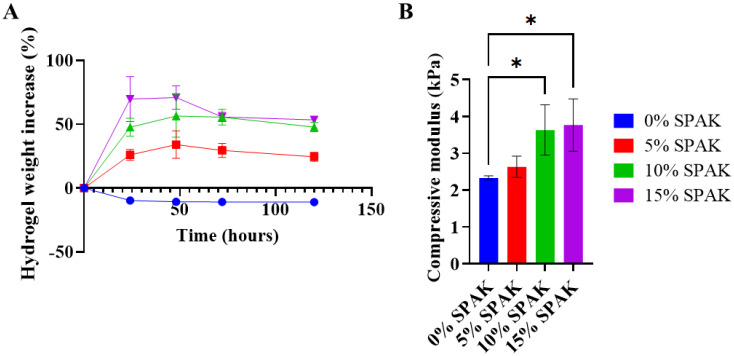 Figure 1
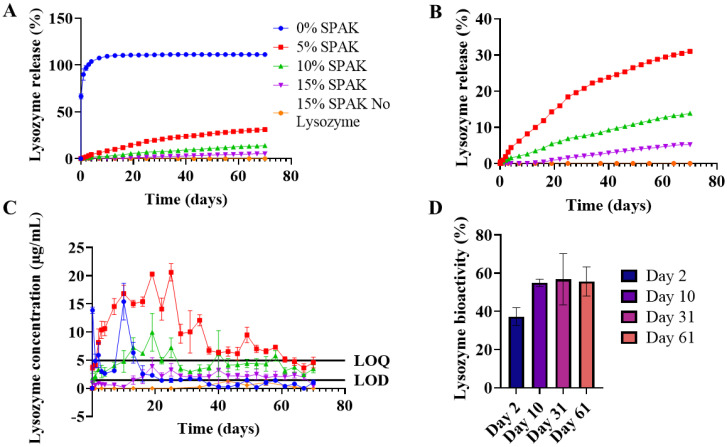 Figure 2
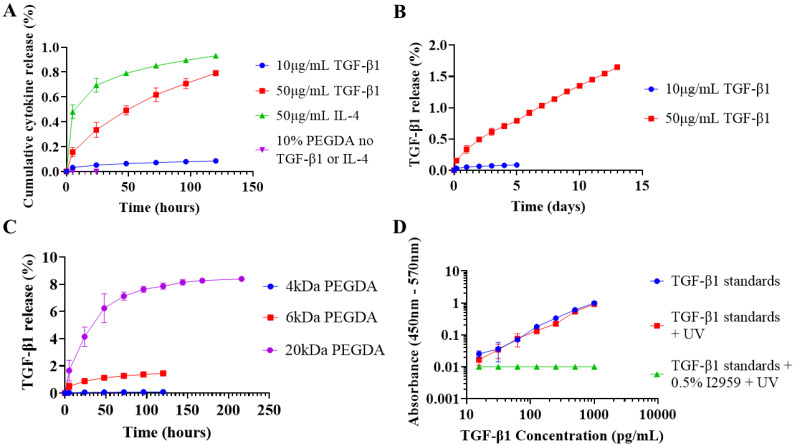 Figure 3
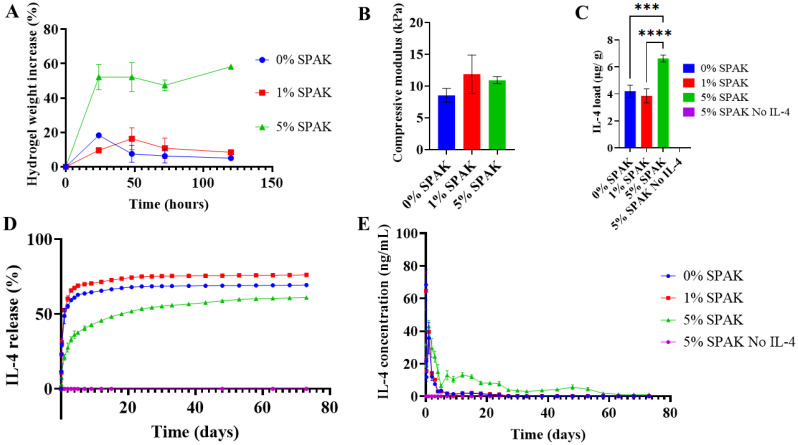 Figure 4
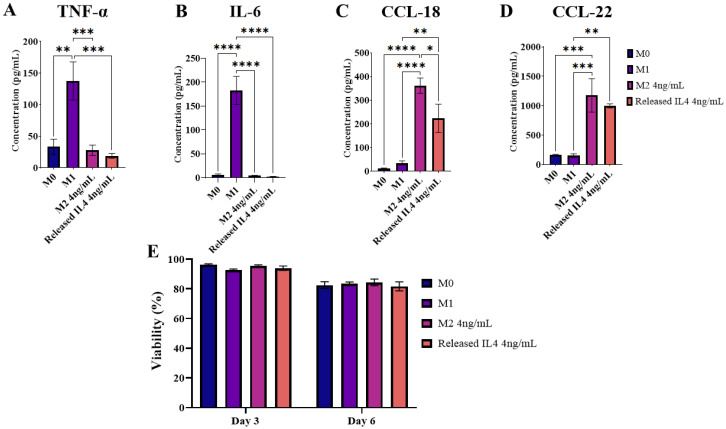 Figure 5
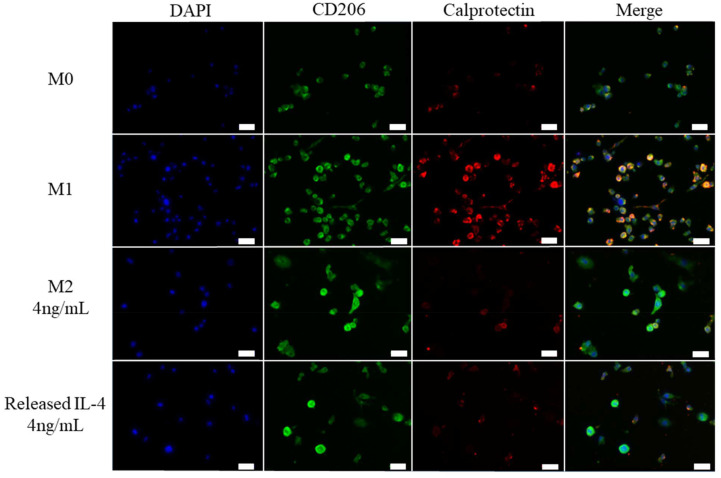 Figure 6
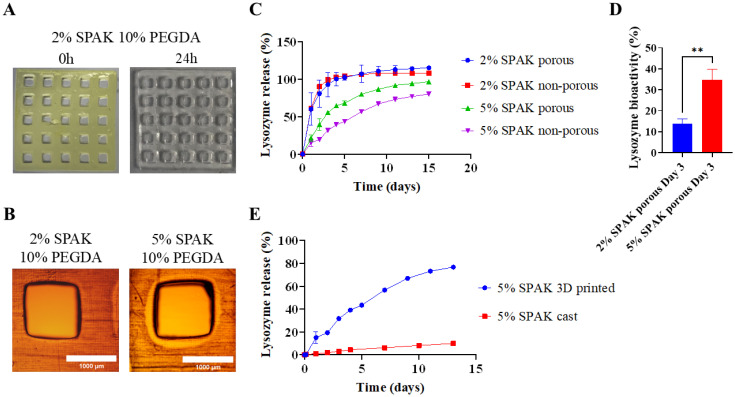 Figure 7
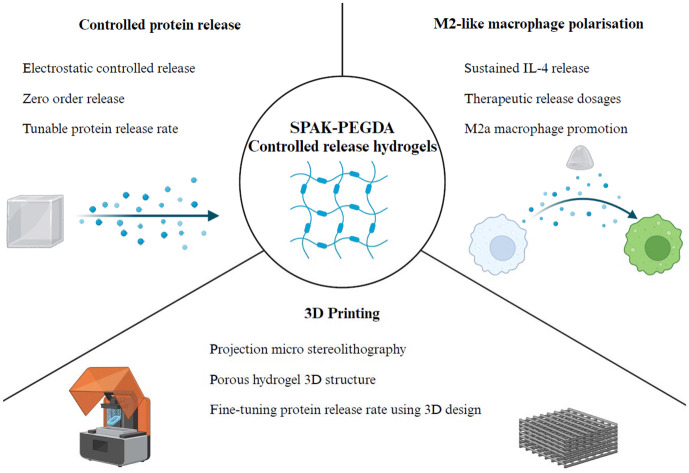 Figure 8
Peer Reviews
No public reviews on file for this paper yet. If you reviewed it on a platform where reviews are public (OpenReview, ICLR, NeurIPS, ICML), you can paste yours below so the community can read it here.
Videos
No videos yet. Explain this paper in a talk, walkthrough, or lecture? Add one.
Taxonomy
TopicsImmune cells in cancer · Graphene and Nanomaterials Applications · Tissue Engineering and Regenerative Medicine