Phosphatase UBLCP1 is required for the growth, virulence and mitochondrial integrity of Toxoplasma gondii
Kaiyin Sheng, Kaiyue Song, Yimin Yang, Haiyan Wu, Zhendong Du, Xueqiu Chen, Yi Yang, Guangxu Ma, Aifang Du

TL;DR
A phosphatase called UBLCP1 is crucial for the growth and virulence of the parasite Toxoplasma gondii, and its absence disrupts mitochondrial function and reduces the parasite's ability to cause disease.
Contribution
This study identifies UBLCP1 as a key phosphatase required for mitochondrial integrity and virulence in Toxoplasma gondii, suggesting it as a potential drug or vaccine target.
Findings
UBLCP1-deficient T. gondii tachyzoites show collapsed mitochondria and reduced growth and proliferation.
UBLCP1 is essential for the virulence of T. gondii in mice, as UBLCP1-deficient parasites fail to cause lethal infections.
Phosphoproteomic analysis reveals UBLCP1 influences protein turnover and trafficking in T. gondii.
Abstract
The mitochondrion is proposed as an ideal target organelle for the control of apicomplexan parasites, whose integrity depends on well-controlled protein import, folding, and turnover. The ubiquitin-like domain-containing C-terminal domain phosphatase 1 (UBLCP1) was found to be associated with the mitochondrial integrity in Toxoplasma gondii. However, little is known about the roles and mechanisms of UBLCP1 in this apicomplexan parasite. The subcellular localization of UBLCP1 in the tachyzoites of T. gondii was determined by an indirect immunofluorescence assay. The roles of UBLCP1 in the growth, cell cycle, and division of T. gondii were assessed by knocking out this molecule in the tachyzoites. Comparative phosphoproteomics between the UBLCP1-deficient and wild-type tachyzoites were performed to understand the roles of UBLCP1 in T. gondii. The virulence of UBLCP1-deficient tachyzoites…
Genes, proteins, chemicals, diseases, species, mutations and cell lines named across the full text — each resolved to its canonical identifier and authoritative record.
Click any figure to enlarge with its caption.
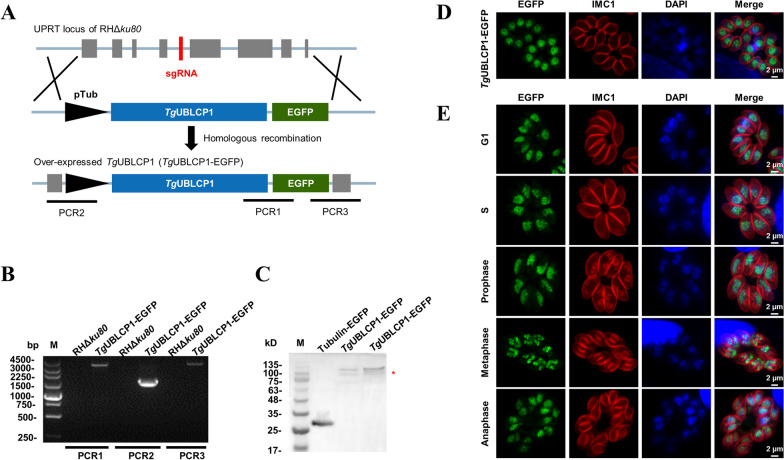 Figure 1
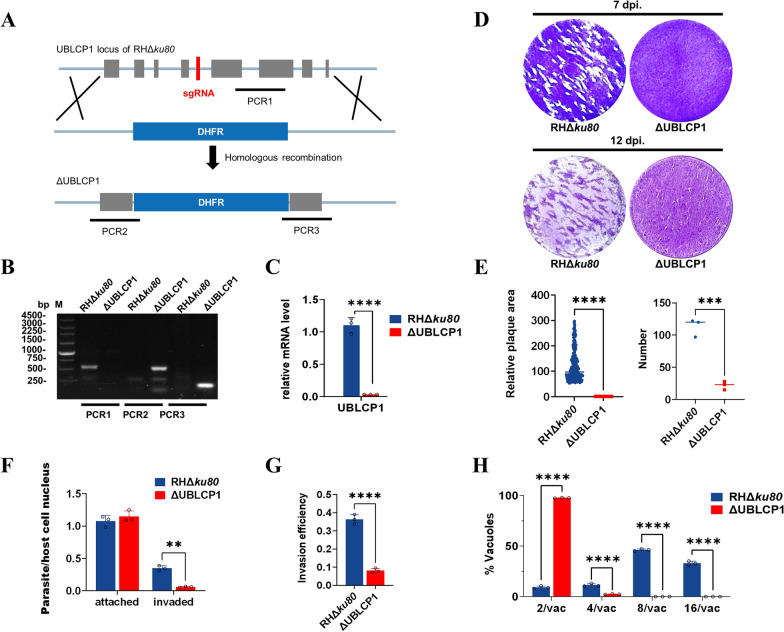 Figure 2
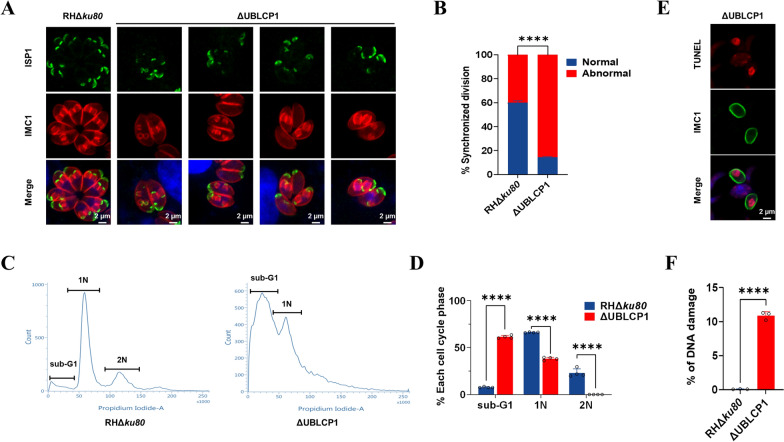 Figure 3
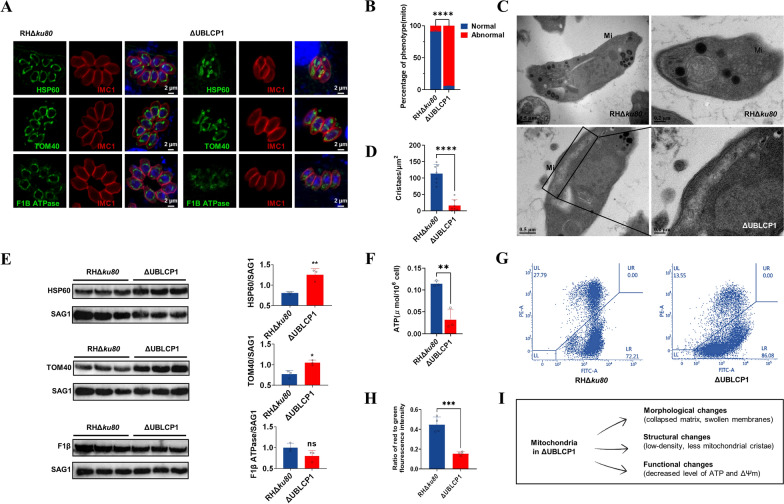 Figure 4
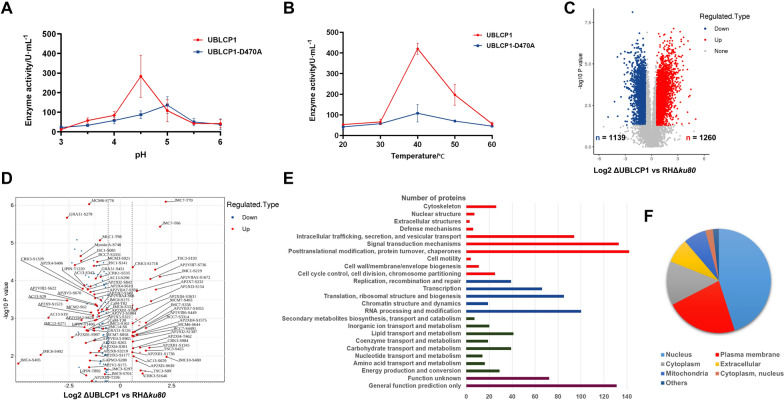 Figure 5
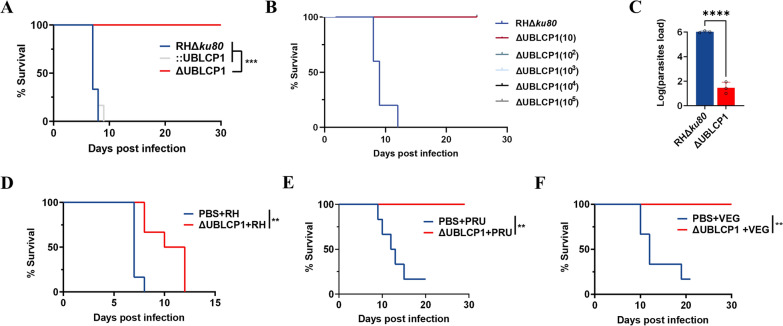 Figure 6
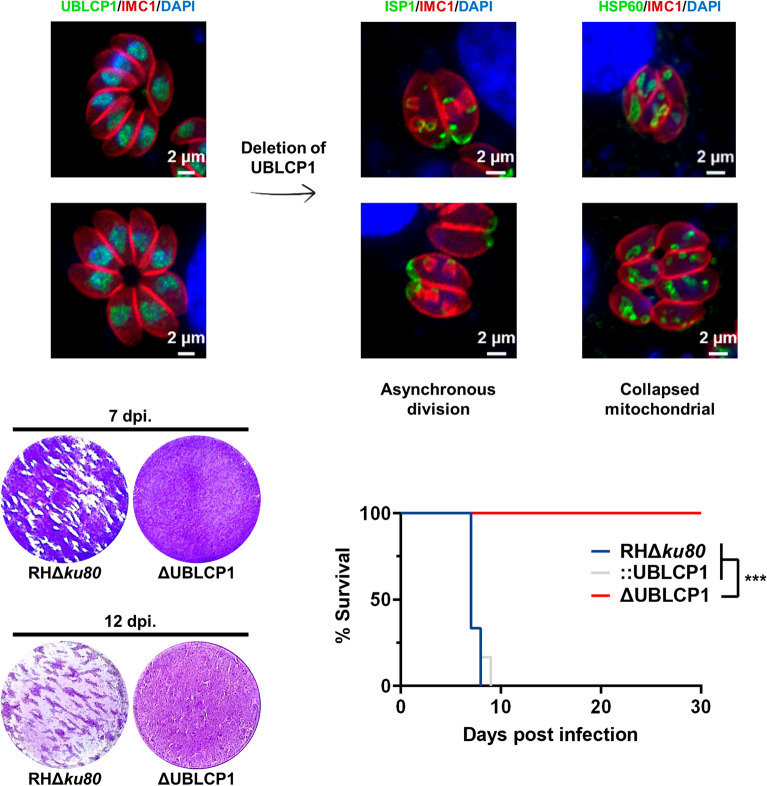 Figure 7
Peer Reviews
No public reviews on file for this paper yet. If you reviewed it on a platform where reviews are public (OpenReview, ICLR, NeurIPS, ICML), you can paste yours below so the community can read it here.
Videos
No videos yet. Explain this paper in a talk, walkthrough, or lecture? Add one.
Taxonomy
TopicsToxoplasma gondii Research Studies · Parasitic Infections and Diagnostics · Herpesvirus Infections and Treatments