Bayesian mixture models for phylogenetic source attribution from consensus sequences and time since infection estimates
Alexandra Blenkinsop, Lysandros Sofocleous, Francesco Di Lauro, Evangelia Georgia Kostaki, Ard van Sighem, Daniela Bezemer, Thijs van de Laar, Peter Reiss, Godelieve de Bree, Nikos Pantazis, Oliver Ratmann

TL;DR
This paper introduces a new Bayesian method to better understand how infectious diseases like HIV spread by combining genetic data with estimates of when people were infected.
Contribution
The novel contribution is the use of Bayesian mixture models incorporating evolutionary clocks and time since infection estimates to improve transmission source attribution.
Findings
Infection time estimates improve population-level transmission source attribution compared to phylogenetic data alone.
The method was applied to HIV transmission networks in Amsterdam to estimate age-specific sources of infection.
Phylogenetic source attribution is enhanced using multi-dimensional mixture models with time data.
Abstract
In stopping the spread of infectious diseases, pathogen genomic data can be used to reconstruct transmission events and characterize population-level sources of infection. Most approaches for identifying transmission pairs do not account for the time passing since the divergence of pathogen variants in individuals, which is problematic in viruses with high within-host evolutionary rates. This prompted us to consider possible transmission pairs in terms of phylogenetic data and additional estimates of time since infection derived from clinical biomarkers. We develop Bayesian mixture models with an evolutionary clock as a signal component and additional mixed effects or covariate random functions describing the mixing weights to classify potential pairs into likely and unlikely transmission pairs. We demonstrate that although sources cannot be identified at the individual level with…
Genes, proteins, chemicals, diseases, species, mutations and cell lines named across the full text — each resolved to its canonical identifier and authoritative record.
Click any figure to enlarge with its caption.
 Figure 1
 Figure 2
 Figure 3
 Figure 4
 Figure 5
 Figure 6
 Figure 7
 Figure 8
 Figure 9
 Figure 10
 Figure 11
 Figure 12
 Figure 13
 Figure 14
 Figure 15
 Figure 16
 Figure 17
 Figure 18
 Figure 19
 Figure 20
 Figure 21
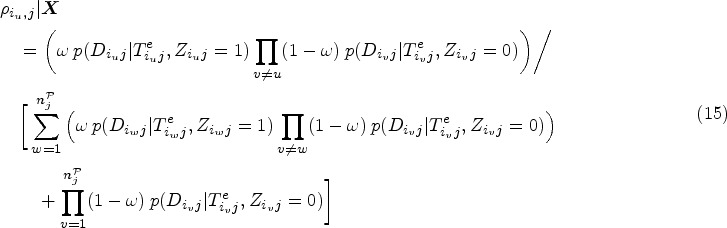 Figure 22
 Figure 23
 Figure 24
 Figure 25
 Figure 26
 Figure 27
 Figure 28
 Figure 29
 Figure 30
 Figure 31
 Figure 32
 Figure 33
 Figure 34
 Figure 35
 Figure 36
 Figure 37
 Figure 38
 Figure 39
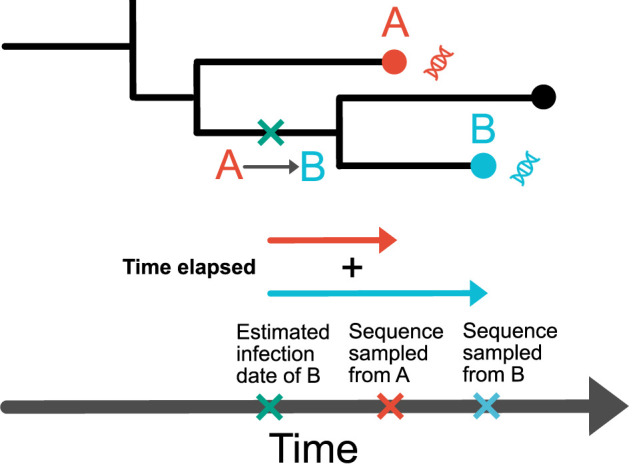 Figure 1
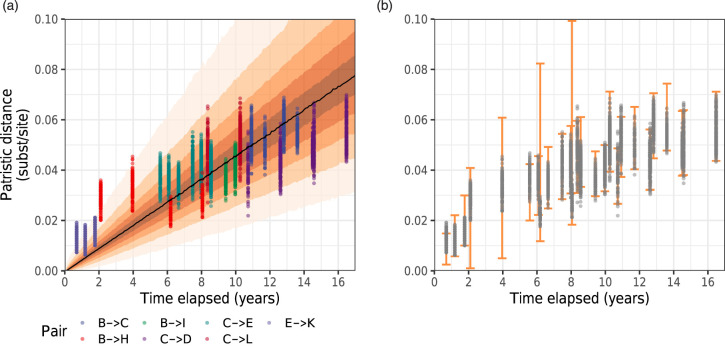 Figure 2
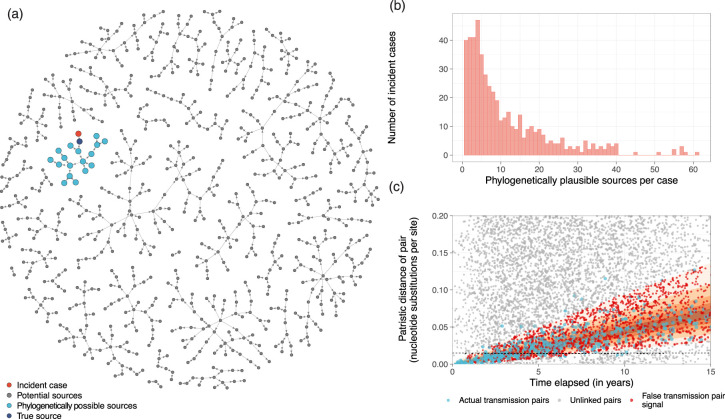 Figure 3
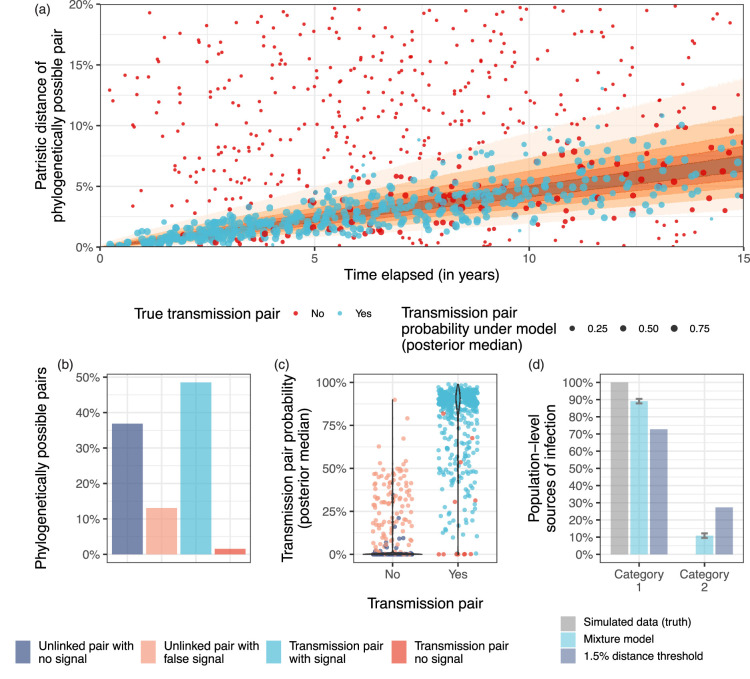 Figure 4
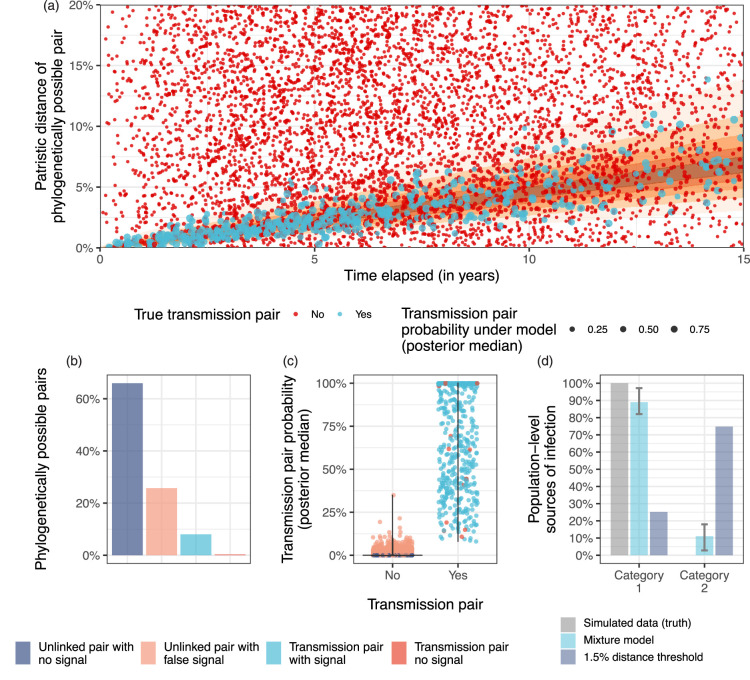 Figure 5
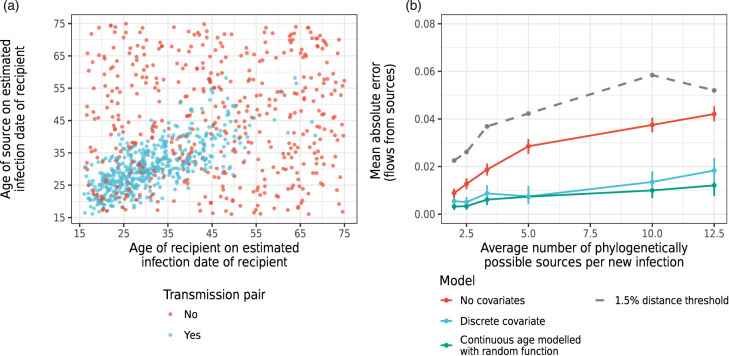 Figure 6
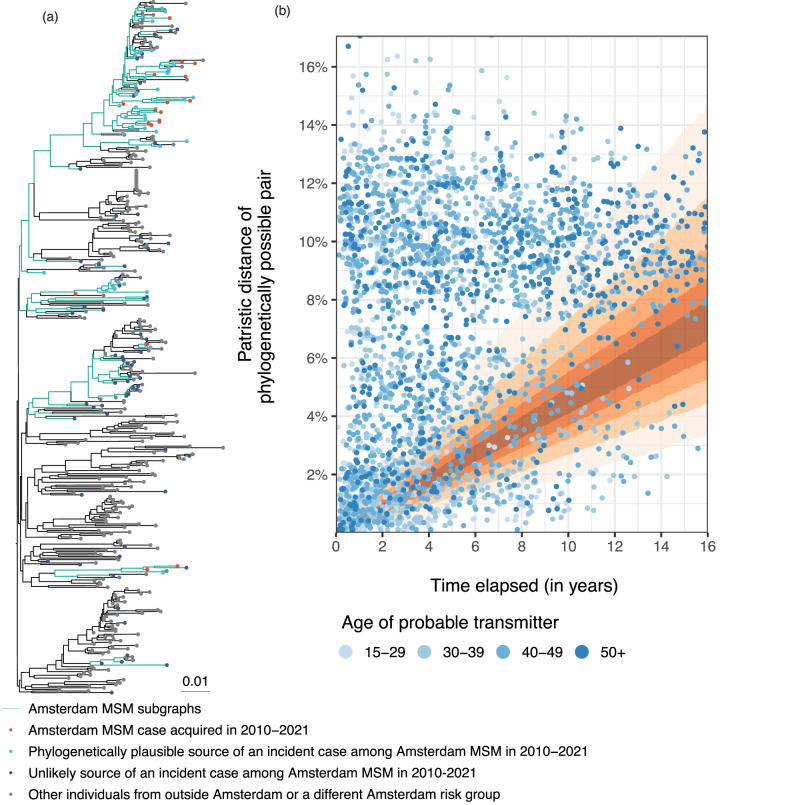 Figure 7
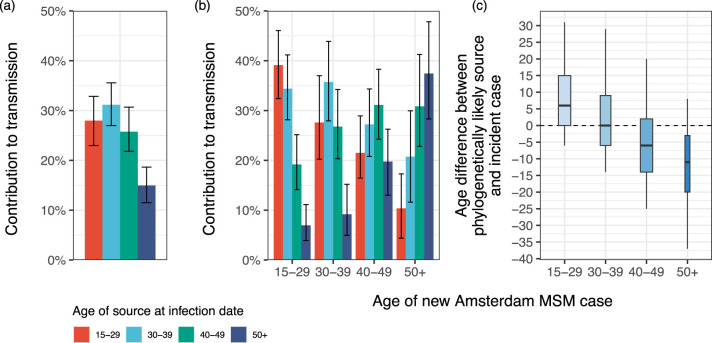 Figure 8
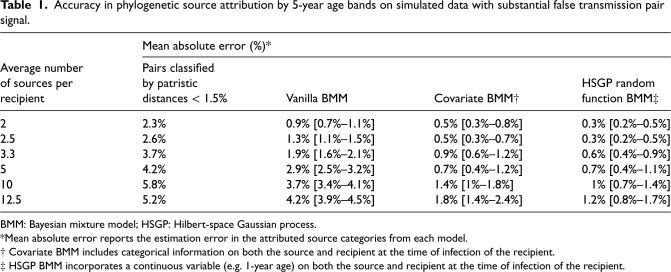 Figure 48
Peer Reviews
No public reviews on file for this paper yet. If you reviewed it on a platform where reviews are public (OpenReview, ICLR, NeurIPS, ICML), you can paste yours below so the community can read it here.
Videos
No videos yet. Explain this paper in a talk, walkthrough, or lecture? Add one.
Taxonomy
TopicsHIV Research and Treatment · Data-Driven Disease Surveillance · Bayesian Methods and Mixture Models