Left atrium volume and function changes during stress in patients with primary mitral regurgitation and preserved left ventricular ejection fraction
Rūta Dirsienė, Rugilė Martinaitytė, Eglė Tamulėnaitė, Aistė Montvilaitė, Dainius Karčiauskas, Eglė Ereminienė, Justina Jolanta Vaškelytė

TL;DR
This study shows that left atrium function and volume changes during stress can predict pulmonary hypertension in patients with primary mitral regurgitation and normal heart function.
Contribution
The study identifies left atrium parameters as early predictors of exercise-induced pulmonary hypertension in asymptomatic primary MR patients.
Findings
LA volume indices were higher in MR patients at rest and during stress.
LA reservoir, conduit, and contractile fractions were reduced in MR patients during stress.
LA volume indices and filling index predict exercise-induced pulmonary hypertension.
Abstract
Patients with primary mitral regurgitation (MR) usually remain asymptomatic for a long time due to compensatory mechanisms and an adequate treatment could be delayed. Stress echocardiography and speckle-tracking analysis could help to evaluate impaired left atrium (LA) function before the manifestation of clinically significant myocardial changes in asymptomatic patients with primary MR and preserved left ventricular (LV) ejection fraction (EF). This study prospectively enrolled 91 patients with preserved LV EF (≥60%) at rest, of which 60 patients had moderate-to-severe MR and 31 were healthy controls. Rest and stress (bicycle ergometry) echocardiography and speckle-tracking offline analysis were performed. In MR group LA volume indices were higher at rest and during stress, while LA reservoir, conduit, and contractile fractions were decreased (p < .005). LA deformation parameters at…
Genes, proteins, chemicals, diseases, species, mutations and cell lines named across the full text — each resolved to its canonical identifier and authoritative record.
Click any figure to enlarge with its caption.
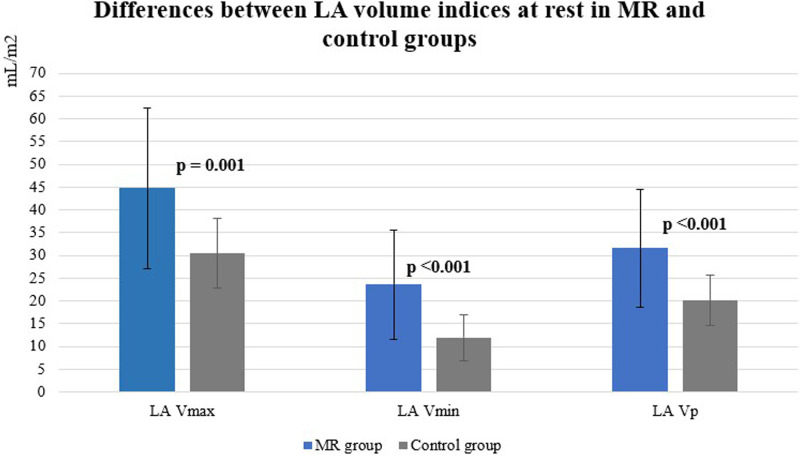 Figure 1
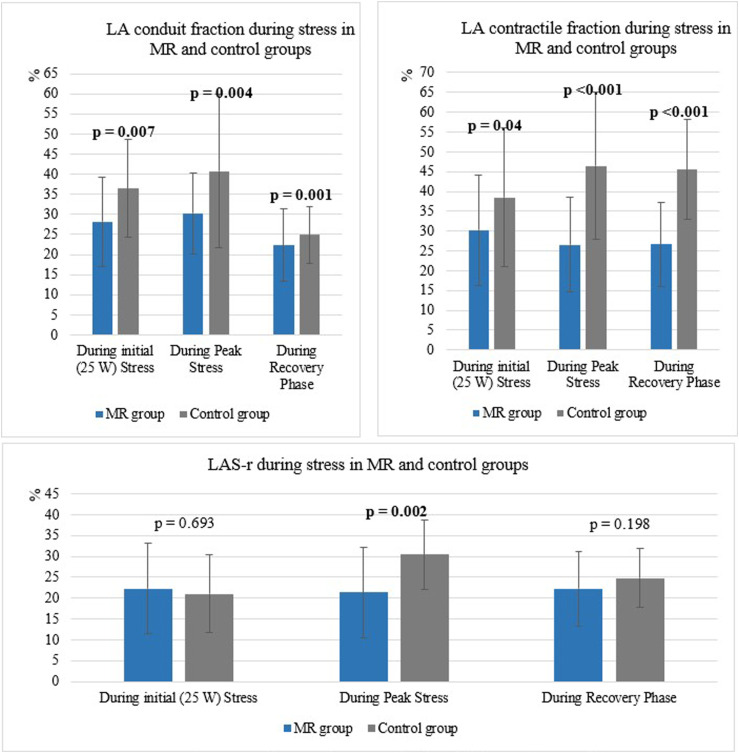 Figure 2
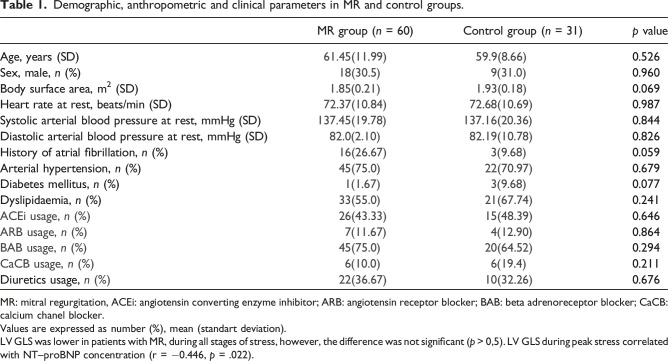 Figure 3
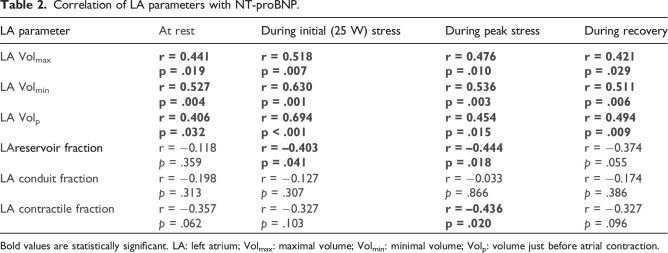 Figure 4
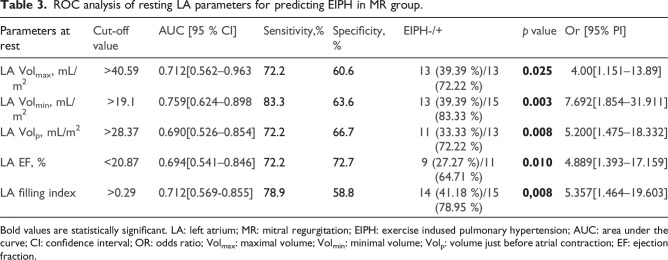 Figure 5
Peer Reviews
No public reviews on file for this paper yet. If you reviewed it on a platform where reviews are public (OpenReview, ICLR, NeurIPS, ICML), you can paste yours below so the community can read it here.
Videos
No videos yet. Explain this paper in a talk, walkthrough, or lecture? Add one.
Taxonomy
TopicsCardiac Valve Diseases and Treatments · Cardiovascular Function and Risk Factors · Cardiac Structural Anomalies and Repair