High-dimensional, outcome-dependent missing data problems: Models for the human KIR loci
Lars Leonardus Joannes van der Burg, Hein Putter, Henning Baldauf, Jürgen Sauter, Johannes Schetelig, Liesbeth C de Wreede, Stefan Böhringer

TL;DR
This paper studies how to handle missing data in KIR loci genotyping by comparing different algorithms, finding that outcome-based methods can sometimes lead to biased results.
Contribution
The paper introduces an outcome-based expectation-maximization algorithm for KIR diplotype reconstruction and evaluates its performance.
Findings
Outcome-based algorithms outperformed baseline methods only under extreme effect sizes and missingness levels.
In most cases, the no-outcome expectation-maximization algorithm performed better or similarly.
Outcome-based models may lead to biased results in high-dimensional settings.
Abstract
Missing data problems are common in biological, high-dimensional data, where data can be partially or completely missing. Algorithms have been developed to reconstruct the missing values by means of imputation or expectation-maximization algorithms. For missing data problems, it has been suggested that the regression model of interest should be incorporated into the imputation procedure to reduce bias of the regression coefficients. We here consider a challenging missing data problem, where diplotypes of the KIR loci are to be reconstructed. These loci are difficult to genotype, resulting in ambiguous genotype calls. We extend a previously proposed expectation-maximization algorithm by incorporating a potentially high-dimensional regression model to model the outcome. Three strategies are evaluated: (1) only allelic predictors, (2) allelic predictors and forward-backward selection on…
Genes, proteins, chemicals, diseases, species, mutations and cell lines named across the full text — each resolved to its canonical identifier and authoritative record.
Click any figure to enlarge with its caption.
 Figure 1
 Figure 2
 Figure 3
 Figure 4
 Figure 5
 Figure 6
 Figure 7
 Figure 8
 Figure 9
 Figure 10
 Figure 11
 Figure 12
 Figure 13
 Figure 14
 Figure 15
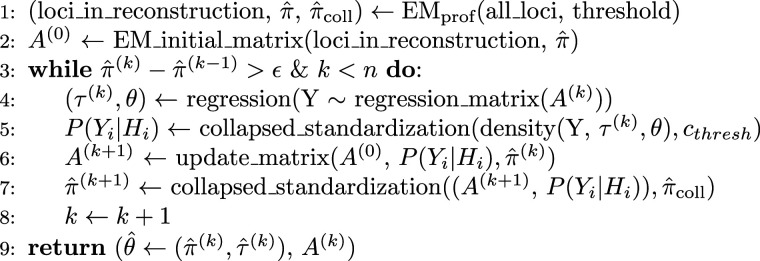 Figure 1
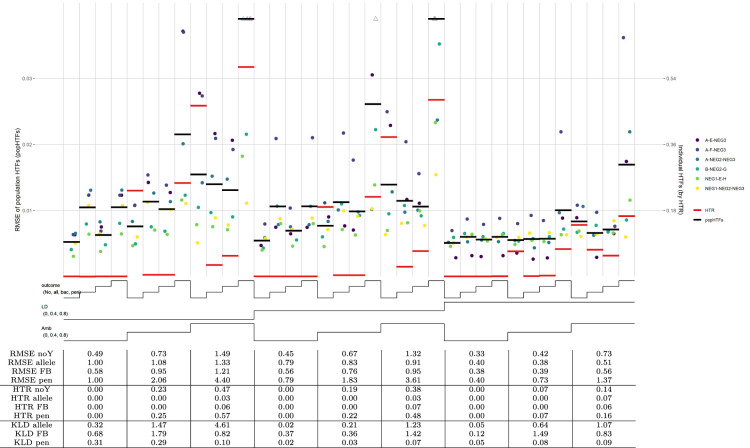 Figure 2
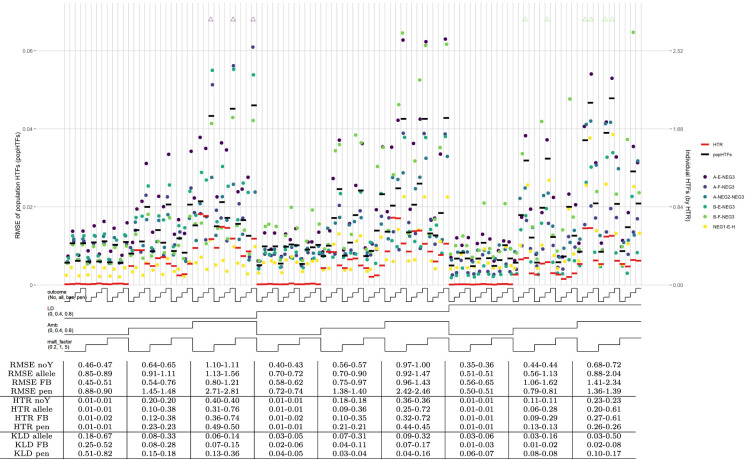 Figure 3
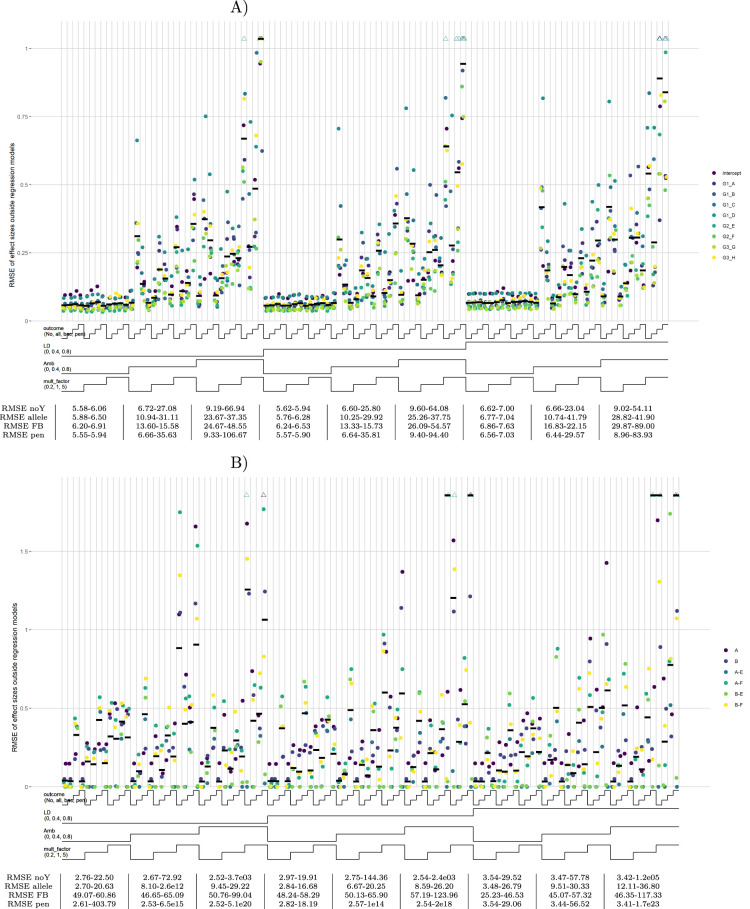 Figure 4
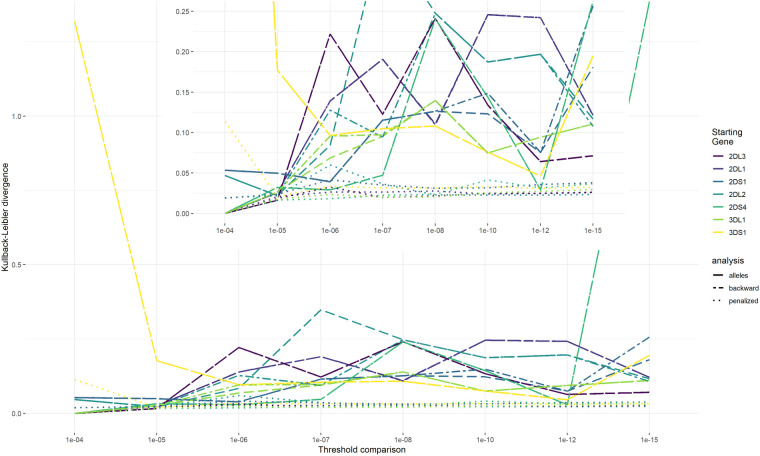 Figure 5
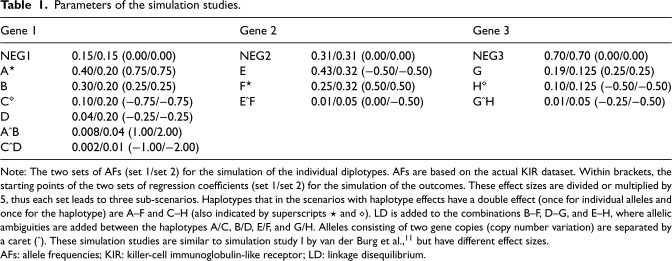 Figure 21
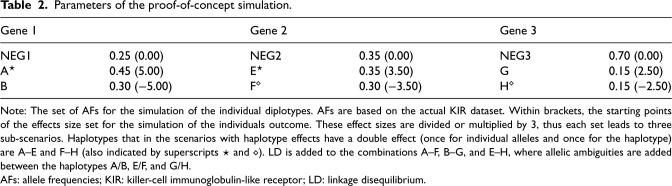 Figure 22
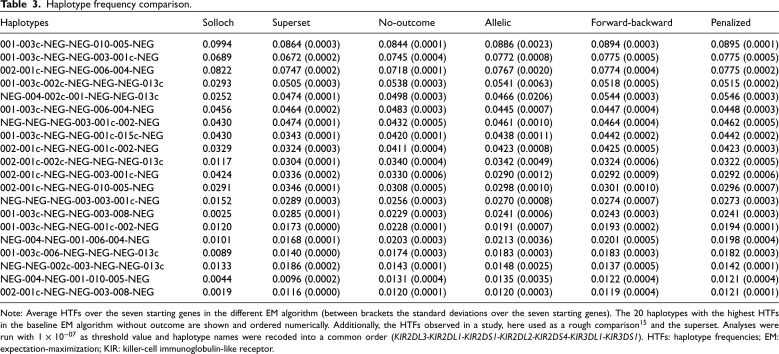 Figure 23
Peer Reviews
No public reviews on file for this paper yet. If you reviewed it on a platform where reviews are public (OpenReview, ICLR, NeurIPS, ICML), you can paste yours below so the community can read it here.
Videos
No videos yet. Explain this paper in a talk, walkthrough, or lecture? Add one.
Taxonomy
TopicsGenetic and phenotypic traits in livestock · Gene expression and cancer classification · Genetic Mapping and Diversity in Plants and Animals