The Biomechanical Importance of Bone Block Positioning in Glenoid Augmentation: Every Millimeter Matters
Sebastian Oenning, Jens Wermers, Alina Köhler, Julia Sußiek, Mats Wiethölter, Michael J. Raschke, J. Christoph Katthagen

TL;DR
This study shows that even small changes in bone block placement during shoulder surgery significantly affect joint stability and can lead to complications.
Contribution
The study demonstrates that precise positioning of bone blocks is critical for restoring shoulder stability in cases of glenoid bone loss.
Findings
Flush bone block placement significantly improves stability compared to bone loss.
A 1-mm medialized bone block fails to restore stability, while a 1-mm lateralized block increases stability.
Accurate bone block positioning is crucial to avoid complications like instability or osteoarthritis.
Abstract
In the presence of anterior glenoid bone loss (aGBL), options for bony glenoid augmentation include Latarjet procedures and free bone block transfers. Bone graft placement is challenging, and malposition causes complications, such as recurrent instability or osteoarthritis. With minimal changes in bone block positioning, osteochondral shoulder stability cannot be restored sufficiently. Controlled laboratory study. In a robotic test setup, 14 human cadaveric scapulae were included. Soft tissue was resected, and matching artificial humeri were selected for each specimen. Testing was performed in 60° of glenohumeral abduction with 50 N of glenohumeral compression and anterior-directed translational force to the humerus. Application of 20% aGBL and screw fixation of artificial bone blocks (artBBs) with different buildup shells allowed the following testing stages: (1) intact, (2) 20%…
Genes, proteins, chemicals, diseases, species, mutations and cell lines named across the full text — each resolved to its canonical identifier and authoritative record.
Click any figure to enlarge with its caption.
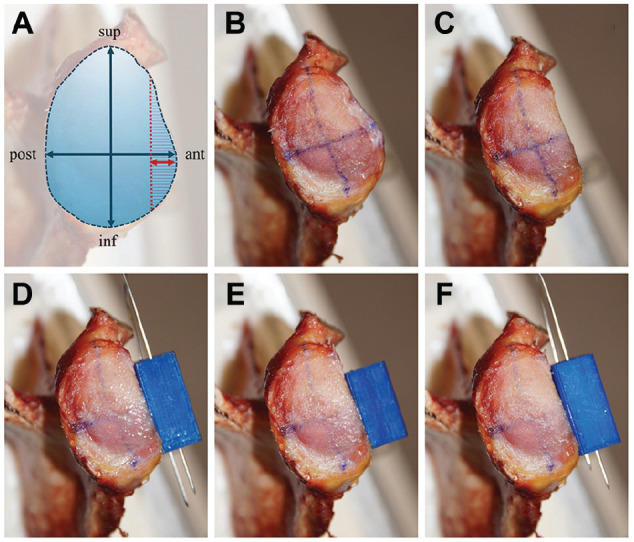 Figure 1
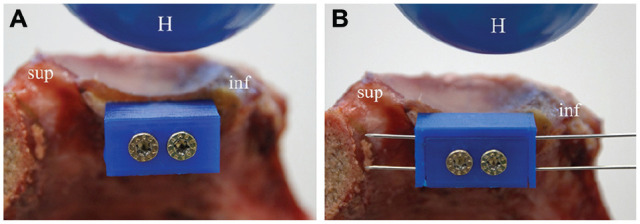 Figure 2
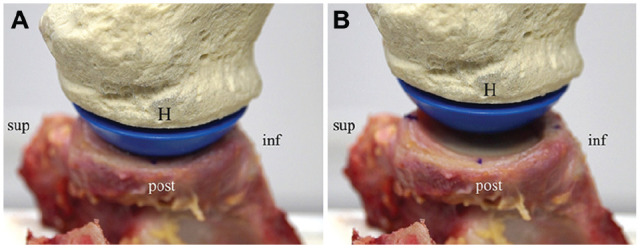 Figure 3
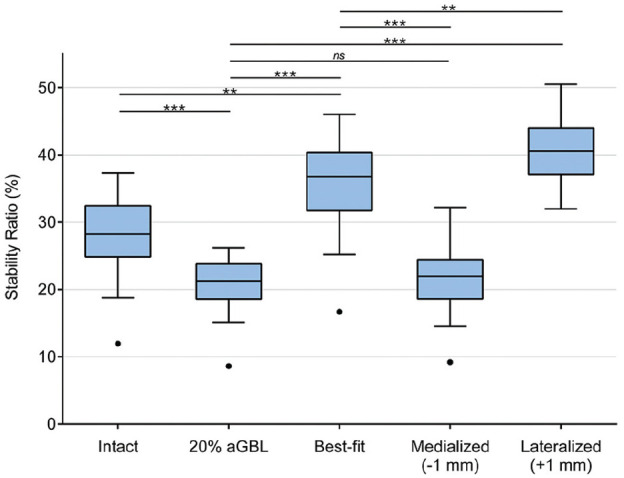 Figure 4
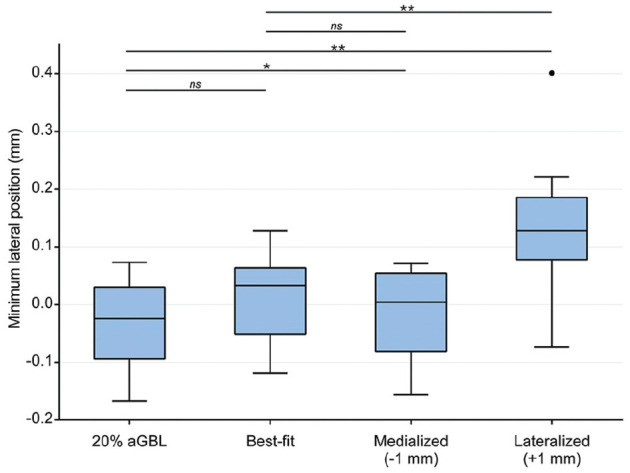 Figure 5
 Figure 6
Peer Reviews
No public reviews on file for this paper yet. If you reviewed it on a platform where reviews are public (OpenReview, ICLR, NeurIPS, ICML), you can paste yours below so the community can read it here.
Videos
No videos yet. Explain this paper in a talk, walkthrough, or lecture? Add one.
Taxonomy
TopicsShoulder Injury and Treatment · Shoulder and Clavicle Injuries · Nerve Injury and Rehabilitation