Layered Double Hydroxide Reshapes the Immune Microenvironment of Rheumatoid Arthritis through Small Mothers against Decapentaplegic 5
Dengju Li, Yawei Sun, Guangxian Liu, Changxing Liu, Guojiang Zhang, Haojue Wang, Shui Sun, Senbo An

TL;DR
A new bioactive material, FA-LDH, reduces inflammation in rheumatoid arthritis by targeting immune cells and altering key signaling pathways.
Contribution
FA-LDH is shown to reshape the immune microenvironment in RA via the pSmad5/p65 axis, offering a novel therapeutic strategy.
Findings
FA-LDH reduces proinflammatory cytokines and promotes M2 macrophage markers in vitro.
FA-LDH modulates Smad5 nucleocytoplasmic transport and inhibits p65 nuclear transport.
In vivo, FA-LDH reduces joint swelling and protects cartilage in collagen-induced arthritis mice.
Abstract
Persistent synovitis is a pivotal pathological feature of rheumatoid arthritis (RA). However, the current rheumatoid drugs are accompanied by severe side effects and have limited anti-inflammatory capabilities. In this work, we designed a bioactive material—folic acid modified layered double hydroxides (FA-LDH), aiming at targeting M1 macrophages and modulating macrophage repolarization. The in vitro experiment showed that FA-LDH mitigated the release of proinflammatory cytokines and promoted the expression of M2 macrophage markers. In terms of the action mechanism, FA-LDH modulated the nucleocytoplasmic transport of the small mothers against decapentaplegic 5 (Smad5) protein by adjusting the pH within the immune microenvironment. Subsequently, relying on the interaction between phospho-Smad5 (pSmad5) and p65, the nuclear factor kappa B signaling pathway was down-regulated through…
Genes, proteins, chemicals, diseases, species, mutations and cell lines named across the full text — each resolved to its canonical identifier and authoritative record.
Click any figure to enlarge with its caption.
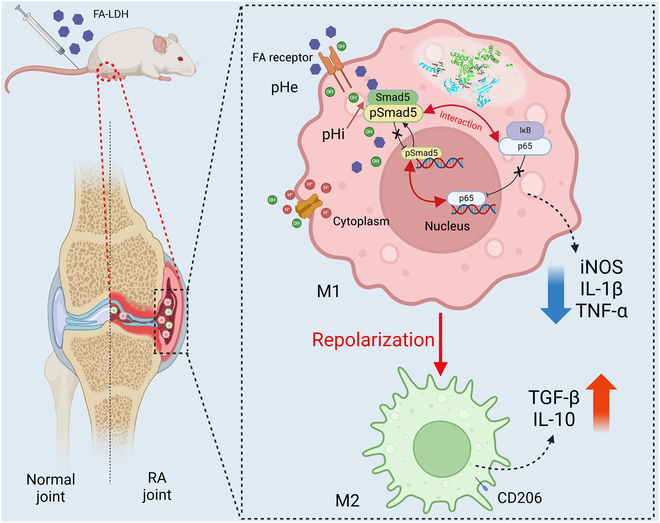 Figure 1
 Figure 2
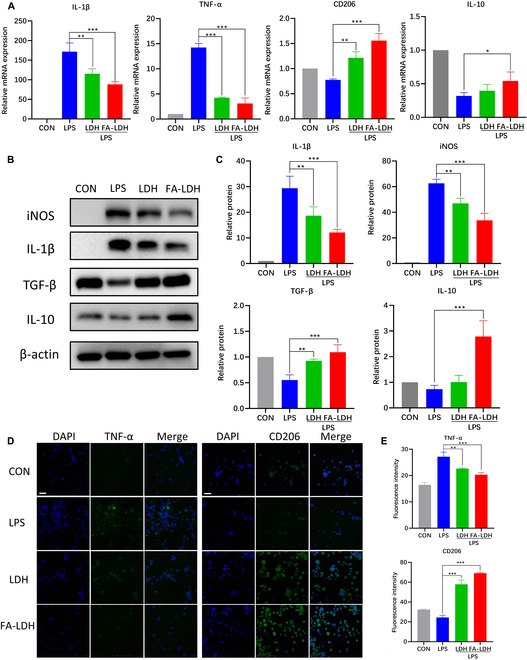 Figure 3
 Figure 4
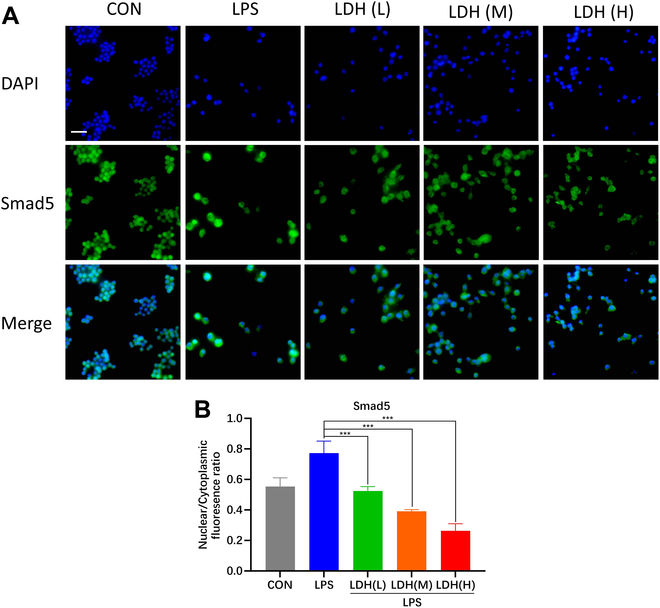 Figure 5
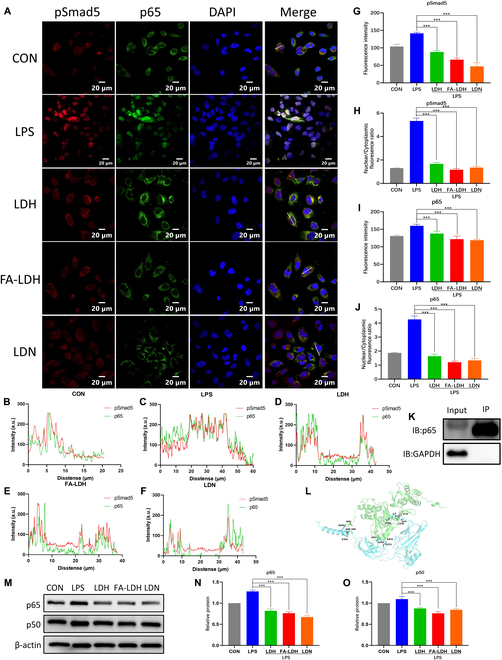 Figure 6
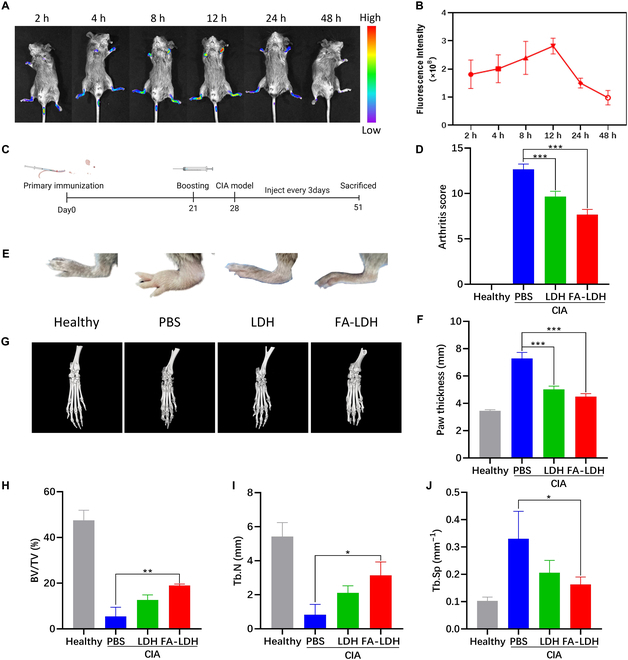 Figure 7
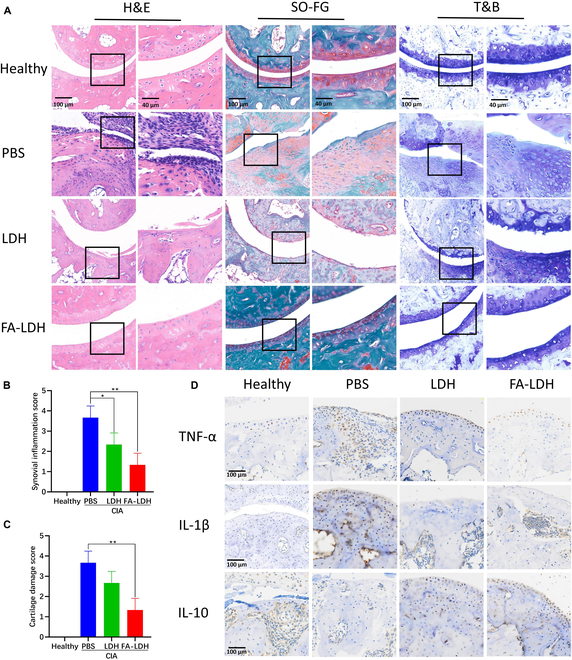 Figure 8
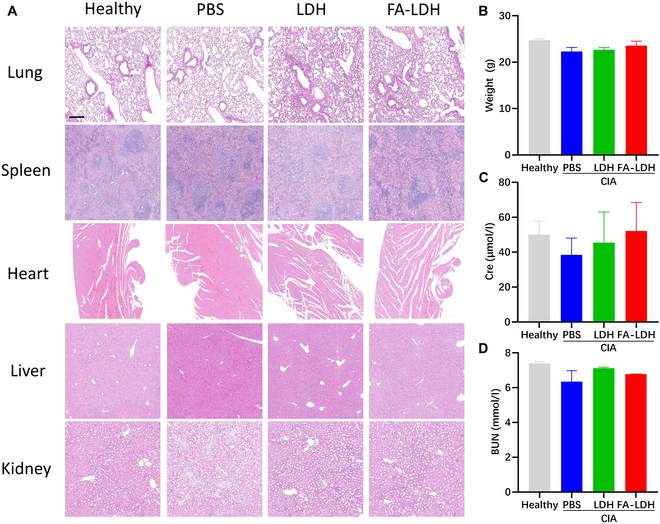 Figure 9
Peer Reviews
No public reviews on file for this paper yet. If you reviewed it on a platform where reviews are public (OpenReview, ICLR, NeurIPS, ICML), you can paste yours below so the community can read it here.
Videos
No videos yet. Explain this paper in a talk, walkthrough, or lecture? Add one.
Taxonomy
TopicsAutoimmune and Inflammatory Disorders Research · Adenosine and Purinergic Signaling · Hemophilia Treatment and Research