Transition to electronic medical records improves efficiency and reach of antimicrobial stewardship service in an Australian tertiary hospital setting
George P Drewett, Danni Miatke, Mani Suleiman, Taksh Singh Mann, Bruce Lin, Saliya Hewagama

TL;DR
Switching to electronic medical records significantly boosted the effectiveness and scope of antimicrobial stewardship in a hospital.
Contribution
Demonstrates how electronic medical records enhance antimicrobial stewardship service performance in a real-world hospital setting.
Findings
Significant increase in restricted antimicrobials identified for review after transition.
More patients were seen by the antimicrobial stewardship service post transition.
AMS interventions became more significant following the switch to electronic records.
Abstract
We examined the effect of transition to electronic medical records on the antimicrobial stewardship service (AMS) in our healthcare service, finding significant increases (P < 0.001) in the number and type of prescribed restricted antimicrobials identified for review, number of patients seen, and AMS intervention significance post transition.
Genes, proteins, chemicals, diseases, species, mutations and cell lines named across the full text — each resolved to its canonical identifier and authoritative record.
Click any figure to enlarge with its caption.
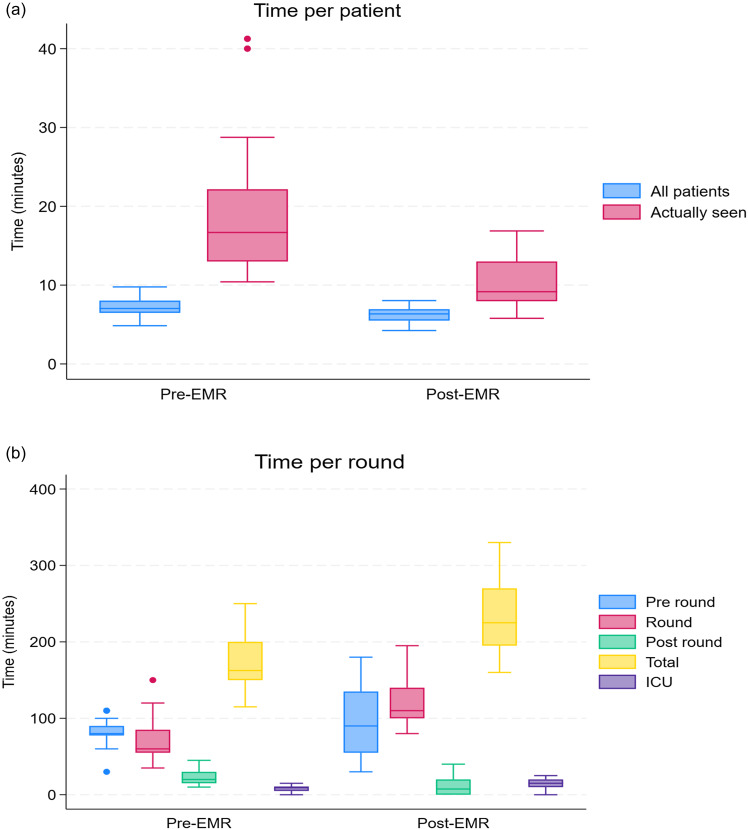 Figure 1
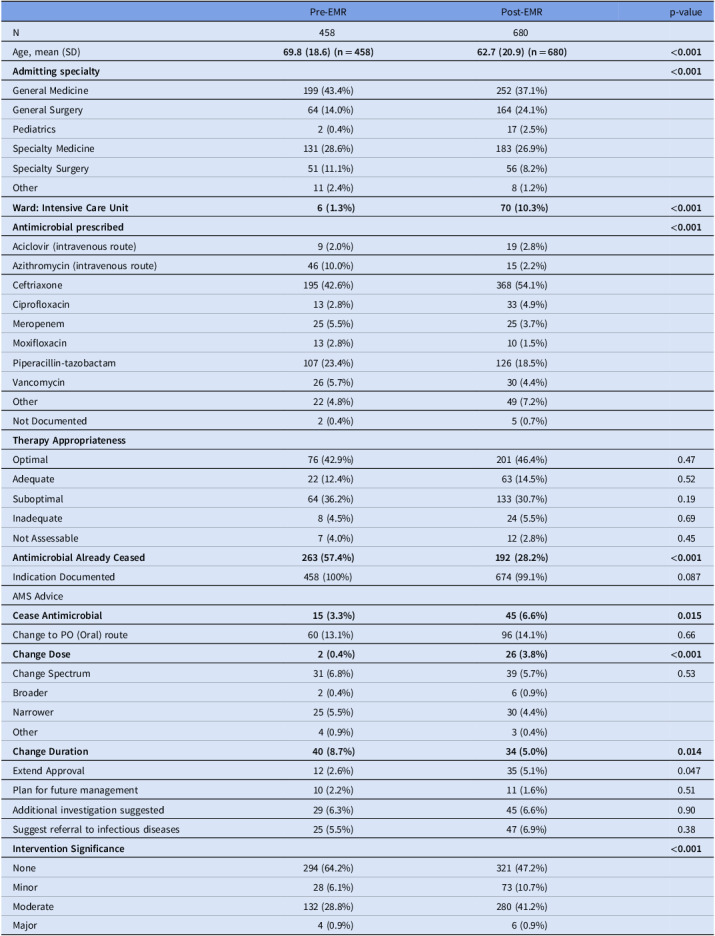 Figure 2
Peer Reviews
No public reviews on file for this paper yet. If you reviewed it on a platform where reviews are public (OpenReview, ICLR, NeurIPS, ICML), you can paste yours below so the community can read it here.
Videos
No videos yet. Explain this paper in a talk, walkthrough, or lecture? Add one.
Taxonomy
TopicsAntibiotic Use and Resistance · Patient Satisfaction in Healthcare · Bacterial Identification and Susceptibility Testing