Prognostic value of prolymphocyte percentage in chronic lymphocytic leukemia
昭亮 张, 家豪 周, 凌霄 邢, 琰 王, 彤璐 邱, 蓉 王, 慧 王, 磊 范, 华渊 朱, 祎 缪, 建勇 李

TL;DR
This study shows that a higher percentage of prolymphocytes in blood is linked to worse outcomes in chronic lymphocytic leukemia patients.
Contribution
The study identifies a 1% prolymphocyte threshold as a potential new prognostic marker for CLL.
Findings
Higher prolymphocyte levels correlate with advanced disease and poor prognostic markers in CLL.
A 1% prolymphocyte threshold improves prognostic model accuracy compared to existing CLL-IPI scores.
Patients with >1% prolymphocytes have shorter survival and respond worse to BTKi therapy.
Abstract
探讨幼淋巴细胞比例对慢性淋巴细胞白血病(CLL)患者预后的影响。 研究纳入了2011年10月至2020年12月在南京医科大学第一附属医院确诊为CLL的300例患者,分析外周血幼淋巴细胞比例与其他基线特征的相关性,然后通过X-tile分析得到外周血幼淋巴细胞比例的最佳临界值,并通过后续的生存分析和预后模型构建验证其预后价值。 共300例符合条件的CLL患者纳入研究,其中有50例CLL患者接受布鲁顿酪氨酸激酶抑制剂(BTKi)作为一线治疗。外周血幼淋巴细胞比例较高的患者多为晚期(P=0.010)、β2微球蛋白较高(P<0.001)、免疫球蛋白重链可变区(IGHV)未突变(P<0.001)和伴有TP53异常(P=0.004)。外周血幼淋巴细胞比例的最佳临界值为1%。外周血幼淋巴细胞比例高于1%的患者的无治疗生存(TFS)期(P<0.001)和总生存期(P=0.007)短。在多因素分析中,外周血幼淋巴细胞比例>1%对TFS的独立预测价值尚不明确,但表现出一定的趋势[HR=1.405(95% CI 0.971~2.032),P=0.071]。将CLL国际预后指数(CLL-IPI)和外周血幼淋巴细胞比例结合构建的新预后模型比CLL-IPI有更好的区分度[曲线下面积(AUC):0.778对0.637,P=0.006]。此外,外周血幼淋巴细胞比例>1%的患者在接受布鲁顿酪氨酸激酶抑制剂治疗后无进展生存期更短(P=0.038)。 外周血幼淋巴细胞比例与治疗前CLL患者的基线特征及预后相关。
Genes, proteins, chemicals, diseases, species, mutations and cell lines named across the full text — each resolved to its canonical identifier and authoritative record.
Click any figure to enlarge with its caption.
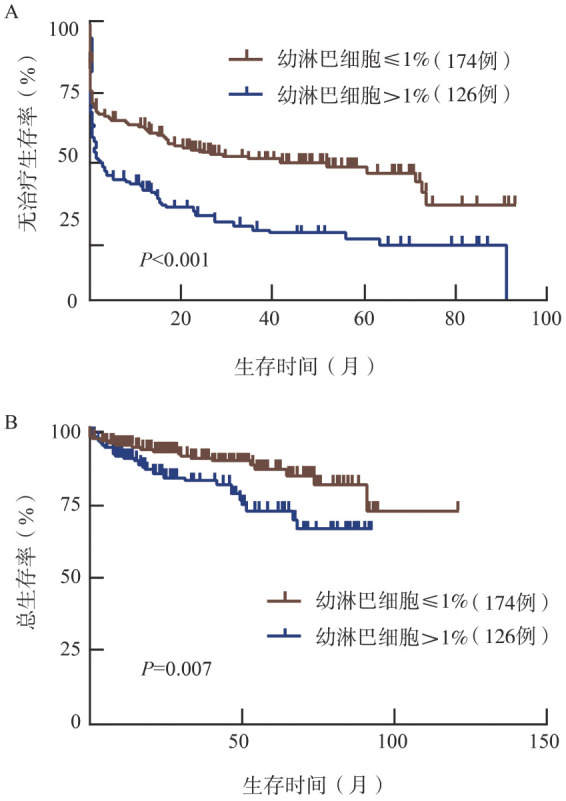 Figure 1
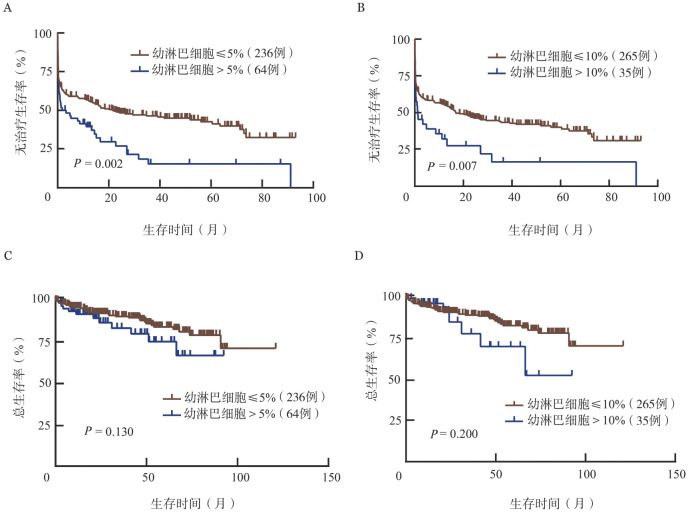 Figure 2
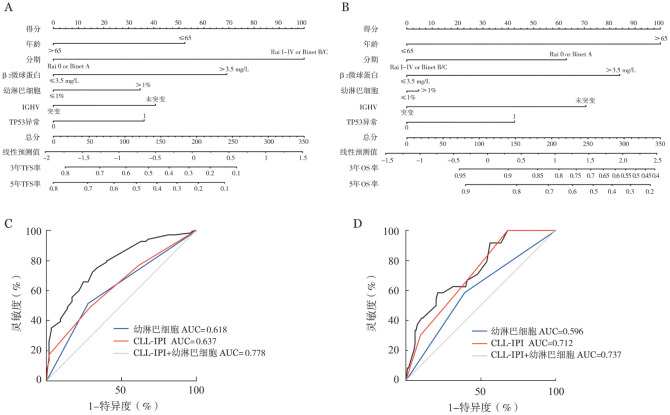 Figure 3
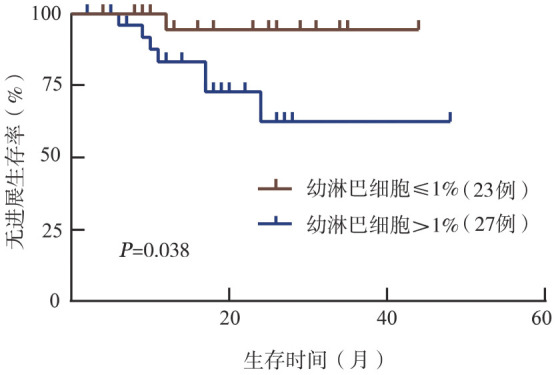 Figure 4
Peer Reviews
No public reviews on file for this paper yet. If you reviewed it on a platform where reviews are public (OpenReview, ICLR, NeurIPS, ICML), you can paste yours below so the community can read it here.
Videos
No videos yet. Explain this paper in a talk, walkthrough, or lecture? Add one.
Taxonomy
TopicsChronic Lymphocytic Leukemia Research