Flowering Plant Microbiomes and Network Interactions Across an Urban Gradient
Katherine D. Chau, Makaylee K. Crone, Phuong N. Nguyen, Sandra M. Rehan

TL;DR
This study explores how the microbial communities in flower surfaces differ among plant species and remain stable despite urbanization.
Contribution
The study identifies key bacterial and fungal taxa in anthosphere microbiomes and their network interactions across urban gradients.
Findings
Bacterial and fungal microbiomes differ significantly in diversity across plant species like Asteraceae and Fabaceae.
Four taxa (Pantoea, Rosenbergiella, Alternaria, Cladosporium) are highly prevalent and influence microbiome composition differences.
Flower-plant networks suggest Paulownia sp. is important for urban pollinators based on rbcL detections.
Abstract
We used flowers to explore how ephemeral anthosphere microbiomes differ among flowering plant species and along an urban gradient. Here, we sequenced 16S rRNA for bacteria, ITS1 for fungi and rbcL for plant DNA from 10 different plant species sampled to characterise anthosphere microbiomes along an urban gradient and identify important network interactions. Bacterial and fungal flower microbiomes significantly differed in diversity across plant species, especially among Asteraceae and Fabaceae. Across all analyses, four taxa, the bacteria Pantoea and Rosenbergiella and the fungi Alternaria and Cladosporium were highly prevalent and contributed to the majority of microbiome composition differences observed between plant species. These four taxa harbour strains or species that may be either pathogenic or beneficial to plants. Across a land use gradient, the plant community bacterial and…
Genes, proteins, chemicals, diseases, species, mutations and cell lines named across the full text — each resolved to its canonical identifier and authoritative record.
Click any figure to enlarge with its caption.
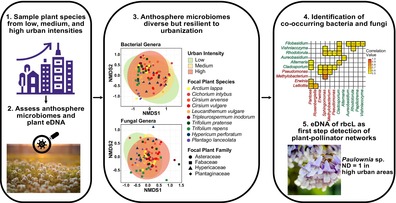 Figure 1
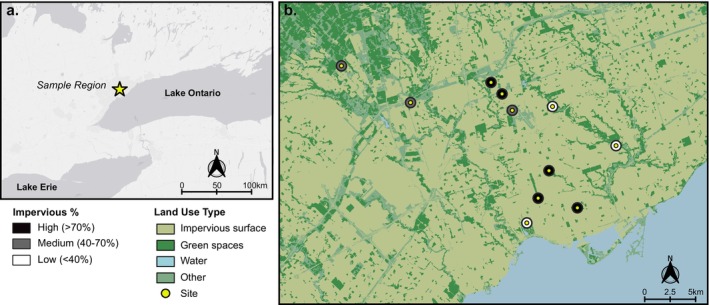 Figure 2
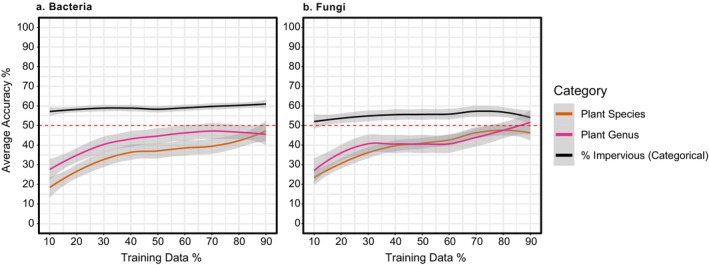 Figure 3
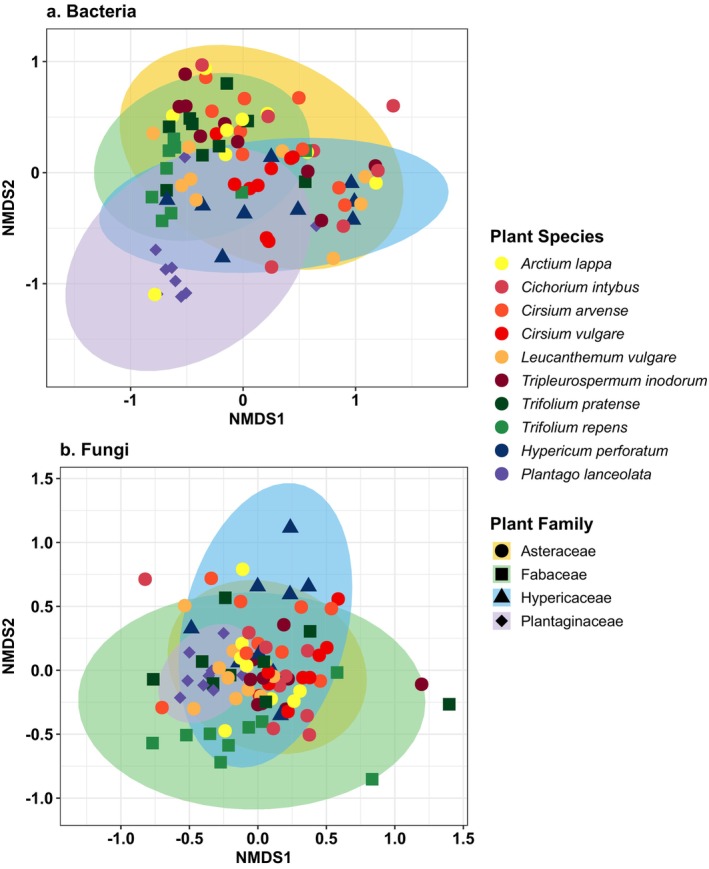 Figure 4
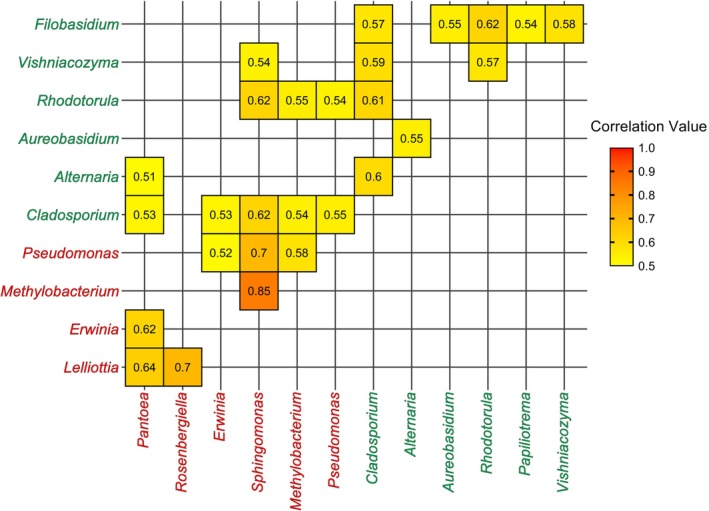 Figure 5
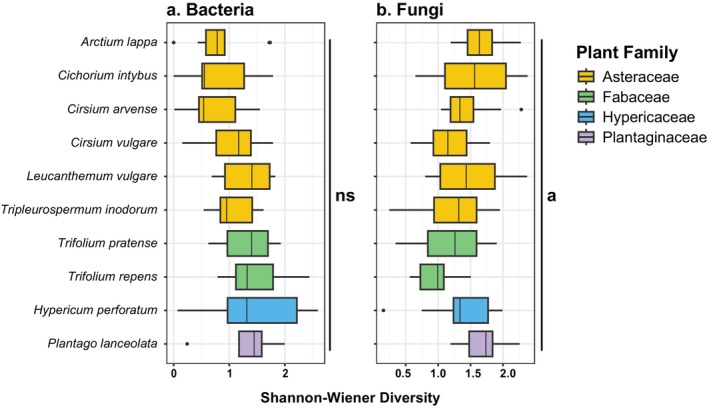 Figure 6
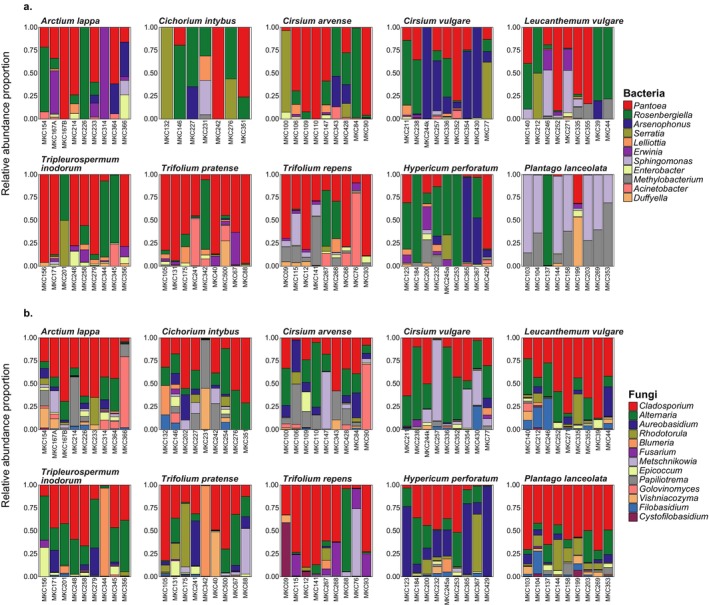 Figure 7
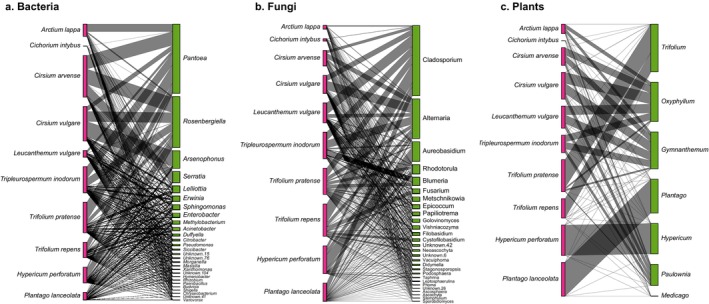 Figure 8
Peer Reviews
No public reviews on file for this paper yet. If you reviewed it on a platform where reviews are public (OpenReview, ICLR, NeurIPS, ICML), you can paste yours below so the community can read it here.
Videos
No videos yet. Explain this paper in a talk, walkthrough, or lecture? Add one.
Taxonomy
TopicsPlant and animal studies · Plant Parasitism and Resistance · Plant and Fungal Species Descriptions