Harlequin Syndrome Caused by Multinodular Goitre
Andrew Strong, Justin Siew Yoong Tu, Sonya Kyi, Tissa Wijeratne

TL;DR
This paper discusses a rare case of Harlequin syndrome caused by a multinodular goitre, highlighting its neurological effects and differences from Horner’s syndrome.
Contribution
The novelty lies in presenting a rare case of Harlequin syndrome linked to a non-toxic multinodular goitre and providing a detailed neuroanatomical review.
Findings
Harlequin syndrome was caused by compression of the sympathetic trunk from a multinodular goitre.
The case highlights the importance of distinguishing Harlequin syndrome from Horner’s syndrome.
The paper provides insights into sympathetic facial innervation for physicians.
Abstract
Harlequin syndrome is a rare neurological disorder characterised by hemifacial flushing and sweating. We present a case of Harlequin syndrome with evidence of compression of the sympathetic trunk due to a non-toxic multinodular goitre. We review the neuroanatomy of this fascinating condition, particularly in relation to the more common and often sinister Horner’s syndrome, to convey a deeper understanding of the nuances of sympathetic facial innervation to the keen physician.
Genes, proteins, chemicals, diseases, species, mutations and cell lines named across the full text — each resolved to its canonical identifier and authoritative record.
Click any figure to enlarge with its caption.
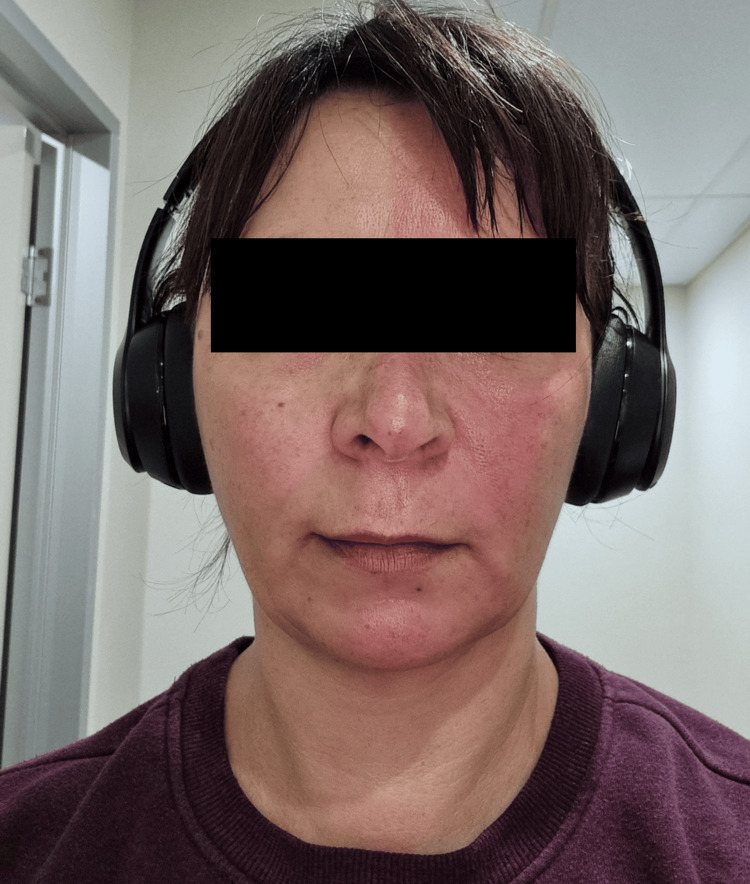 Figure 1
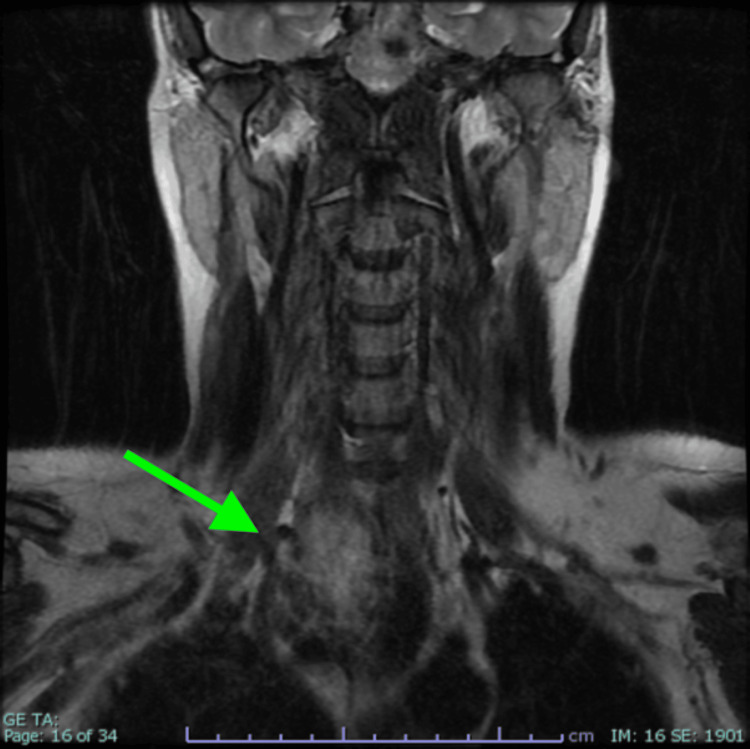 Figure 2
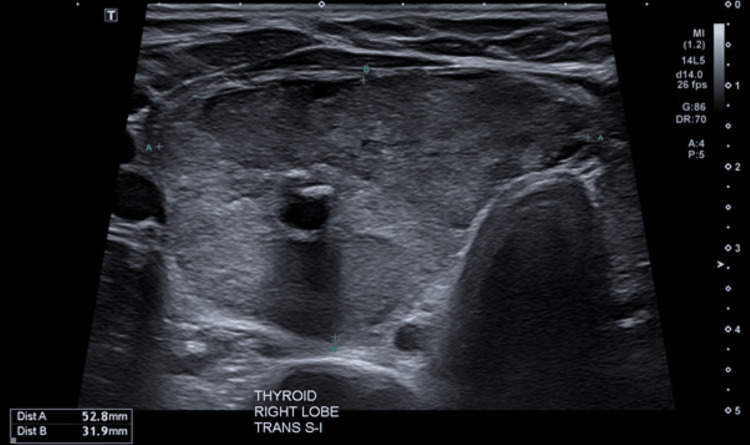 Figure 3
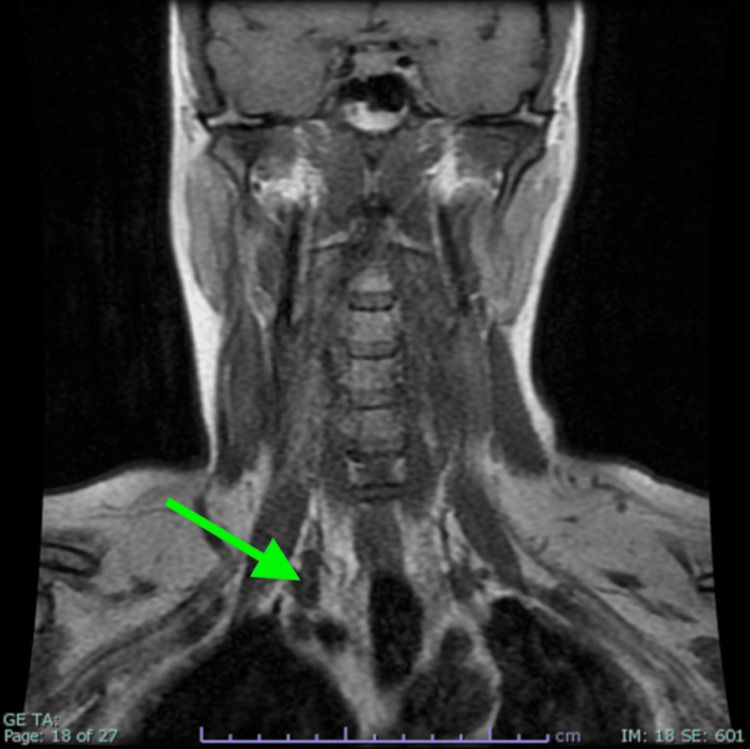 Figure 4
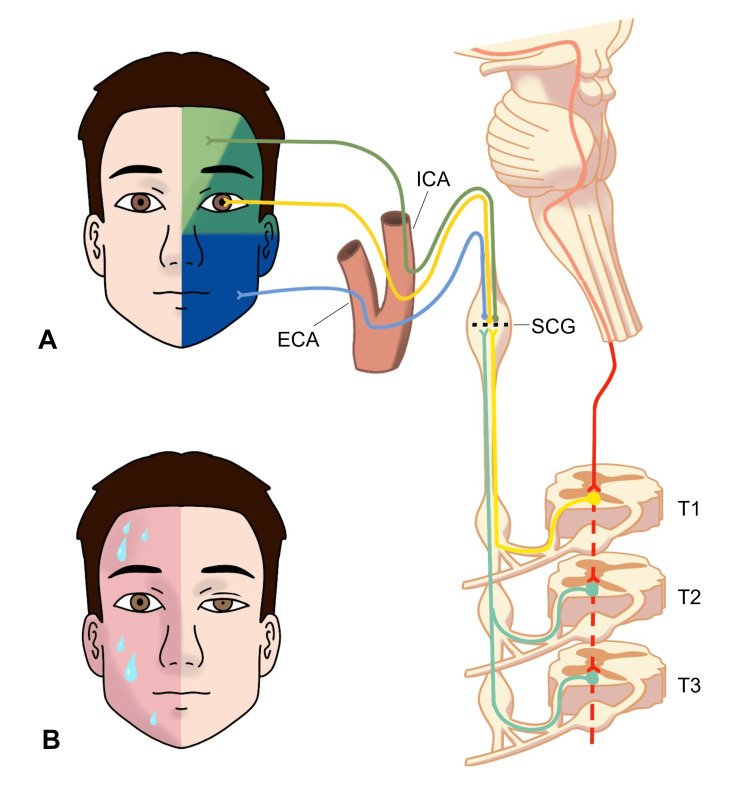 Figure 5
Peer Reviews
No public reviews on file for this paper yet. If you reviewed it on a platform where reviews are public (OpenReview, ICLR, NeurIPS, ICML), you can paste yours below so the community can read it here.
Videos
No videos yet. Explain this paper in a talk, walkthrough, or lecture? Add one.
Taxonomy
TopicsSympathectomy and Hyperhidrosis Treatments · Migraine and Headache Studies · Ophthalmology and Eye Disorders