Exceptional response to brigatinib following alectinib failure in a patient with ALK fusion-positive duodenal carcinoma
Akinori Sasaki, Sayaka Chihara, Risa Okamoto, Takayuki Yoshino, Yoshiaki Nakamura

TL;DR
A patient with ALK fusion-positive duodenal carcinoma showed a strong response to brigatinib after alectinib failed, highlighting the potential of ctDNA sequencing to guide treatment.
Contribution
This is the first report showing brigatinib's efficacy after alectinib failure in ALK fusion-positive duodenal carcinoma.
Findings
Brigatinib led to marked shrinkage of liver metastases after alectinib failure in a patient with ALK fusion-positive duodenal carcinoma.
Circulating tumor DNA sequencing detected the ALK L1196M mutation, which was sensitive to brigatinib.
The patient remained on brigatinib for 7 months before tumor progression.
Abstract
Patients with advanced duodenal carcinoma typically have a poor prognosis due to limited practical chemotherapy options. While studies on genotype-directed therapy in patients with duodenal carcinoma is progressing, clinical data assessing the efficacy of molecularly targeted therapy remains scarce. We report the case of a 65-year-old woman diagnosed with anaplastic lymphocyte kinase (ALK) fusion-positive advanced duodenal carcinoma. The patient had been treated with alectinib for approximately 2 years for ALK-positive duodenal carcinoma but developed progressive liver metastases, indicating alectinib failure. During the disease progression, circulating tumor DNA (ctDNA) sequencing revealed the emergence of ALK L1196M mutation, which demonstrated sensitivity to brigatinib. After switching to brigatinib, marked shrinkage of liver metastases was observed. The patient maintained brigatinib…
Genes, proteins, chemicals, diseases, species, mutations and cell lines named across the full text — each resolved to its canonical identifier and authoritative record.
Click any figure to enlarge with its caption.
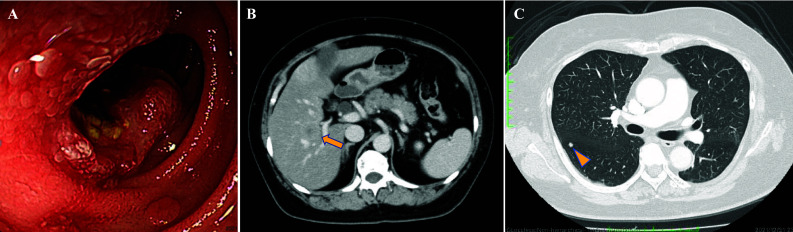 Figure 1
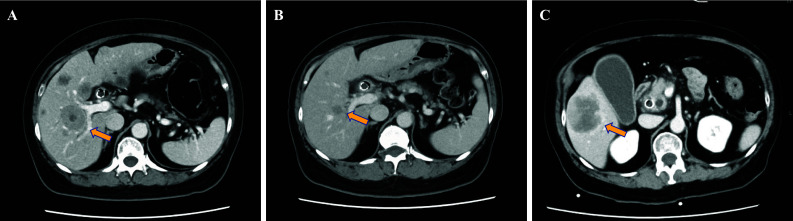 Figure 2
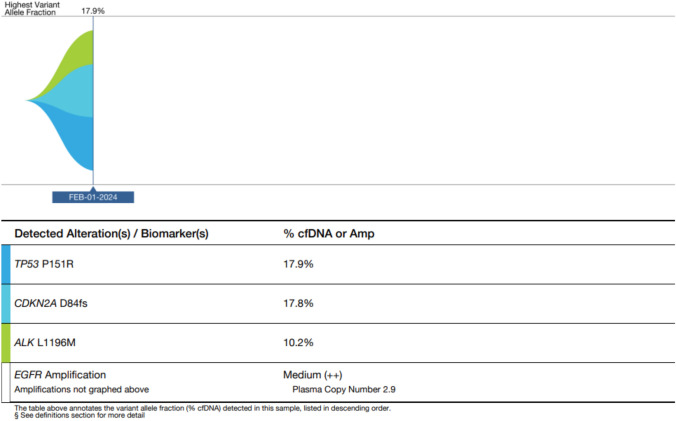 Figure 3
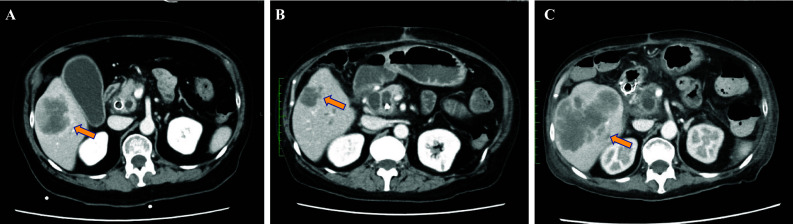 Figure 4
Peer Reviews
No public reviews on file for this paper yet. If you reviewed it on a platform where reviews are public (OpenReview, ICLR, NeurIPS, ICML), you can paste yours below so the community can read it here.
Videos
No videos yet. Explain this paper in a talk, walkthrough, or lecture? Add one.
Taxonomy
TopicsPancreatic and Hepatic Oncology Research · Lung Cancer Treatments and Mutations · Gastric Cancer Management and Outcomes