Novel self-expandable metal stent with dumbbell-shape and spiral cover to prevent stent-related cholecystitis
Haruo Miwa, Yugo Ishino, Shotaro Tsunoda, Ritsuko Oishi, Kazuki Endo, Yuichi Suzuki, Shin Maeda

Abstract
Genes, proteins, chemicals, diseases, species, mutations and cell lines named across the full text — each resolved to its canonical identifier and authoritative record.
Click any figure to enlarge with its caption.
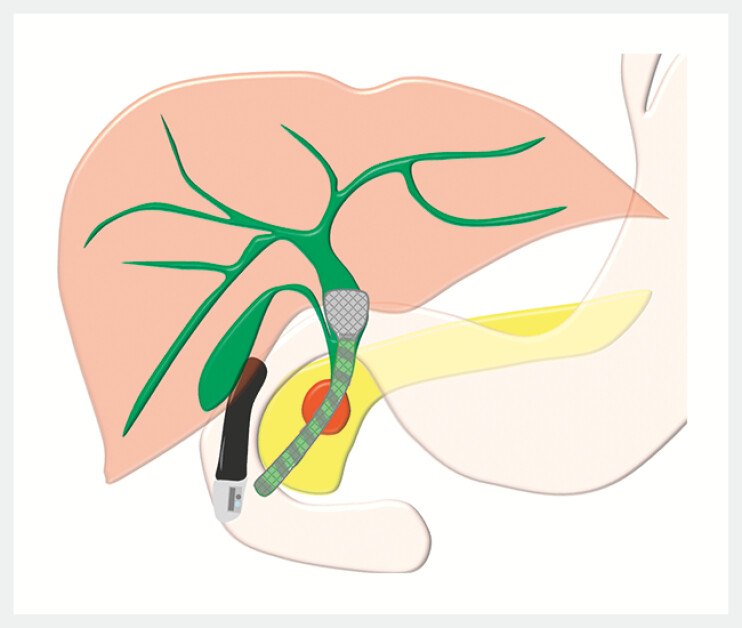 Fig. 1
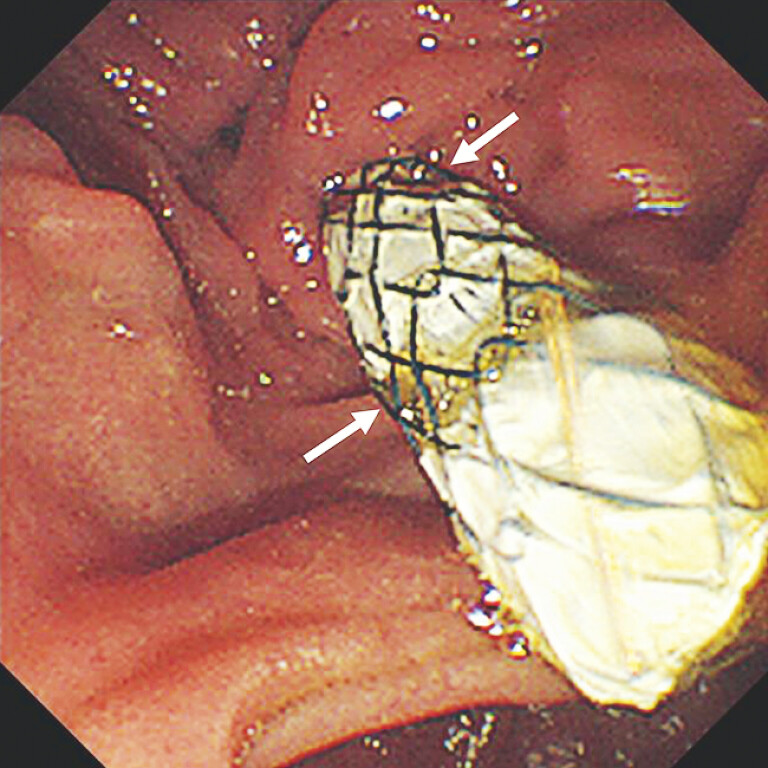 Fig. 2
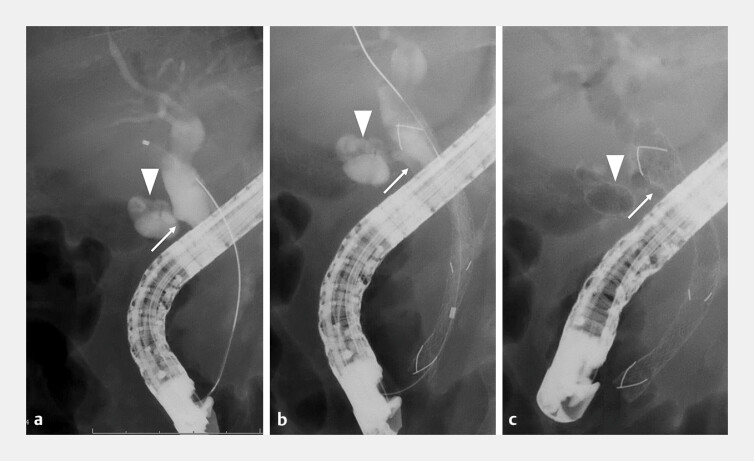 Fig. 3
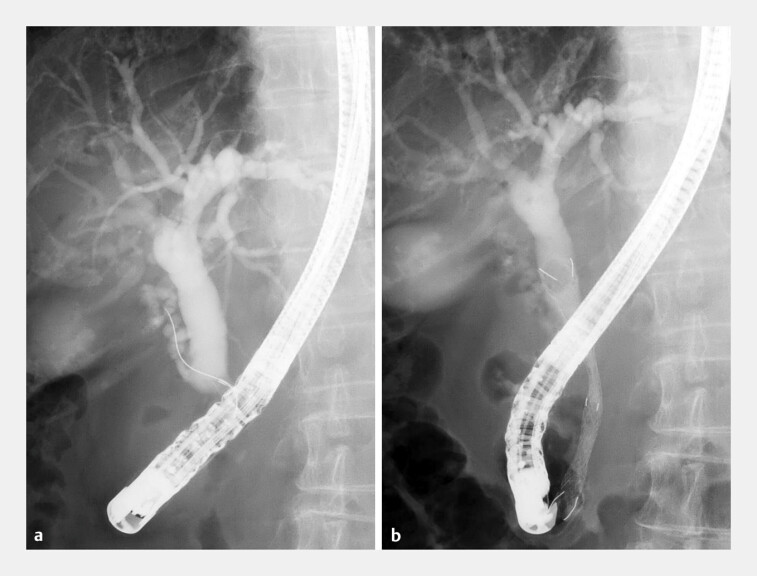 Fig. 4
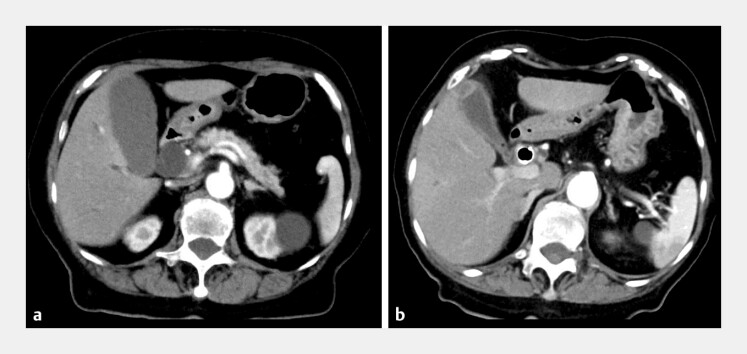 Fig. 5
Peer Reviews
No public reviews on file for this paper yet. If you reviewed it on a platform where reviews are public (OpenReview, ICLR, NeurIPS, ICML), you can paste yours below so the community can read it here.
Videos
No videos yet. Explain this paper in a talk, walkthrough, or lecture? Add one.
Taxonomy
TopicsGallbladder and Bile Duct Disorders · Pediatric Hepatobiliary Diseases and Treatments · Cholangiocarcinoma and Gallbladder Cancer Studies
Covered self-expandable metal stents (cSEMS) are commonly used to treat malignant distal biliary obstruction (MDBO) 1 ; however, they can lead to cholecystitis 2 3 . A novel stent – the HILZO dumbbell-shaped stent with spiral cover (ABIS Inc., Hyogo, Japan) was designed to prevent stent-related cholecystitis 4 . The dumbbell-shaped proximal end creates space around the orifice of the cystic duct (OCD), while the spiral outer cover facilitates bile flow ( Fig. 1 , Fig. 2 ). Herein, we report two cases of MDBO in which the novel cSEMS was placed beyond the OCD ( Video 1 ).
A novel HILZO dumbbell-shaped stent with spiral cover (ABIS Inc., Hyogo, Japan) is designed to prevent stent-related cholecystitis.
The spiral outer cover allows bile to flow out through the gaps (arrows).
The novel HILZO dumbbell-shaped stent with spiral cover (ABIS Inc., Hyogo, Japan) can prevent stent-related cholecystitis in patients with malignant distal biliary obstruction.Video 1
Case 1: A 62-year-old woman with MDBO secondary to pancreatic cancer was referred to our hospital. Endoscopic retrograde cholangiopancreatography was performed due to recurrent biliary obstruction after initial cSEMS placement. Cholangiography revealed the OCD above the biliary stricture. The novel cSEMS (8 mm, 7 cm) was deployed to cover the OCD with the covered part of the stent. Although contrast medium pooled in the cystic duct during the procedure, it flowed out and was replaced by air immediately after cSEMS placement ( Fig. 3 ). The patient was discharged without complications.
Case 1. a Cholangiography revealed the orifice of the cystic duct (arrows) above the stricture. b The novel HILZO stent (ABIS Inc., Hyogo, Japan) was deployed from the common hepatic duct to the duodenum. c Contrast agent that had pooled in the cystic duct flowed out after stent placement.
Case 2: An 80-year-old woman with MDBO due to pancreatic cancer was admitted to our hospital. Cholangiography revealed the OCD at the proximal end of the biliary stricture. Initially, transpapillary gallbladder drainage was attempted to prevent stent-related cholecystitis; however, a guidewire could not be advanced into the gallbladder due to the highly angulated cystic duct. Therefore, the novel cSEMS (8 mm, 7 cm) was placed beyond the OCD. Stent deployment was successfully performed from the common hepatic duct to the duodenum ( Fig. 4 ). The patient was discharged without any complications, and follow-up computed tomography showed a collapsed gallbladder compared with before cSEMS placement ( Fig. 5 ).
Case 2. a Cholangiography revealed the orifice of the cystic duct at the proximal end of the biliary stricture. b The novel HILZO stent (ABIS Inc., Hyogo, Japan) was successfully placed.
Case 2: Computed tomography showed the gallbladder collapse compared with before placement of the novel HILZO stent (ABIS Inc., Hyogo, Japan). a Before stent placement. b After stent placement.
To the best of our knowledge, this is the first report of a novel HILZO stent used to prevent stent-related cholecystitis in patients with MDBO.
Endoscopy_UCTN_Code_TTT_1AR_2AZ
The reference list from the paper itself. Each links out to its DOI / PubMed record.
- 1Zorrón Pu Lde Moura EGH Bernardo WM Endoscopic stenting for inoperable malignant biliary obstruction: a systematic review and meta-analysis World J Gastroenterol 201521133741338526715823 10.3748/wjg.v 21.i 47.13374 PMC 4679772 · doi ↗ · pubmed ↗
- 2Suk KT Kim HS Kim JW Risk factors for cholecystitis after metal stent placement in malignant biliary obstruction Gastrointest Endosc 20066452252910.3390/jcm 1213435416996343 · doi ↗ · pubmed ↗
- 3Matsumi A Kato H Ogawa T Risk factors and treatment strategies for cholecystitis after metallic stent placement for malignant biliary obstruction: a multicenter retrospective study Gastrointest Endosc 2024100768410.1016/j.gie.2024.02.01938490459 · doi ↗ · pubmed ↗
- 4Miwa H Ishino Y Tsunoda S Novel self-expandable metallic stent with dumbbell-shape and spiral outer cover for malignant distal biliary obstruction Endoscopy 202456 E 849E 85039379055 10.1055/a-2420-7965 PMC 11461090 · doi ↗ · pubmed ↗