Camchaya khongchiamensis Chatan & Promprom (Asteraceae: Vernonieae), a New Species From Thailand
Wilawan Promprom, Phukphon Munglue, Wannachai Chatan

TL;DR
A new plant species, Camchaya khongchiamensis, was discovered in Thailand and compared to a similar species.
Contribution
The discovery and detailed description of a new plant species from Thailand with morphological and conservation data.
Findings
Camchaya khongchiamensis differs from C. loloana in capitula size, corolla lobe, and floret count.
The new species has distinct anther and style features compared to its closest relative.
A conservation assessment under IUCN criteria was conducted for the new species.
Abstract
Camchaya khongchiamensis Chatan & Promprom (Asteraceae), a new species from Ubon Ratchathani Province, Thailand, is described and illustrated. It is similar to C. loloana, but clearly different from C. loloana by having a larger size of capitula, involucre, receptacle, and corolla lobe. In addition, it mostly has fewer florets (18–40 [−50]) per capitulum; lower haft whitish, upper haft purplish corolla tubes; sagittate base anthers; and white except for the purple near apex style. A distribution map, pollen morphology, and a table with comparative morphological characters of the new species and its closest relative are provided, as well as the preliminary conservation assessment under the IUCN criteria. Camchaya khongchiamensis Chatan & Promprom (Asteraceae), a new species from Ubon Ratchathani Province, Thailand. A distribution map, pollen morphology, and a table with comparative…
Genes, proteins, chemicals, diseases, species, mutations and cell lines named across the full text — each resolved to its canonical identifier and authoritative record.
Click any figure to enlarge with its caption.
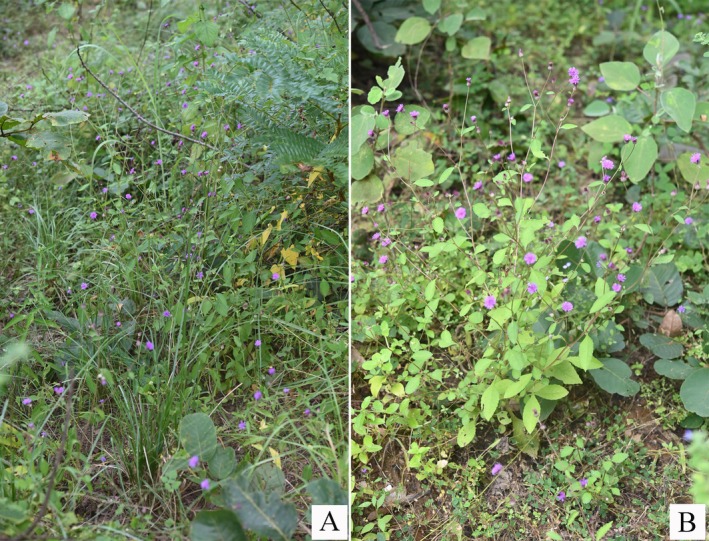 FIGURE 1
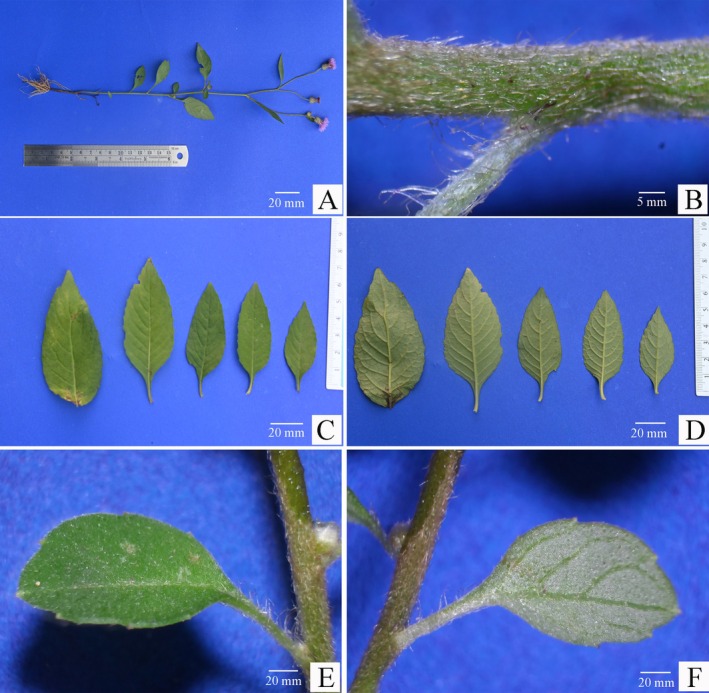 FIGURE 2
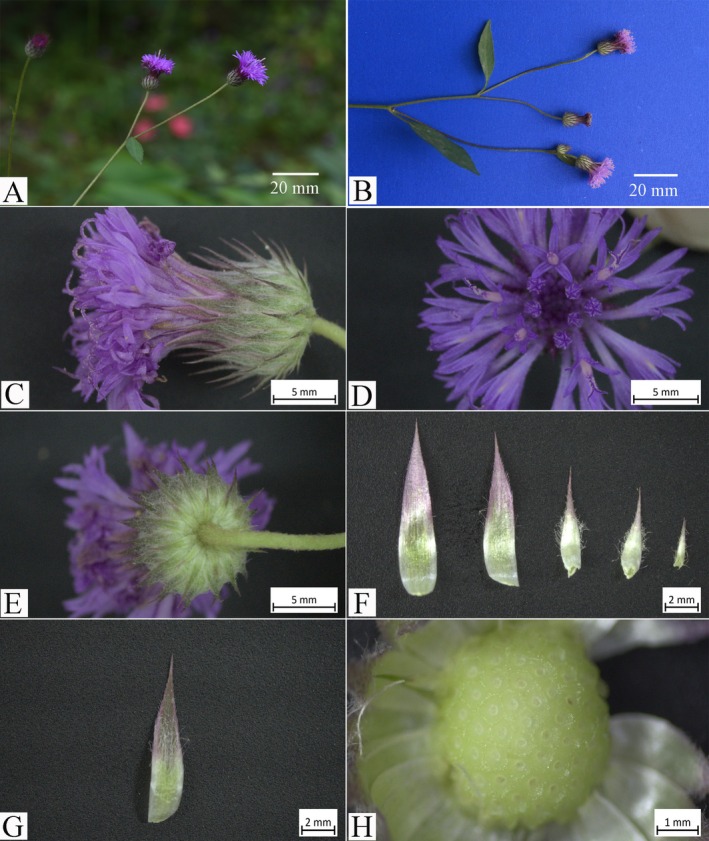 FIGURE 3
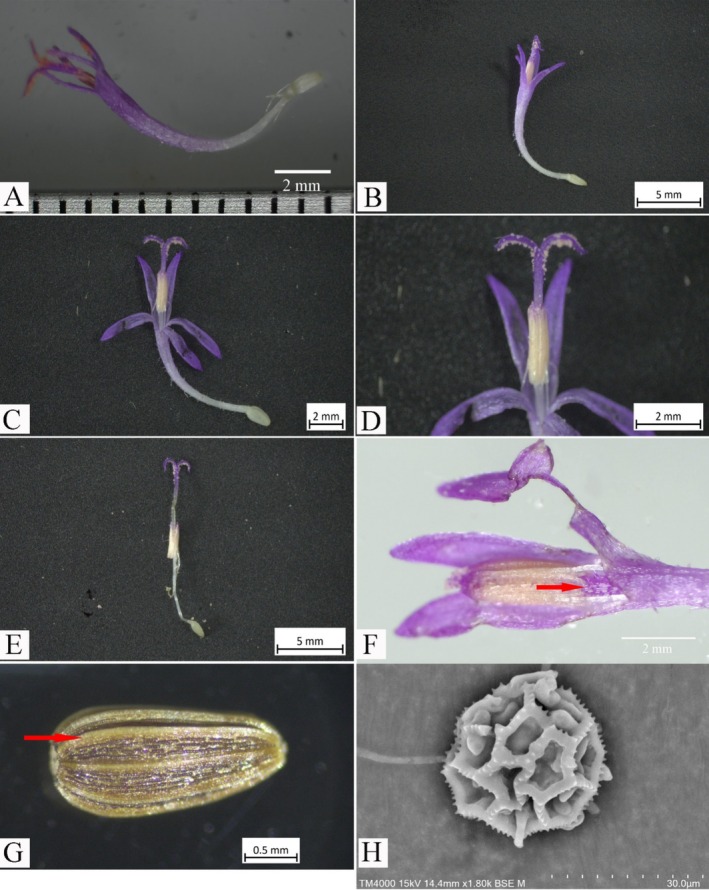 FIGURE 4
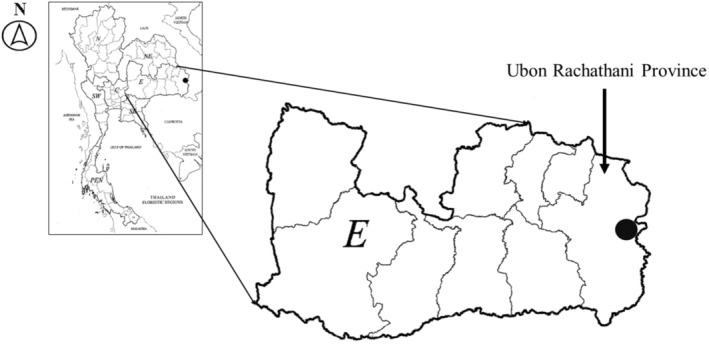 FIGURE 5
| Characters |
|
|
|---|---|---|
| 1. Blade leaf apex | Acute or obtuse | Acute or acuminate |
| 2. Blade margin | Serrate or subentire | Serrate or undulate |
| 3. Capitulescences | Solitary or grouped in panicle | Grouped in panicle |
| 4. Capitula | 15–21 mm long in anthesis | 9–10 mm long in anthesis |
| 5. Involucres | 12–14 mm long | 7–10 mm long |
| 6. Phyllaries | 7–10 seriate, lanceolate or linear‐oblong; apex upward to a capitular apex; marginalspines 0.1–0.3 mm long | 5–8‐seriate, lanceolate or oblong or linear‐oblong; apex downward or slightly spread out; marginalspines up to 1 mm long |
| 7. Receptacles | 4.2–4.5 mm diam. | 2–4 mm diam. |
| 8. Florets | 18–40 (−50) per capitulum | 30–100 per capitulum |
| 9. Corollas tubes | 6.8–8 mm long, lower haft whitish, upper haft purplish | Ca. 5.5–9.5 mm long, purple or rarely white |
| 10. Corolla lobes | 4–5 mm long | 1.5–3 mm long |
| 11. Anther base | Sagittate | Rounded |
| 12. Styles | White, except for the purple near the apex and branches | Whole part purple, except for a short white section at the base. |
| 13. Cypselae | 1.6–2.4 mm long | 1.3–5 mm long |
| 14. Pappus | 1.5–1.8 mm long | 1.5–3 mm long |
- —Mahasarakham University 10.13039/501100007288
Peer Reviews
No public reviews on file for this paper yet. If you reviewed it on a platform where reviews are public (OpenReview, ICLR, NeurIPS, ICML), you can paste yours below so the community can read it here.
Videos
No videos yet. Explain this paper in a talk, walkthrough, or lecture? Add one.
Taxonomy
TopicsSesquiterpenes and Asteraceae Studies · Ethnobotanical and Medicinal Plants Studies · Phytochemistry and Biological Activities
Introduction
1
The genus Camchaya Gagnep. (Asteraceae) was established in 1920 (Gagnepain 1920) and currently consists of 10 species (Noyori et al. 2022; POWO 2024). It is a member of the subtribe Centrapalinae, which belongs to the tribe Vernonieae (Susanna et al. 2020). Its characteristics are defined by its leafy stems, involucres with phyllaries that are not reflexed, a lack of a carpopodium in cypsela, a pappus arranged in a single series (which can be deciduous or sometimes absent), and pollen with six apertures.
As Camchaya is a member of the Asteraceae family, which is known for its use in treating various ailments such as inflammation, ulcers, and gastrointestinal disorders, it is also rich in bioactive compounds such as flavonoids, phenolic acids, and terpenoids. These compounds contribute to its medicinal properties. Additionally, specific phytochemicals like inulin, known for its prebiotic effects, are commonly found in this family, enhancing their nutritional and therapeutic potential (Sharma et al. 2022). However, studies specifically focusing on Camchaya remain limited, and further scientific research is needed. The genus is closely related to Koyamasia Robinson (Robinson 1999), but can be differentiated by its not reflexed phyllaries, obovate cypselae, and hexaporate pollen, as opposed to Koyamasia's reflexed phyllaries, oblong cypselae and three‐apertured pollen (Bunwong et al. 2014). Camchaya species are primarily found in Southeast Asia, extending into China, and often grow on forest floors or rocky areas in Indochina's dipterocarp forests (Bunwong et al. 2014). In Thailand, there are seven species including a new species, Camchaya thailandica Bunwong, Chantar. & S.C.Keeley, which was reported in 2012 (Bunwong et al. 2012, 2014; Koyama et al. 2016).
In the past 10 years, the authors have conducted taxonomic work in Eastern and Northeastern Thailand and discovered many new plant taxa in these regions (Chatan and Promprom 2017, 2018a, 2018b; Promprom and Chatan 2018, 2020, 2021, 2022; Promprom et al. 2023, 2024a, 2024b). However, the authors have never conducted research in Khongchiam district in Ubon Ratchathani Province, Thailand. Khongchiam is located near the border of Thailand and Laos (Lao PDR). It is a relatively unexplored region in eastern Thailand, known for its remarkable diversity of plant species, particularly those in the Asteraceae family. Khong Chiam District boasts a distinctive ecological landscape, comprising both dry evergreen and deciduous dipterocarp forests. The biodiversity of this area is further enhanced by the presence of two significant rivers, the Mekong and the Moon, which flow through the district. During the field works conducted in Khongchiam district from 2023 to 2024, the authors found a previously unidentified species within the Asteraceae. Using herbarium specimens and taxonomic studies, the investigation of key morphological characters—such as the capitula, receptacle, corolla, anther, and style—revealed unique traits that set this species apart from previously known Camchaya species. As a result, the species was formally described and named C. khongchiamensis Chatan & Promprom. Along with its scientific description, a vernacular name, ecological details, and a preliminary conservation assessment were also provided.
Materials and Methods
2
Digital images of herbarium specimens from BK, BKF, K, L, P, and US herbaria on JSTOR Global Plants (https://plants.jstor.org/) and the herbaria's websites were obtained and analyzed. A critical examination of these plants was conducted through comparisons with relevant taxonomic literature, including Gagnepain (1920), Kerr (1935), Koyama (1984), Robinson (1999), and Bunwong et al. (2009, 2012, 2014), as well as Koyama et al. (2016). The morphological description is based on both herbarium specimens and field observations, with terminology adhering to these sources. Additionally, the morphological terminology follows Harris and Harris (1994). Floral dissections and measurements were performed under a stereo microscope using a micrometer or ruler, and measurements were taken from herbarium specimens collected by the authors during fieldwork. The new species shows morphological similarities to C. loloana Dunn ex Kerr, including var. loloana, var. mukdahanensis H. Koyama, and var. pseudotenuiflora H. Koyama (POWO 2024). Consequently, type specimens and protologues of these taxa (Kerr 1935; Koyama 1984) were consulted during the investigation.
The pollen of C. khongchiamensis Chatan & Promprom sp. nov. was studied and examined by using the method from Erdtman (1972). The pollen samples were dehydrated through a series of ethanol solutions at concentrations of 70%, 80%, 95%, and 100%, with each step taking 5 min. After that, they were left to air‐dry overnight at room temperature. The dried pollen was then mounted onto aluminum panels, which were attached to stubs using carbon tape. We studied the pollen grains with a scanning electron microscope (SEM) (Hitachi, TM‐4000plus, Hitachi High‐Tech, Tokyo, Japan) at the Laboratory Equipment Center in Mahasarakham University's Division of Research Facilitation and Dissemination and took photomicrographs for further analysis.
The conservation status was assessed following the Guidelines for Using the IUCN Red List Categories and Criteria, Version 16 (IUCN Standards and Petitions Committee 2024). This evaluation aligns with global standards and provides a reliable framework for classifying the species' conservation requirements.
Taxonomic Treatment
3
Camchaya khongchiamensis
Chatan & Promprom Sp. Nov
3.1
Camchaya khongchiamensis Chatan & Promprom: (A) Habitat; (B) Habit.
Camchaya khongchiamensis Chatan & Promprom. (A) Whole plant; (B) Stem and parts of petiole; (C) Leaves (upper leaf surface); (D) Leaves (under side); (E, F) Upper and lower leaf surfaces, respectively.
Camchaya khongchiamensis Chatan & Promprom. (A, B) Capitulescences and capitula; (C–E) capitula in lateral, top, and bottom views, respectively; (F) upper side of phyllaries (from left to right: Inner ones to outer ones); (G) under side of phyllary (inner one); (H) receptacle.
Camchaya khongchiamensis Chatan & Promprom. (A, B) Florets; (C, D) florets (the open top of the corolla showing the upper parts of the stamen and pistil); (E) floret (corolla removed); (F) anthers (the sagittate base indicated by arrowhead); (G) cypsela (rib indicated by arrowhead); (H) pollen.
Distribution of Camchaya khongchiamensis Chatan & Promprom (black circle) in Khong Chiam District, Ubon Ratchathani Province, Thailand.
Type
3.2
Thailand, Khong Chiam District, Ubon Ratchathani Province, alt. 105–110 m, 15°18′39.1″ N 105°30′09.2″ E, November 10, 2023, W.Chatan 2888 (holotype: K!; isotype: BK!).
Diagnosis
3.3
Camchaya khongchiamensis is morphologically similar to C. loloana in the presence of glandular hairs and ≤ 1 mm long marginal spines on phyllaries and 10‐ribbed cypselae, but differs from the latter by its larger size of capitula (15–21 mm vs. 9–10 mm long in anthesis), involucres (12–14 mm long vs. 7–10 mm long), receptacles (4.2–4.5 mm vs. 2–4 mm diam.), corolla lobes (4–5 vs. 1.5–3 mm). In addition, C. khongchiamensis has 18–40 (−50) florets per capitulum; lower haft whitish, upper haft purplish corolla tubes; sagittate base anthers; and white except for the purple near apex style, while C. loloana has 30–100 florets per capitulum; purple or rarely white corolla tubes; rounded base anthers; and the purple styles except for a short white part of thebase.
Description
3.4
Annual herbs, up to 70 cm tall. Stem erect in the middle and upper part, terete, inconspicuously ribbed, 1–5 mm in diam.; surface densely covered with T‐shape hairs, glandular hairs, and filiform hairs. Leaves alternate; petiole 0.4–1 cm long; blades ovate, occasionally lanceolate, 3–8 × 2–4 cm, apex acute or obtuse, base attenuate, margin subentire or serrate with approximately 1–2 mm long teeth on each side, chartaceous, green adaxially, pale greenish gray abaxially; both surfaces sparse short filiform hairs, whip‐shaped hairs, and glands, few with T‐shape hairs present; midrib, lateral veins, and other veins slightly prominent on the adaxial side and more visible on the abaxial side. Capitulescences terminal and axillary, solitary or in panicles. Capitula 15–21 mm long in anthesis. Peduncles up to 20 cm long. Involucres campanulate, 12–14 × 10–12 mm. Phyllaries 7–10 seriate, imbricate; each linear or oblong, 0.27–2.3 × 3–10.5 mm, apex upward to a capitular apex, dull gray‐green with pale purple apices, margins with spines to 0.1–0.3 mm long, glabrous adaxially, hairy with T‐shape and glandular abaxially, margins with up to 0.5 mm long spines, apex aristate, all phyllaries lanceolate, 3.0–10.5 × 0.5–2.2 mm; Receptacle convex, 4–4.5 mm diam., glabrous. Florets 18–40 (−50) per capitulum; corollas tubular‐infundibular, sparsely glandular hairy; tubes 6.8–8 mm long, lower haft whitish, upper haft purplish; lobes 5, narrowly oblong, 4–5 × 0.6–0.8 mm, apex acute. Stamens 5, anthers lanceolate, 1.8–2 mm long, apex acute, base sagittate, apical appendage triangular, ca. 0.3–0.4 mm long, apex acute; filaments ca. 5–6 mm long, white, glabrous, connate to the corolla near the corolla mouth, free part 1–1.2 mm long. Ovary obovoid, 0.8–1.3 × 0.5–0.8 mm; styles linear, 8–9 mm long, white except for the purple near the apex, sparsely white hairs near the apex; stigmas 2‐branched, branches 1–1.3 mm long, sparsely purplish hairs. Cypselae obovoid, 1.6–2.4 mm long, ca. 1 mm diam., 10‐ribbed, without carpopodium. Pappus bristles, 1.5–1.8 mm long, white, thin and filiform, caducous, with minute white spine, or absent. Pollen spheroidal, echinolophate, 6‐porate, without micropuncta, 25.5–32.7 μm diam.
Phenology
3.5
Flowering October to November, fruiting November to December.
Etymology
3.6
The specific epithet “khongchiamensis” refers to the type locality, Khong Chiam District.
Distribution
3.7
Thailand (Khong Chiam District, Ubon Ratchathani Province, the Eastern Thailand) (Figure 5).
Habitat and Ecology
3.8
The new species grows on both dry and slightly wet soil over exposed areas in dry‐dipterocarp forest.
Vernacular Name
3.9
Phu Muang Ngam.
Preliminary Conservation Status
3.10
The new species has so far been identified only in its type locality. The plant is estimated to number fewer than 2500 mature individuals and mature individuals in each subpopulation fewer than 250. Therefore, it should be considered as “Endangers (EN)” according to IUCN criteria C(C2ai) (IUCN Standards and Petitions Committee 2024).
Additional Specimens Examined (Paratypes)
3.11
Thailand: Ubon Ratchathani Province, Khong Chiam District: 15°18′39.1″ N 105°30′09.3″ E, November 11, 2023 (W.Chatan 2889: BK); 15°18′39.1″ N 105°30′09.3″ E, November 11, 2023 (W.Chatan 3890: BK); 15°18′40.6″ N 105°30′03.8″ E, November 11, 2024 (W.Chatan 3891: BK); 15°18′29.8″ N 105°29′38.7″ E, October 5, 2024 (W.Chatan 3892: BK); 15°18′25.0″ N 105°29′35.8″ E, October 5, 2024 (W.Chatan 3893: BK); 15°18′25.5″ N 105°29′37.1″ E, October 5, 2024 (W.Chatan 3894: BK); 15°18′29.1″ N 105°29′44.8″ E, October 6, 2024 (W.Chatan 3895: BK); 15°17′31.7″ N 105°29′21.9″ E, October 6, 2024 (W.Chatan 3896: BK).
Notes
3.12
Camchaya khongchiamensis Chatan & Promprom is different from C. loloana (including three varieties, i.e., var. loloana, var. mukdahanensis H.Koyama, and var. pseudotenuiflora H.Koyama), another species of the genus distributed in Cambodia, China South‐Central, Laos, Thailand, and Vietnam (Koyama 1984; POWO 2024). The details of the morphological differences between the two plant species are significant and can be categorized into various characteristics (Table 1).
Camchaya khongchiamensis has capitula that are either solitary or part of a paniculate structure (up to 10 capitulae), measuring 15–21 mm in length during anthesis. In contrast, C. loloana consistently exhibits paniculate capitulescences, with capitula measuring 9–10 mm in length during anthesis. However, the number of capitula in a panicle can reach up to 10, as observed in C. khongchiamensis.
The involucres of the new species are longer (12–14 mm) in length, whereas those of C. loloana range from 7 to 10 mm. Phyllaries in the new species are arranged in 7–10 series and feature shorter marginal spiny elements measuring 0.1–0.3 mm. In contrast, C. loloana has phyllaries arranged in 5–8 series with spiny elements up to 1 mm long. The receptacle diameter of the new species is generally larger (4.2–4.5 mm) compared to 2–4 mm in C. loloana. The new species has 18–40 (rarely up to 50) florets per capitulum, while C. loloana has 30–100 florets per capitulum.
The corolla tubes of the new species measure 6.8–8.0 mm in length, with a whitish lower portion and a purplish upper portion. In contrast, C. loloana has corolla tubes approximately 5.5–9.5 mm long, which are predominantly purple but may occasionally be white. The corolla lobes in the new species are 4–5 mm long compared to 1.5–3 mm in C. loloana. Anthers in the new species are 1.8–2 mm long with a sagittate base, while those in C. loloana range from 1.5 to 2.5 mm long with a rounded base. Styles in the new species are 8–9 mm long and predominantly white except for a purple near the apex. In C. loloana, styles range from 5 to 11 mm and are purple. The cypselae of the new species measure 1.6–2.4 mm, whereas those of C. loloana are 1.3–5 mm long. The pappus of the new species has pappus lengths of 1.5–1.8 mm and C. loloana ranges from 1.5 to 3 mm.
These detailed morphological differences highlight the distinct characteristics that differentiate C. khongchiamensis from C. loloana, contributing to a clearer understanding of these distinct species. The key to the species of Camchaya in Thailand, modified from Koyama et al. (2016), is presented as follows.
Key to the Species of Camchaya in Thailand
3.13
1Phyllary margin without spines2—Phyllary margin spinose32Cypselae 4–5‐ribbed
C. gracilis
—Cypselae 10‐ribbed
C. thailandica
3Cypselae 5 − (6–9)‐ribbed
C. pentagona
—Cypselae 10‐ribbed44Phyllaries eglandular, marginal spines to 10 mm
C. spinulifera
—Phyllaries with glands, marginal spines to 5 mm55Phyllaries acuminate; cypselae 2.5–3 mm long C. kampotensis 5Phyllaries aristate or apiculate; achenes 1.5–2 mm long66Leaves without T‐shaped hairs; phyllaries spinose ≥ 1 mm long
C. tenuiflora
—Leaves with T‐shaped hairs; phyllaries spinose ≤ 1 mm long77Corolla lobes 1.5–3 mm long, anther base rounded C. loloana —Corolla lobes 4–5 mm long, anther base sagittate C. khongchiamensis
Author Contributions
Wilawan Promprom: data curation (equal), formal analysis (equal), funding acquisition (equal), investigation (equal), methodology (equal), project administration (equal), resources (equal), validation (equal), writing – original draft (equal), writing – review and editing (equal). Phukphon Munglue: data curation (equal), formal analysis (equal), investigation (equal), methodology (equal), resources (equal), validation (equal), visualization (equal), writing – original draft (equal). Wannachai Chatan: conceptualization (lead), data curation (equal), formal analysis (equal), funding acquisition (equal), investigation (equal), methodology (equal), project administration (equal), resources (equal), supervision (equal), visualization (equal), writing – original draft (equal), writing – review and editing (equal).
Conflicts of Interest
The authors declare no conflicts of interest.
The reference list from the paper itself. Each links out to its DOI / PubMed record.
- 1Bunwong, S. , P. Chantaranothai , and S. C. Keeley . 2012. “A New Species of Camchaya (Asteraceae, Vernonieae) From Thailand.” Phyto Keys 12: 53–57. 10.3897/phytokeys.12.3221.PMC 334905622645414 · doi ↗ · pubmed ↗
- 2Bunwong, S. , P. Chantaranothai , and S. C. Keeley . 2014. “Revisions and Key to the Vernonieae (Compositae) of Thailand.” Phyto Keys 37: 25–101. 10.3897/phytokeys.37.6499.PMC 402333324843297 · doi ↗ · pubmed ↗
- 3Bunwong, S. , H. Robinson , and P. Chantaranothai . 2009. “Taxonomic Notes on Camchaya and iodocephalus (Vernonieae: Asteraceae), and a New Genus iodocephalopsis .” Proceedings of the Biological Society of Washington 122, no. 3: 357–363. 10.2988/08-45.1. · doi ↗
- 4Chatan, W. , and W. Promprom . 2017. “New Subspecies of Ardisia crenata (Primulaceae) From Thailand.” Taiwania 62, no. 2: 116–120. 10.6165/tai.2017.62.116. · doi ↗
- 5Chatan, W. , and W. Promprom . 2018 a. “New Medicinal Plant Variety of Trichosanthes tricuspidata Lour. (Cucurbitaceae) From Northeastern Thailand.” Pharmacognosy Journal 10, no. 1: 29–32. 10.5530/pj.2018.1.6. · doi ↗
- 6Chatan, W. , and W. Promprom . 2018 b. “New Species of Bauhinia (Cercidoideae: Leguminosae) From Thailand.” Phytotaxa 385, no. 1: 43–47. 10.11646/phytotaxa.385.1.6. · doi ↗
- 7Erdtman, G. 1972. Pollen Morphology and Plant Taxonomy: Angiosperms (An Introduction to Palynology. I); Corrected Reprint of the Edition of 1952 With a New Addendum, 1–539. Hafner Publication Company.
- 8Gagnepain, F. 1920. “ Camchaya .” Notulae Systematicae 4: 14–15.