Shifting Outcomes: Superior Functional Recovery in Embolic Stroke of Undetermined Source Compared to Cardioembolic Stroke
Jessica Seetge, Balázs Cséke, Zsófia Nozomi Karádi, Edit Bosnyák, László Szapáry

TL;DR
This study found that patients with ESUS strokes recover better functionally than those with cardioembolic strokes, even after adjusting for baseline differences.
Contribution
The study provides new evidence on superior functional recovery in ESUS compared to cardioembolic stroke patients.
Findings
ESUS patients were younger, had fewer comorbidities, and milder strokes than cardioembolic stroke patients.
After adjusting for baseline differences, ESUS patients showed significantly greater functional recovery.
Age, pre-mRS score, and NIHSS score at 72 h post-stroke were the strongest predictors of recovery.
Abstract
Background/Objectives: An embolic stroke of undetermined source (ESUS) is a subtype of ischemic stroke characterized by a non-lacunar infarct in the absence of a clearly identifiable embolic source, despite comprehensive diagnostic evaluation. While ESUS patients are typically younger, have fewer cardiovascular comorbidities, and experience milder strokes than those with cardioembolic strokes (CEs), their functional recovery remains underexplored. Methods: We retrospectively analyzed data from 374 ischemic stroke patients (n = 94 ESUS, n = 280 CE) admitted to the Department of Neurology, University of Pécs, between February 2023 and September 2024. Functional recovery was assessed using the modified Rankin Scale (mRS). Propensity score matching (PSM) was performed to balance the baseline characteristics, and the mRS-shift was compared between groups. Independent predictors of mRS-shift…
Genes, proteins, chemicals, diseases, species, mutations and cell lines named across the full text — each resolved to its canonical identifier and authoritative record.
Click any figure to enlarge with its caption.
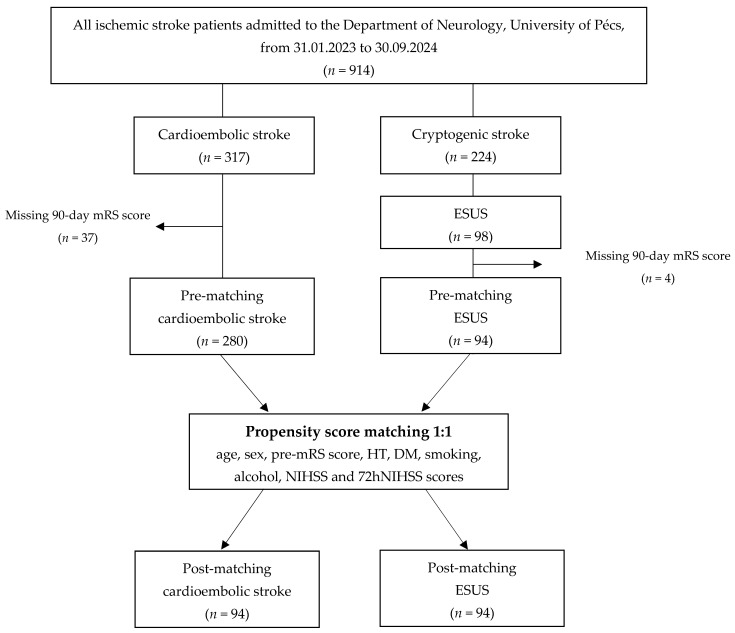 Figure 1
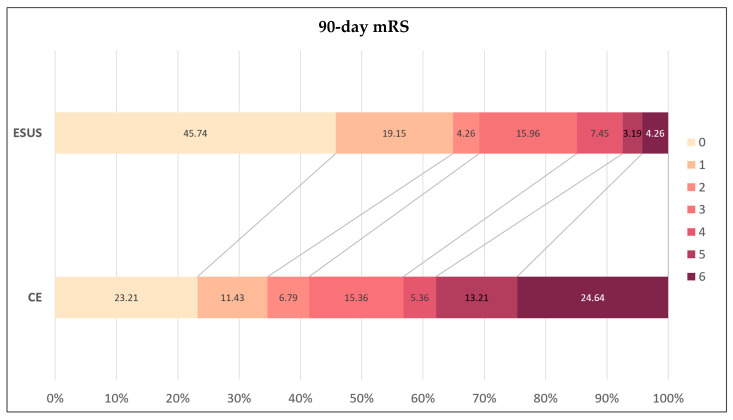 Figure 2
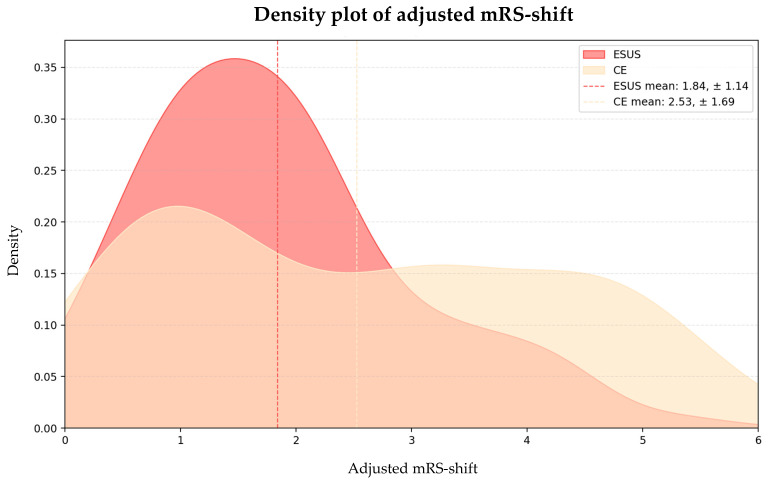 Figure 3
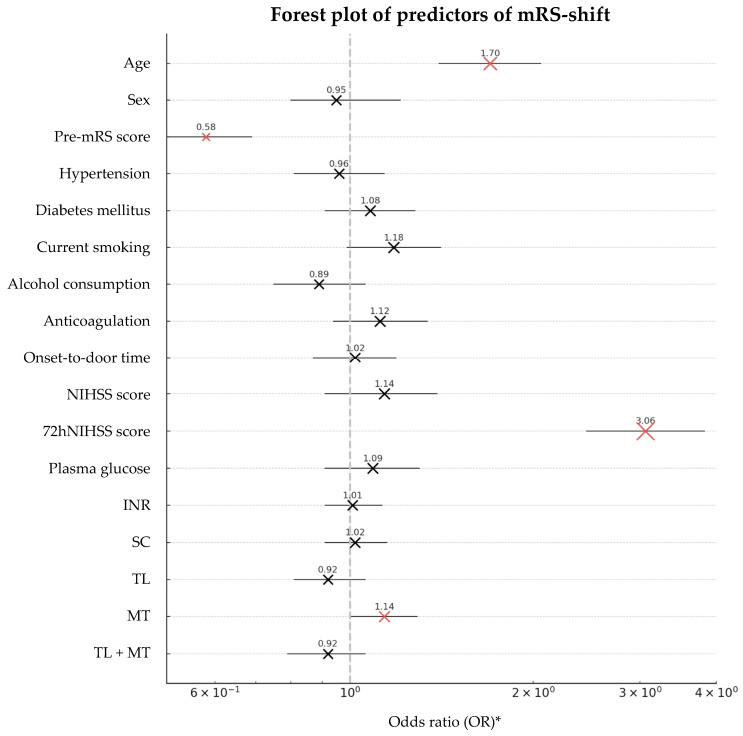 Figure 4
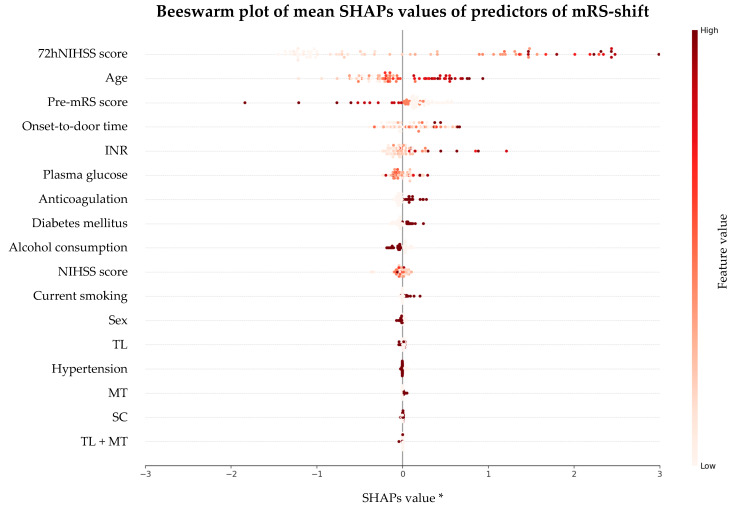 Figure 5
Peer Reviews
No public reviews on file for this paper yet. If you reviewed it on a platform where reviews are public (OpenReview, ICLR, NeurIPS, ICML), you can paste yours below so the community can read it here.
Videos
No videos yet. Explain this paper in a talk, walkthrough, or lecture? Add one.
Taxonomy
TopicsAcute Ischemic Stroke Management · Atrial Fibrillation Management and Outcomes · Cerebrovascular and Carotid Artery Diseases