Development of a Multi-Locus Real-Time PCR with a High-Resolution Melting Assay to Differentiate Wild-Type, Asian Recombinant, and Vaccine Strains of Lumpy Skin Disease Virus
Kultyarat Bhakha, Yuto Matsui, Natchaya Buakhao, Saruda Wanganurakkul, Taweewat Deemagarn, Mami Oba, Hitoshi Takemae, Tetsuya Mizutani, Naoaki Misawa, Lerdchai Chintapitaksakul, Kentaro Yamada, Nutthakarn Suwankitwat

TL;DR
Scientists developed a fast and affordable test to distinguish between wild, vaccine, and recombinant strains of a cattle virus causing economic losses.
Contribution
A novel multi-locus HRM assay was developed to differentiate LSDV strains in under 2 hours.
Findings
The HRM assay can distinguish wild-type, vaccine, and recombinant LSDV strains using three target genes.
The method successfully identified recombinant strains with wild-type and vaccine-type gene combinations.
The assay was validated using synthetic DNA and clinical samples.
Abstract
Lumpy skin disease (LSD) is a transboundary viral disease of cattle, the clinical signs of which are fever, anorexia, skin nodules, decreased milk production, infertility, and abortion, leading to severe economic losses. A live-attenuated vaccine is available to control this disease, but a strategy for the differentiation of infected from vaccinated animals (DIVA) is needed because of the side effects of the vaccine. Recently, a recombinant strain, which is a hybrid of the wild-type field and vaccine strains, has spread throughout Asian countries. Therefore, a rapid and low-cost method to differentiate field, vaccine, and recombinant strains is needed. We chose the high-resolution melting (HRM) assay, which is a post-PCR assay capable of discriminating gene variations without sequencing, and selected three genes (ORF095, ORF126, and ORF145) to establish the differentiation assay. In…
Genes, proteins, chemicals, diseases, species, mutations and cell lines named across the full text — each resolved to its canonical identifier and authoritative record.
Click any figure to enlarge with its caption.
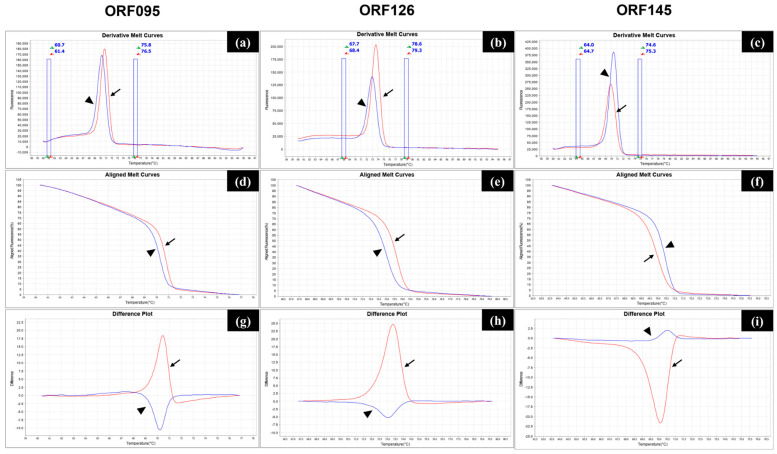 Figure 1
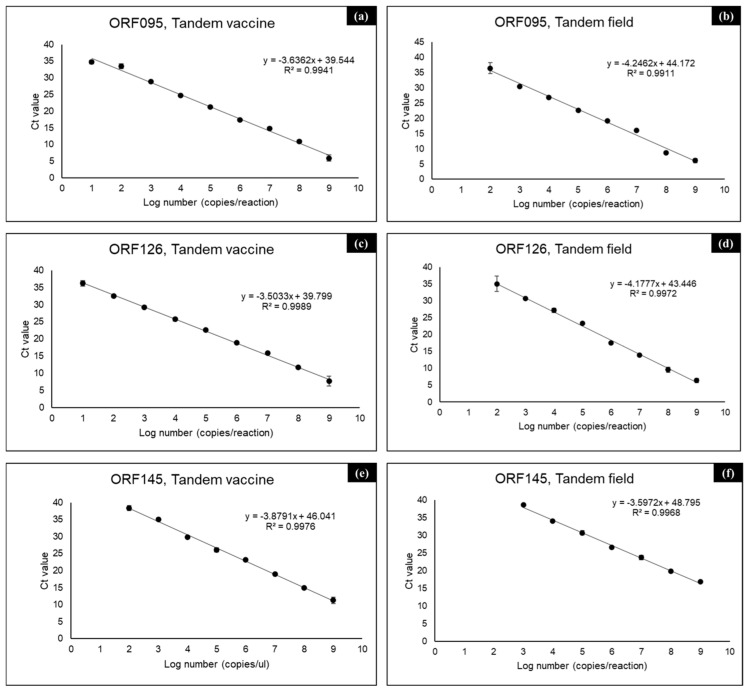 Figure 2
 Figure 3
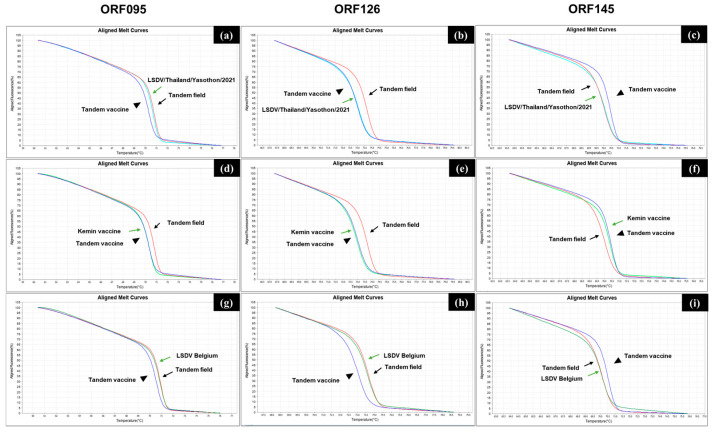 Figure 4
Peer Reviews
No public reviews on file for this paper yet. If you reviewed it on a platform where reviews are public (OpenReview, ICLR, NeurIPS, ICML), you can paste yours below so the community can read it here.
Videos
No videos yet. Explain this paper in a talk, walkthrough, or lecture? Add one.
Taxonomy
TopicsPoxvirus research and outbreaks · Herpesvirus Infections and Treatments · Virus-based gene therapy research