Coelenterazine Analogs for Bioassays and Molecular Imaging
Sung-Bae Kim, Genta Kamiya, Tadaomi Furuta, Shojiro A. Maki

TL;DR
This review discusses recent advances in coelenterazine analogs, highlighting their improved optical properties and diverse applications in bioassays and molecular imaging.
Contribution
The paper introduces new CTZ analogs with unique functionalities like color tunability and specificity to various proteins and ions.
Findings
CTZ analogs can emit light across the visible spectrum without luciferases.
Modified CTZs show specificity to proteins such as albumin and virus proteins.
Some CTZ analogs are activatable by ions, reactive oxygen species, and anticancer drugs.
Abstract
Coelenterazine (CTZ) is a common substrate of marine luciferases upon emission of bioluminescence (BL) in living organisms. Because CTZ works as a “luminophore” in the process of BL emission, the chemical modification has been centered for improving the optical properties of BL. In this review, we showcase recent advances in CTZ designs with unique functionalities. We first elucidate the light-emitting mechanisms of CTZ, and then focus on how the rational modification of CTZ analogs developed in recent years are connected to the development of unique functionalities even without luciferases, which include color tunability covering the visible region, specificity to various proteins (e.g., luciferase, albumin, and virus protein), and activatability to ions or reactive oxygen species (ROS) and anticancer drugs. This review provides new insights into the broad utilities of CTZ analogs with…
Genes, proteins, chemicals, diseases, species, mutations and cell lines named across the full text — each resolved to its canonical identifier and authoritative record.
Click any figure to enlarge with its caption.
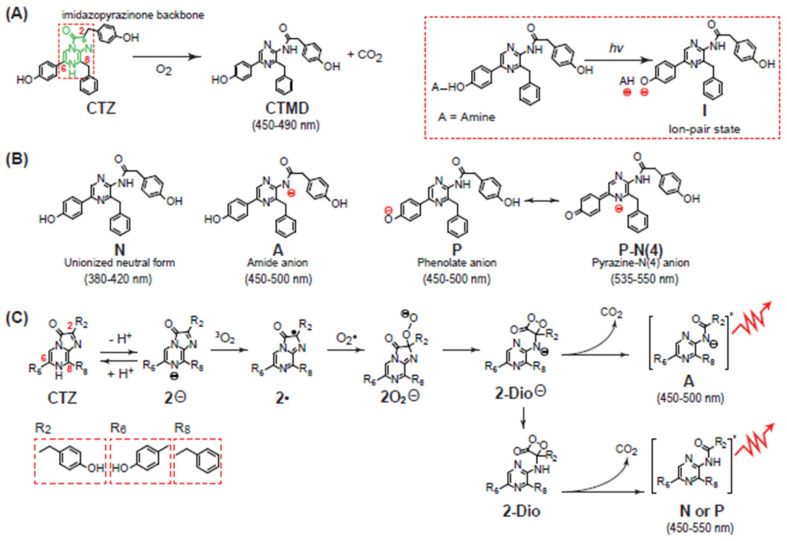 Figure 1
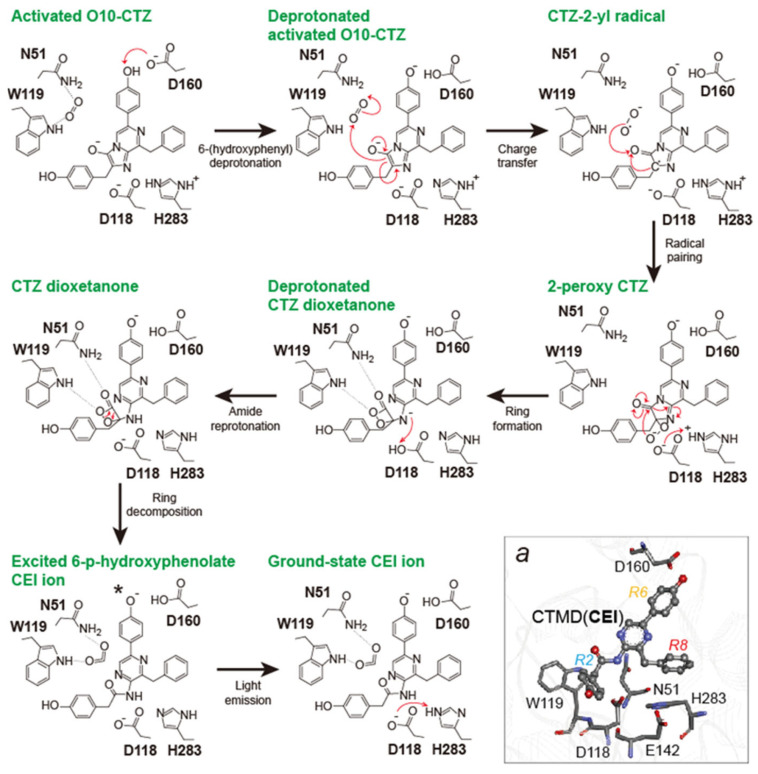 Figure 2
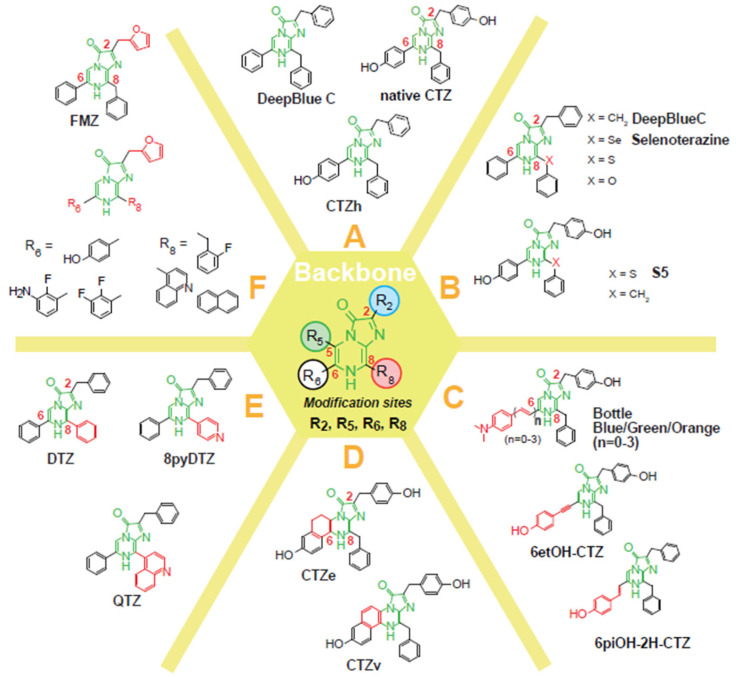 Figure 3
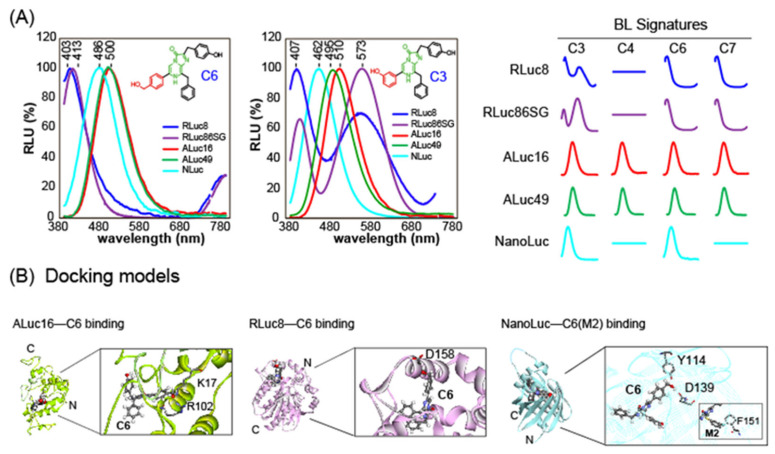 Figure 4
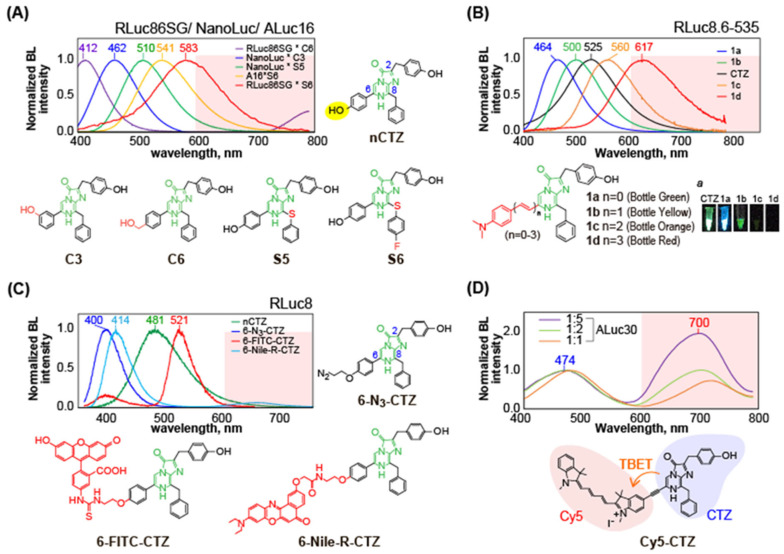 Figure 5
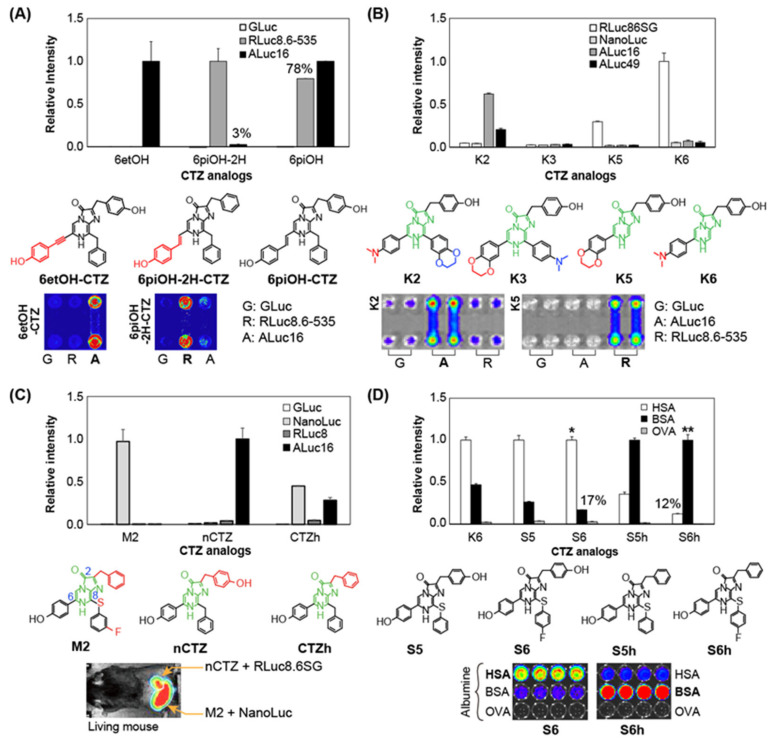 Figure 6
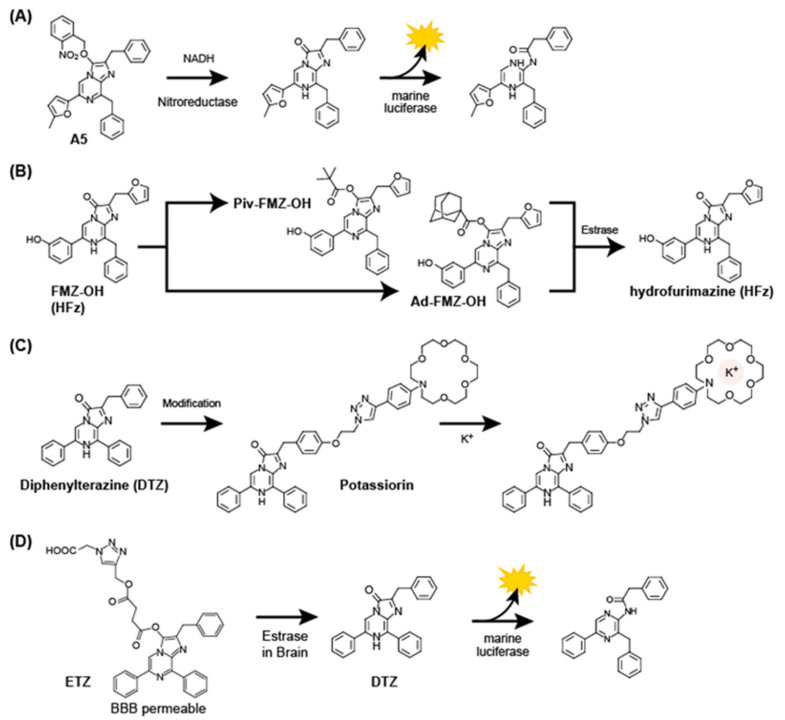 Figure 7
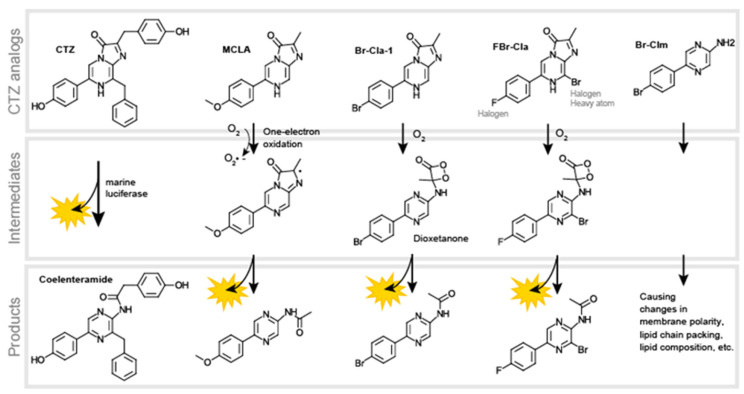 Figure 8
Peer Reviews
No public reviews on file for this paper yet. If you reviewed it on a platform where reviews are public (OpenReview, ICLR, NeurIPS, ICML), you can paste yours below so the community can read it here.
Videos
No videos yet. Explain this paper in a talk, walkthrough, or lecture? Add one.
Taxonomy
Topicsbioluminescence and chemiluminescence research · Photoreceptor and optogenetics research · Biosensors and Analytical Detection