Multi-Omics Analysis Provides Insights into a Mosaic-Leaf Phenotype of Astaxanthin-Producing Tobacco
Jialin Wang, Zaifeng Du, Xiaoyang Lin, Peng Li, Shihao Sun, Changqing Yang, Yong Chen, Zhongfeng Zhang, Xue Yin, Ning Fang

TL;DR
This study explores why astaxanthin-producing tobacco plants have red and green leaf patterns, using multi-omics to uncover the underlying biological mechanisms.
Contribution
The study reveals how astaxanthin production causes mosaic leaf patterns through altered chlorophyll metabolism and gene regulation.
Findings
Mosaic_G regions have higher chlorophyll and better chloroplast structure than Mosaic_R regions.
Chlorophyll degradation is reduced in Mosaic_G, linked to lower levels of pheophorbide a and related enzymes.
Small RNAs target chlorophyll-degradative and astaxanthin biosynthetic genes, influencing leaf coloration.
Abstract
In metabolically engineered plants, the target products are usually uniformly distributed in the whole plant or specific tissues. When engineering tobacco to produce astaxanthin, a ketocarotenoid with strong antioxidant activity and multiple bioactivities, a scattered distribution of astaxanthin-producing regions was observed in a small portion of astaxanthin-producing tobacco plants, which caused mosaic-like red and green spots on the leaves (ASTA-mosaic). A physiological assay showed that the non-astaxanthin green region (Mosaic_G) had relatively higher chlorophyll content and better chloroplast structure than the astaxanthin-producing red region (Mosaic_R). Then, metabolomics, proteomics, and small RNA transcriptomics were employed to analyze the uneven distribution of astaxanthin-producing regions in tobacco leaves. The results of metabolomics and proteomics revealed a decrease in…
Genes, proteins, chemicals, diseases, species, mutations and cell lines named across the full text — each resolved to its canonical identifier and authoritative record.
Click any figure to enlarge with its caption.
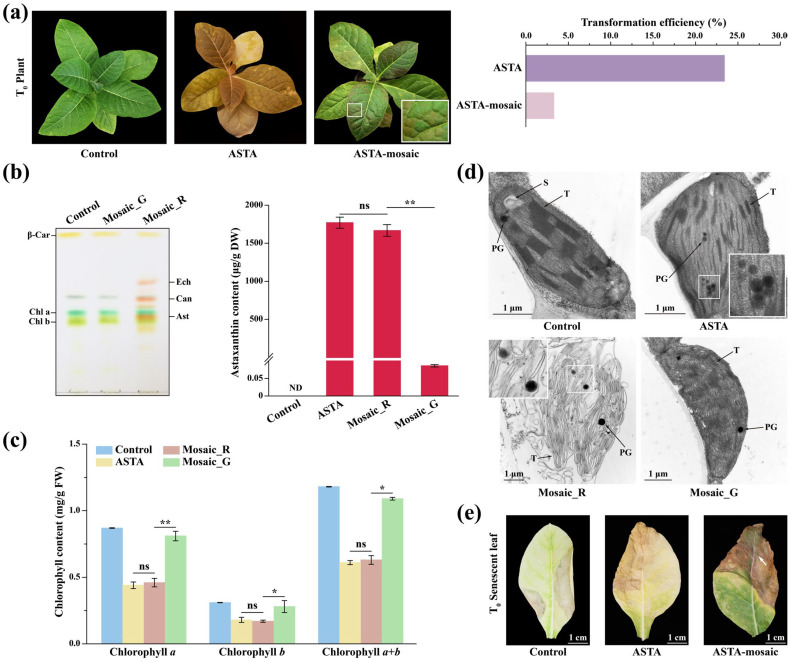 Figure 1
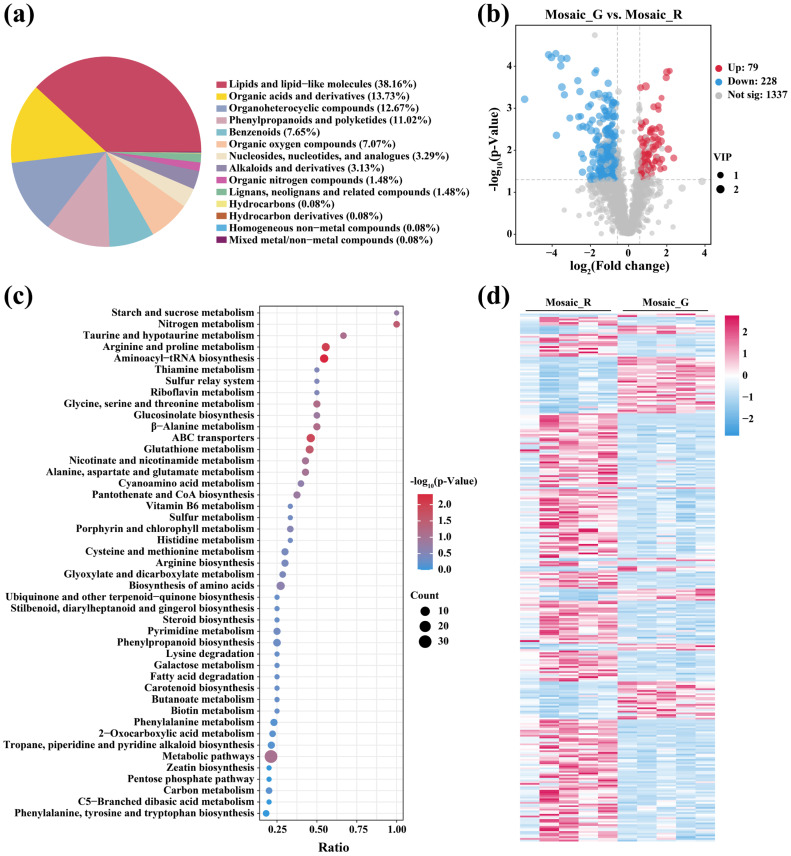 Figure 2
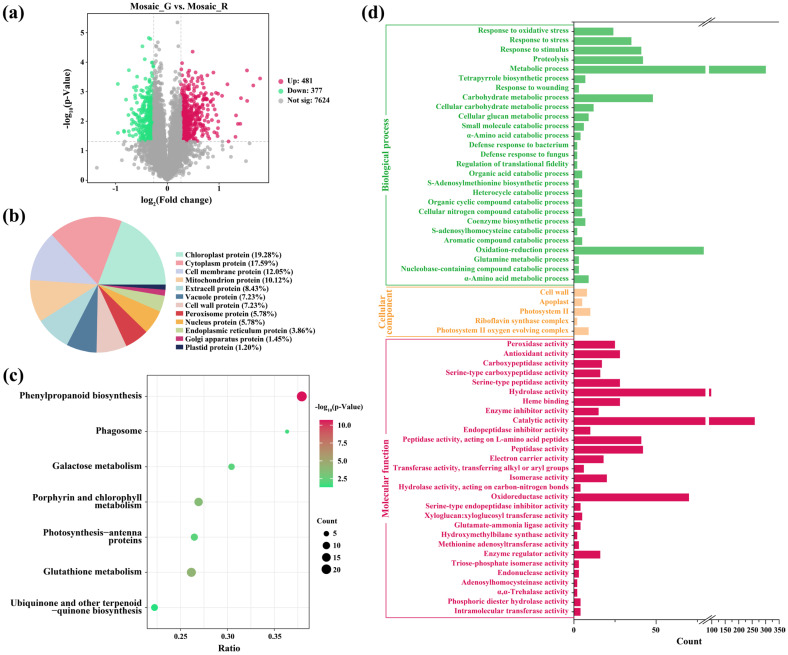 Figure 3
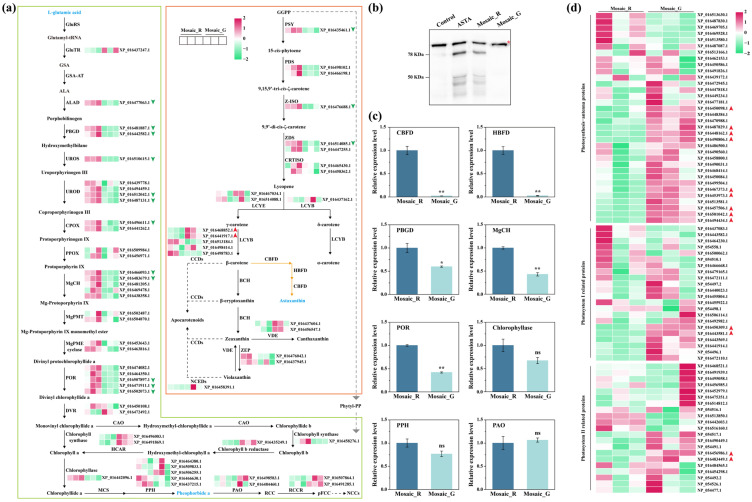 Figure 4
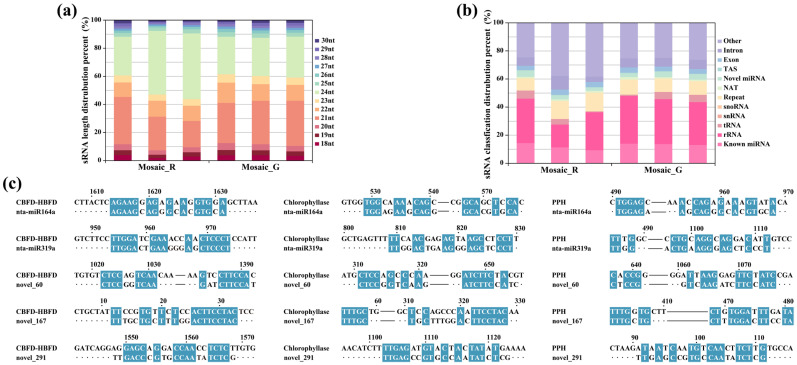 Figure 5
Peer Reviews
No public reviews on file for this paper yet. If you reviewed it on a platform where reviews are public (OpenReview, ICLR, NeurIPS, ICML), you can paste yours below so the community can read it here.
Videos
No videos yet. Explain this paper in a talk, walkthrough, or lecture? Add one.
Taxonomy
TopicsPhotosynthetic Processes and Mechanisms · Antioxidant Activity and Oxidative Stress · Plant biochemistry and biosynthesis