BuZhong YiQi Formula Alleviates Diabetes-Caused Hyposalivation by Activating Salivary Secretion Pathway in the Parotid and Submandibular Glands of Rats
Ming-Yu Wang, Zhen-Ran Hu, Liang Wang, Xin-Xin Zeng, Xiang-Ke Li, Guo-Jun Fei, Jing-Li Zhang, Jing-Ru Chen, Ze-Min Yang

TL;DR
This study shows that BuZhong Yiqi Formula improves dry mouth in diabetic rats by boosting salivary gland activity and glucose metabolism.
Contribution
The study reveals a novel mechanism by which BZYQF alleviates diabetes-induced hyposalivation through activation of specific salivary secretion pathways.
Findings
BZYQF significantly increases salivary flow rate and alpha-amylase activity in diabetic rats.
BZYQF activates the β1-AR/PKA/AMY1 and CHRM3/IP3R/AQP5 salivary secretion pathways.
BZYQF reduces glucose and lipid levels while improving gland inflammation and pathology.
Abstract
Background/Objectives: BuZhong Yiqi Formula (BZYQF) has significant ameliorative effects on type 2 diabetes mellitus (T2DM). However, its efficacy in alleviating the hyposalivation caused by T2DM needs to be confirmed, and its mechanism is unclear. Methods: Network pharmacology and molecular docking were combined to analyze the molecular mechanism by which BZYQF alleviates T2DM-caused hyposalivation. A T2DM rat model was induced to evaluate the efficacy of BZYQF. The total saliva before and after acid stimulation was collected to determine the salivary flow rate and salivary alpha-amylase (sAA) activity. The parotid (PG) and submandibular glands (SMG) of experimental rats were removed to perform histopathology observation, biochemical indicator determination, and expression detection of signaling molecules in the salivary secretion pathway. Results: The present study screened out 1014…
Genes, proteins, chemicals, diseases, species, mutations and cell lines named across the full text — each resolved to its canonical identifier and authoritative record.
Click any figure to enlarge with its caption.
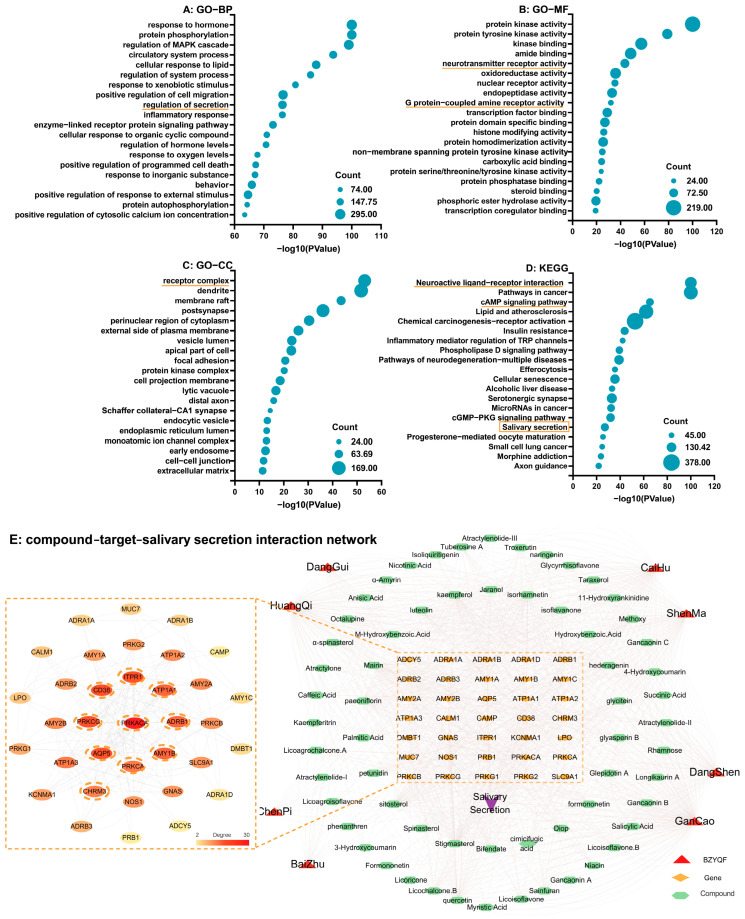 Figure 1
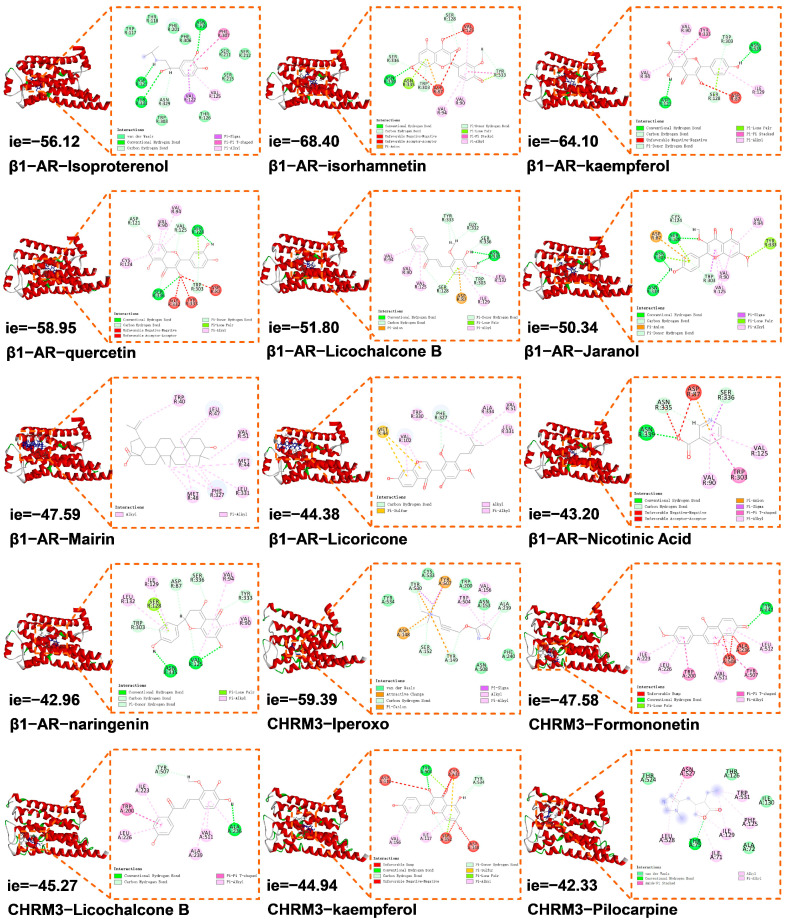 Figure 2
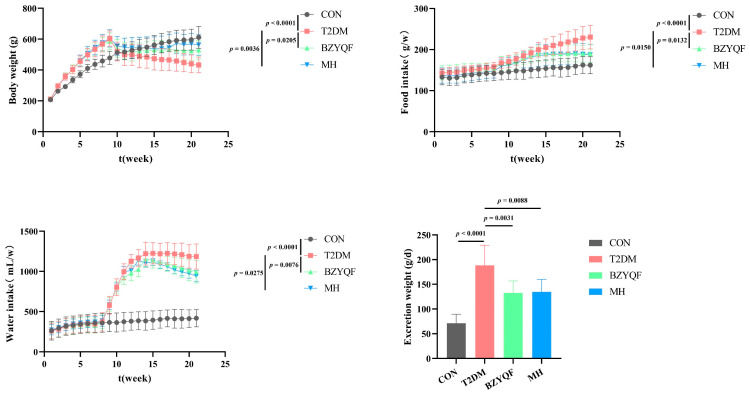 Figure 3
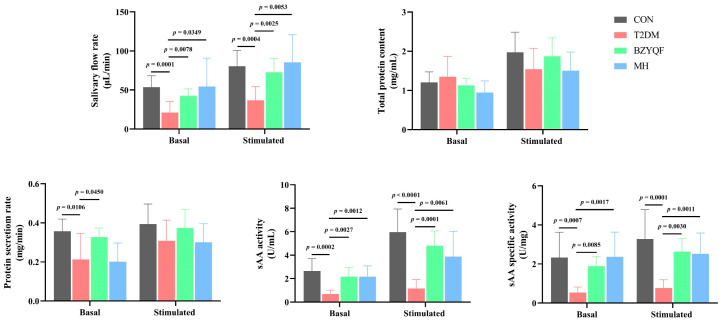 Figure 4
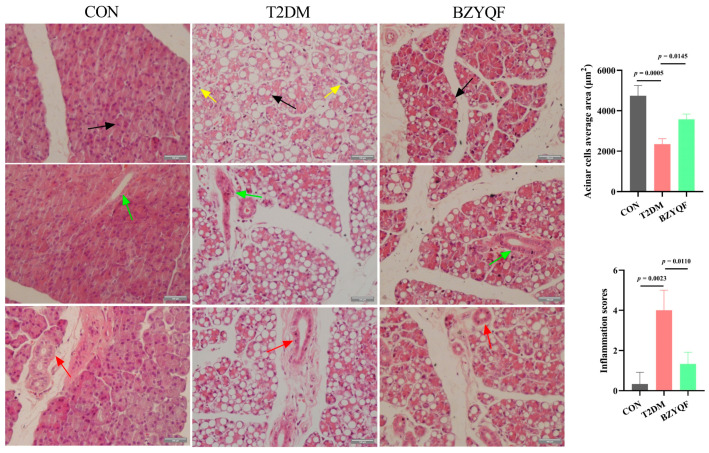 Figure 5
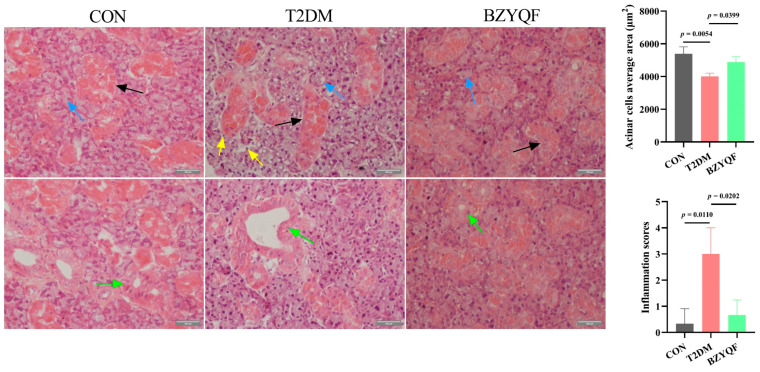 Figure 6
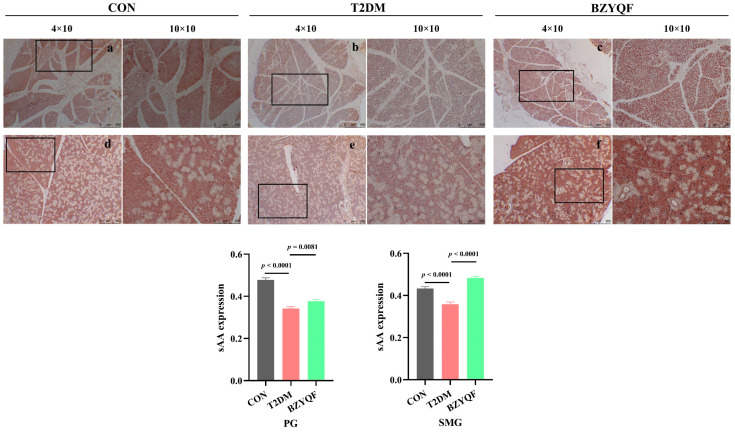 Figure 7
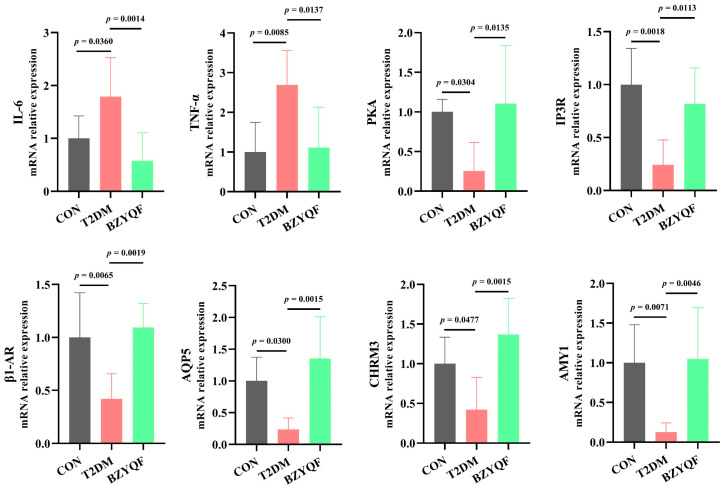 Figure 8
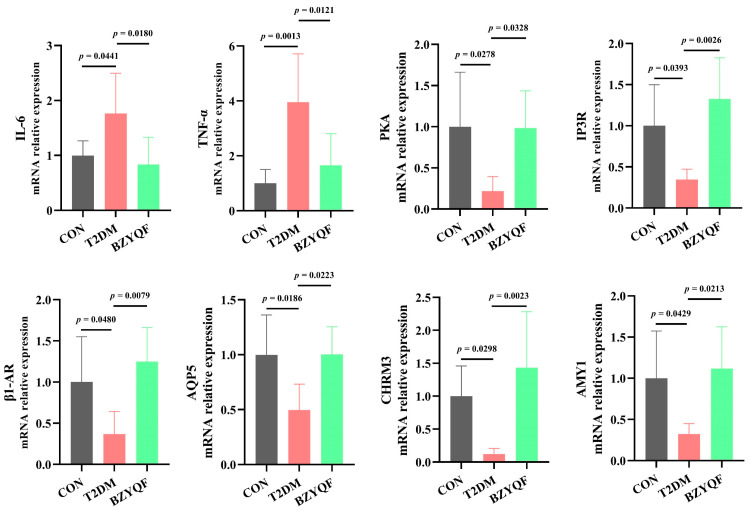 Figure 9
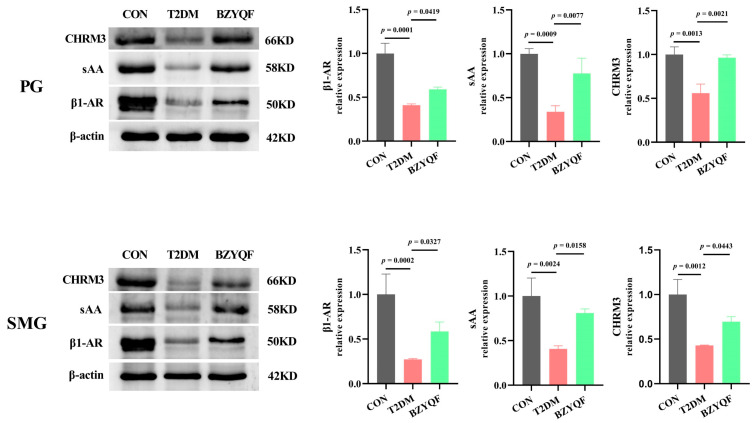 Figure 10
Peer Reviews
No public reviews on file for this paper yet. If you reviewed it on a platform where reviews are public (OpenReview, ICLR, NeurIPS, ICML), you can paste yours below so the community can read it here.
Videos
No videos yet. Explain this paper in a talk, walkthrough, or lecture? Add one.
Taxonomy
TopicsSalivary Gland Disorders and Functions · Oral microbiology and periodontitis research · Advanced Glycation End Products research