Increase in Lead (Pb) Concentration in the Soil Can Cause Morphophysiological Changes in the Leaves of Inga vera subsp. affinis (DC.) T.D.Penn. and Inga laurina (Sw.) Willd
Isabella Fiorini de Carvalho, Patricia Fernanda Rosalem, Caroline de Lima Frachia, Patrícia Borges Alves, Bruno Bonadio Cozin, Ricardo de Almeida Gonçalves, Nayane Cristina Pires Bomfim, Roberta Possas de Souza, Aline Redondo Martins, Liliane Santos de Camargos

TL;DR
This study shows how two Inga species respond to lead in soil, maintaining photosynthesis and leaf structure despite heavy metal stress.
Contribution
The study identifies morphophysiological adaptations in two Inga species under lead stress, highlighting their resilience.
Findings
Both species maintained stable photosynthetic parameters under high Pb concentrations.
I. vera subsp. affinis retained high chlorophyll levels, while I. laurina accumulated more carotenoids and phenolics.
Leaf tissue thickness was unaffected by Pb, indicating structural resilience.
Abstract
The accumulation of heavy metals, such as lead (Pb), causes environmental degradation, affecting human health and plant metabolism. Pb can alter plant physiological processes, including photosynthesis, influencing the structure of chloroplasts and leaf tissues. The present study aimed to evaluate the effect of increasing lead concentrations in soil on gas exchange, photosynthetic pigments, and the anatomy of leaf tissues in Inga vera subsp. affinis and Inga laurina. The experiment was conducted in a greenhouse using a randomized block design in a 2 × 6 factorial scheme, with Pb concentrations of 0, 100, 200, 300, 400, and 500 mg dm−3. I. vera subsp. affinis and I. laurina maintained stable photosynthetic parameters even under high Pb concentrations. Regarding photosynthetic pigments, I. vera subsp. affinis exhibited high levels of chlorophyll a and b, even at the highest Pb…
Genes, proteins, chemicals, diseases, species, mutations and cell lines named across the full text — each resolved to its canonical identifier and authoritative record.
Click any figure to enlarge with its caption.
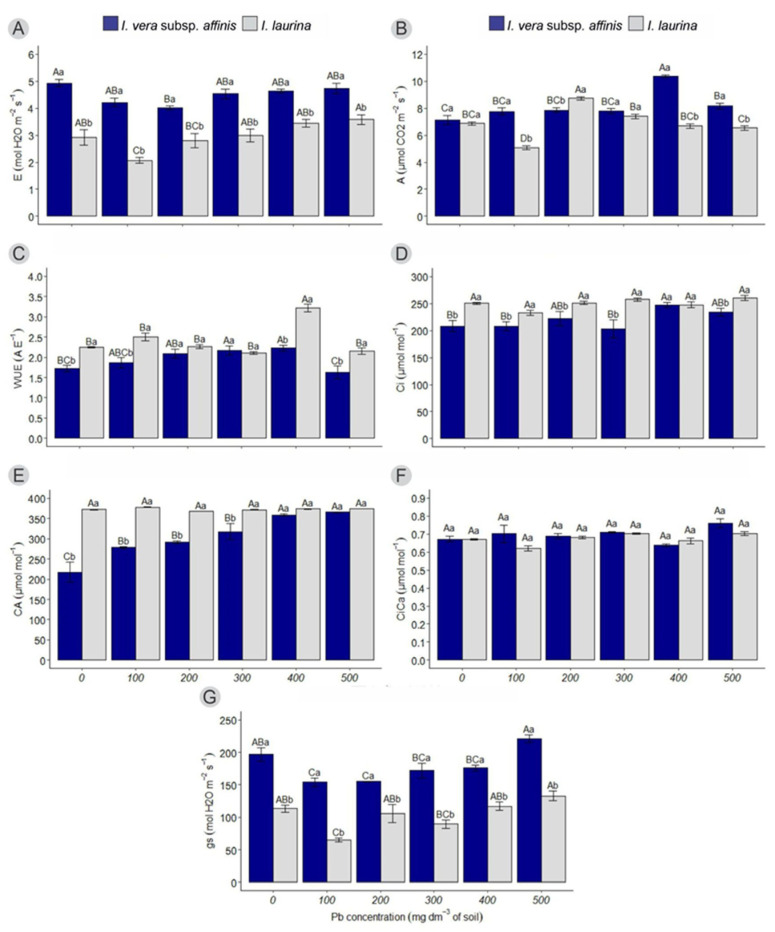 Figure 1
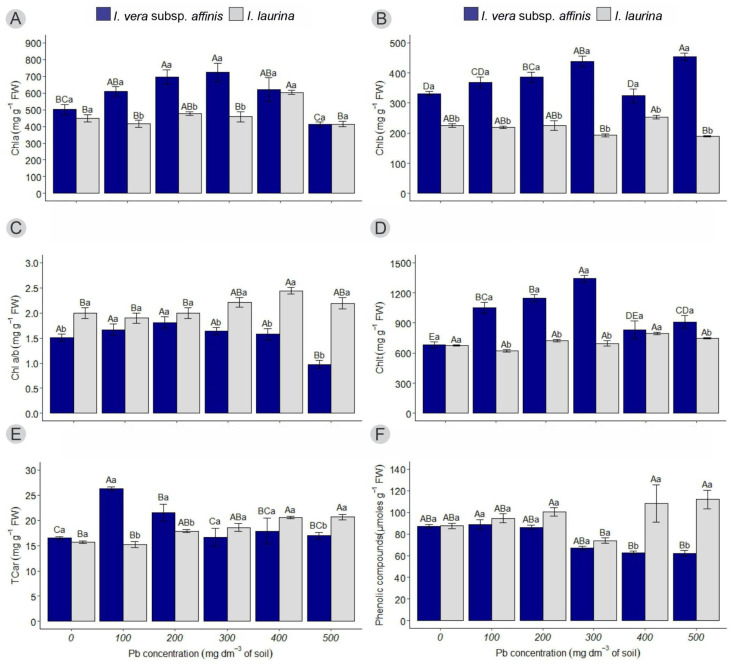 Figure 2
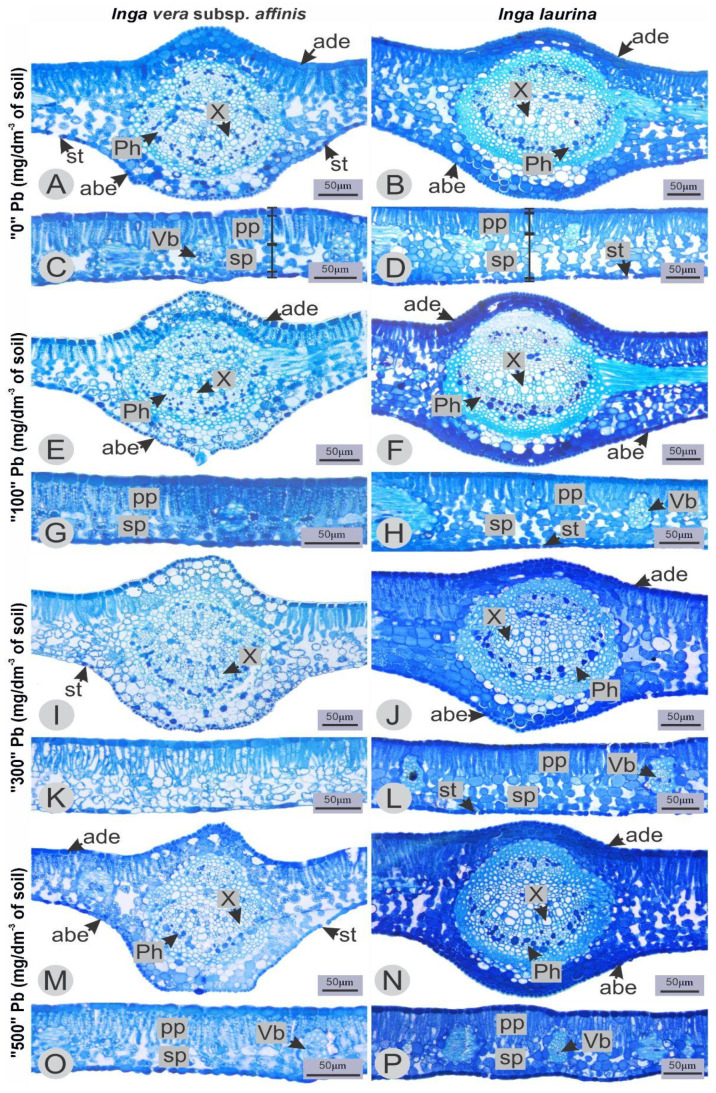 Figure 3
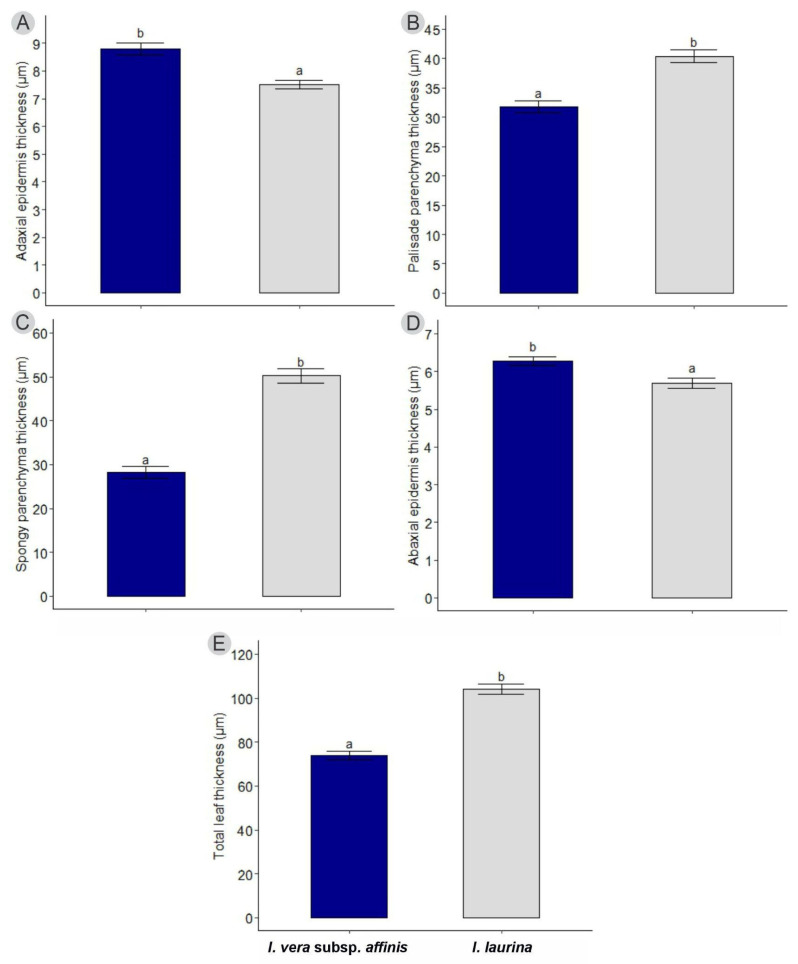 Figure 4
Peer Reviews
No public reviews on file for this paper yet. If you reviewed it on a platform where reviews are public (OpenReview, ICLR, NeurIPS, ICML), you can paste yours below so the community can read it here.
Videos
No videos yet. Explain this paper in a talk, walkthrough, or lecture? Add one.
Taxonomy
TopicsPlant Stress Responses and Tolerance · Heavy metals in environment · Growth and nutrition in plants