Erythrocyte DHA/EPA Ratio Surpasses Its Individual Fatty Acid Levels in Predicting Metabolic Syndrome in Chinese Adults: A Prospective Study
Pinning Feng, Yan Yan, Hanzu Chen, Dongmei Ru, Xinyue Wang, Yuming Chen

TL;DR
This study finds that the ratio of two fatty acids in red blood cells is a better predictor of metabolic syndrome than the individual levels of those fatty acids in Chinese adults.
Contribution
The study introduces the DHA/EPA ratio in erythrocytes as a novel predictor of metabolic syndrome prevalence and risk.
Findings
Higher DHA/EPA ratios were associated with lower odds of metabolic syndrome prevalence.
The DHA/EPA ratio was inversely linked to the incidence of metabolic syndrome over 12 years.
EPA levels alone showed a weaker association with metabolic syndrome compared to the DHA/EPA ratio.
Abstract
Background: The individual roles of docosahexaenoic acid (DHA) and eicosapentaenoic acid (EPA) in mitigating metabolic syndrome (MetS) have been well-documented. However, the significance of their ratio (DHA/EPA) in erythrocytes concerning MetS remains underexplored. This study evaluated the association between the DHA/EPA ratio and MetS including its separate components. Methods: This community-based prospective cohort study involved 3497 participants aged 40 to 75 years enrolled in the Guangzhou Nutrition and Health Study (GNHS) from 2008 to 2013 in China. Baseline erythrocyte fatty acids were quantified using gas chromatography. Over a 12-year follow-up, MetS status was reassessed triennially, identifying 766 new MetS cases among the 2111 participants initially free of the syndrome. The study examined both cross-sectional and prospective relationships of EPA, DHA, and the DHA/EPA…
Genes, proteins, chemicals, diseases, species, mutations and cell lines named across the full text — each resolved to its canonical identifier and authoritative record.
Click any figure to enlarge with its caption.
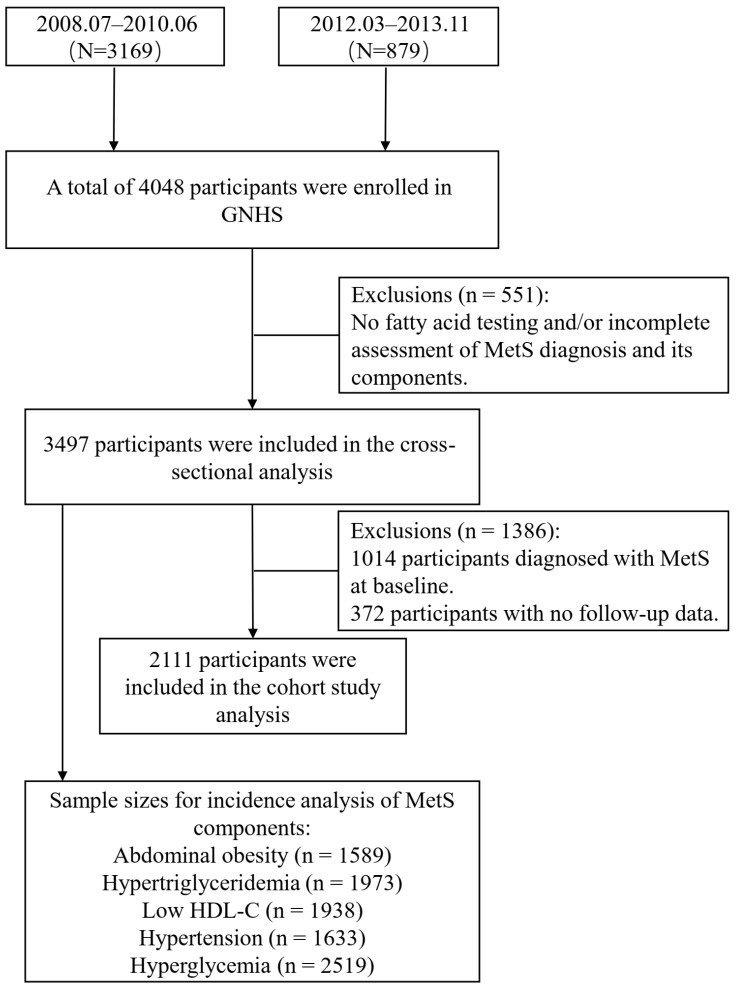 Figure 1
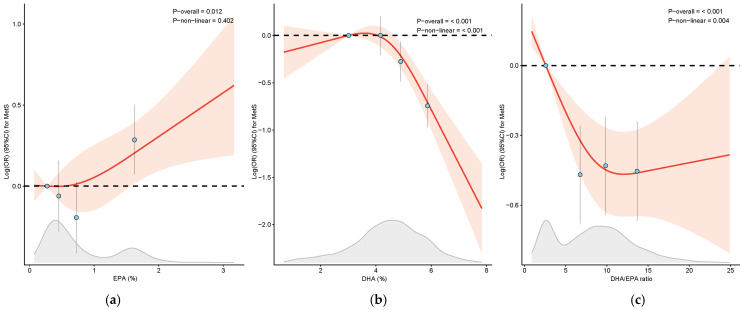 Figure 2
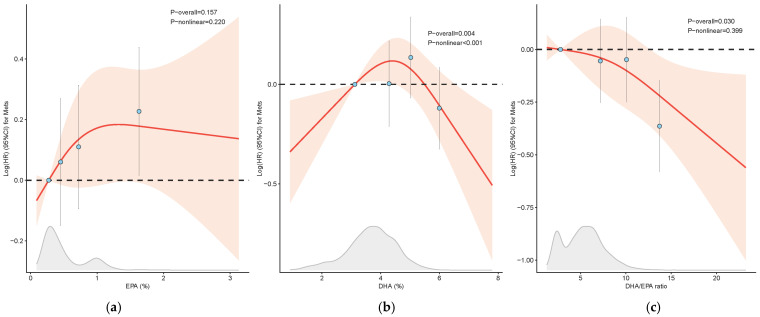 Figure 3
Peer Reviews
No public reviews on file for this paper yet. If you reviewed it on a platform where reviews are public (OpenReview, ICLR, NeurIPS, ICML), you can paste yours below so the community can read it here.
Videos
No videos yet. Explain this paper in a talk, walkthrough, or lecture? Add one.
Taxonomy
TopicsFatty Acid Research and Health · Diet, Metabolism, and Disease · Eicosanoids and Hypertension Pharmacology