Development of an Easy-to-Fabricate Microdevice for Three-Dimensional Culture and Its Application to Glomerular Endothelial Cell Culture
Miyu Yamazaki, Yasuko Kobayashi, Kiichi Sato

TL;DR
Researchers created a simple and low-cost microdevice for 3D cell culture, enabling the growth of thick vascular networks for organ-on-a-chip applications.
Contribution
The device is easy to fabricate and supports thick 3D cultures without requiring expensive equipment.
Findings
A 200 µm thick vascular endothelial cell network was successfully constructed using the device.
The device allows nutrient supply to cells without obstruction from adjacent media channels.
The method supports co-culture of human glomerular endothelial cells and fibroblasts.
Abstract
The development of an organ-on-a-chip to reproduce organ functions requires the incorporation of a vascular network within the tissue to transport the necessary nutrients. Tissues thicker than 200 µm cannot survive without a capillary network, necessitating the construction of a vascular network exceeding that thickness. Therefore, we focused on the development of an inexpensive and easy-to-fabricate device for thick three-dimensional(3D)-cultured tissues. This device does not have a conventional pillar array structure, and the nutrient supply to the cells from adjacent media channels is not obstructed. Additionally, this device does not require expensive soft lithography equipment or a high-precision 3D printer to fabricate the mold. Human glomerular endothelial cells and human dermal fibroblasts were co-cultured using this device, and a 3D network of vascular endothelial cells (200 µm…
Genes, proteins, chemicals, diseases, species, mutations and cell lines named across the full text — each resolved to its canonical identifier and authoritative record.
Click any figure to enlarge with its caption.
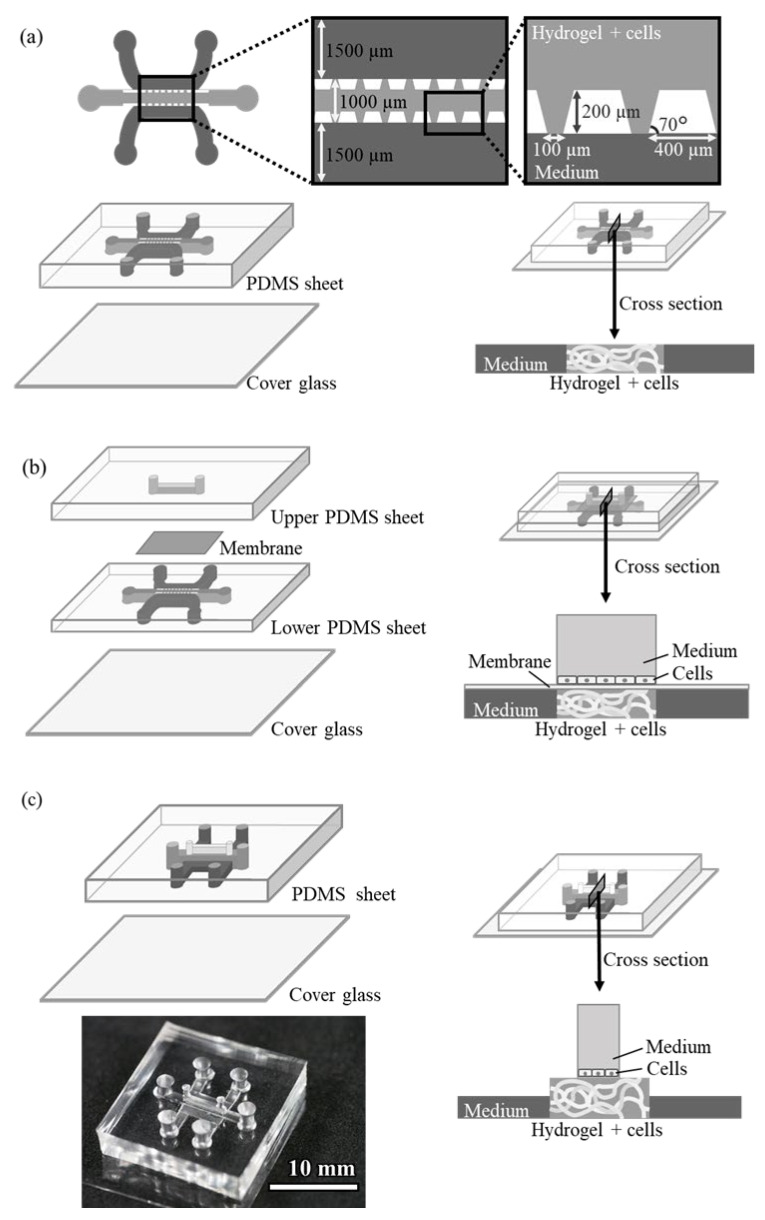 Figure 1
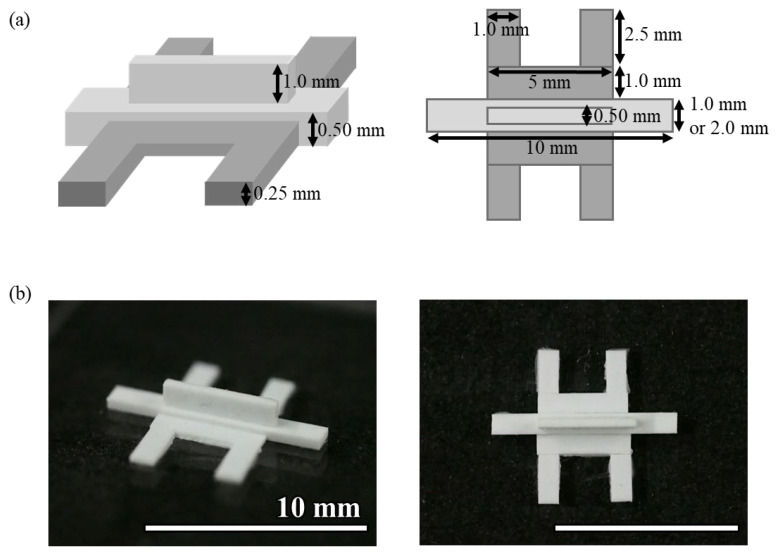 Figure 2
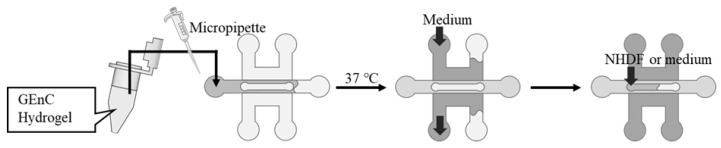 Figure 3
 Figure 4
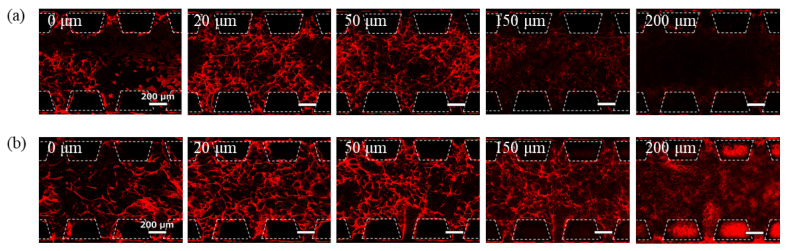 Figure 5
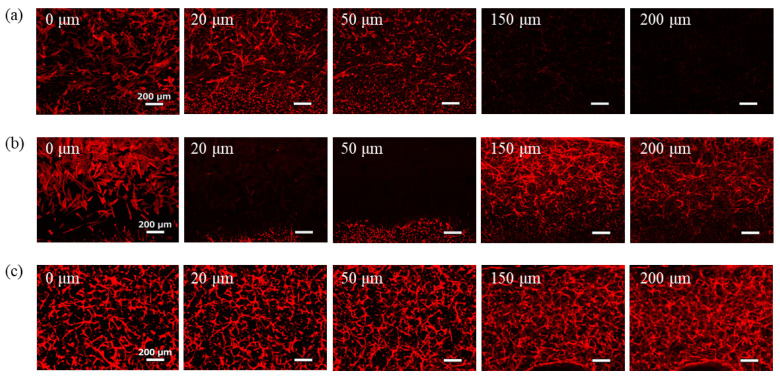 Figure 6
Peer Reviews
No public reviews on file for this paper yet. If you reviewed it on a platform where reviews are public (OpenReview, ICLR, NeurIPS, ICML), you can paste yours below so the community can read it here.
Videos
No videos yet. Explain this paper in a talk, walkthrough, or lecture? Add one.
Taxonomy
Topics3D Printing in Biomedical Research · Innovative Microfluidic and Catalytic Techniques Innovation · Anatomy and Medical Technology