Responsiveness and Minimal Important Change of the Mini- and Brief-Balance Evaluation Systems Tests in People with Incomplete Cervical Spinal Cord Injury: A Prospective Cohort Study
Yusuke Morooka, Yosuke Kunisawa, Shigeru Obayashi, Yasuyuki Takakura

TL;DR
This study determines how well two balance tests track improvement in people with incomplete cervical spinal cord injuries.
Contribution
The study establishes the minimal important change for the Mini-BESTest and Brief-BESTest in subacute incomplete cervical spinal cord injury patients.
Findings
Changes in BBS scores were moderately correlated with changes in Mini-BESTest and Brief-BESTest scores.
MICadjusted values were 3.7 for the Mini-BESTest and 2.2 for the Brief-BESTest.
MICROC was considered less suitable due to a high proportion of improved participants.
Abstract
Background/Objectives: Responsiveness and minimal important change (MIC) are key metrics that vary across conditions and should be determined for specific populations. However, these metrics have not yet been established for the Mini-Balance Evaluation Systems Test (Mini-BESTest) and Brief-BESTest in people with subacute traumatic incomplete cervical spinal cord injury (iCSCI). In this study, we aimed to determine the responsiveness and MIC of the Mini-BESTest and Brief-BESTest in people with subacute iCSCI. Methods: This study included people with iCSCI who could maintain the standing position for 30 s without assistance within 7 days of injury at the university hospital’s advanced critical care center. Responsiveness was assessed by correlating Mini-BESTest and Brief-BESTest change scores with the Berg Balance Scale (BBS). MIC values were determined using the global rating of change…
Genes, proteins, chemicals, diseases, species, mutations and cell lines named across the full text — each resolved to its canonical identifier and authoritative record.
Click any figure to enlarge with its caption.
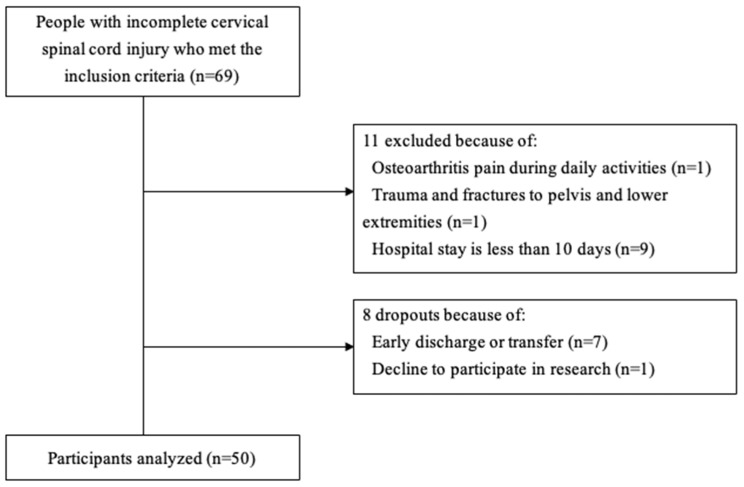 Figure 1
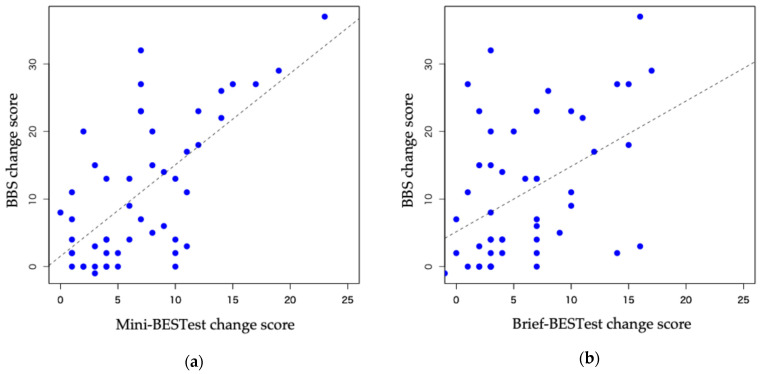 Figure 2
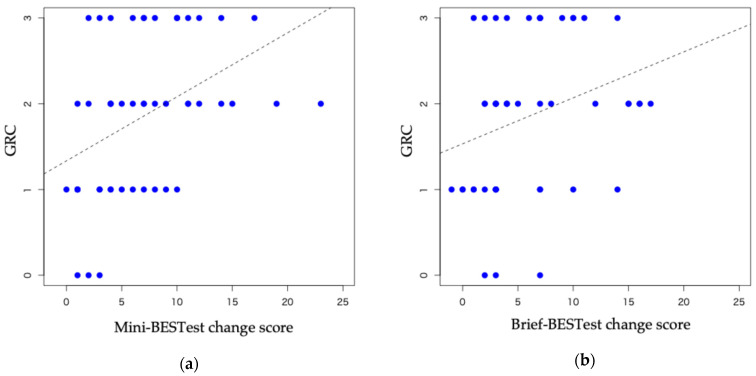 Figure 3
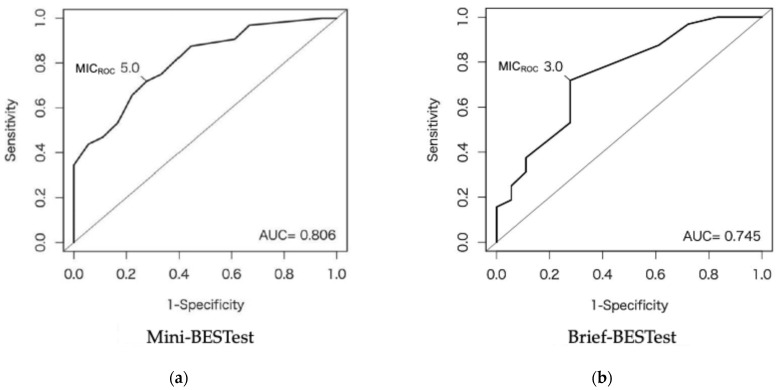 Figure 4
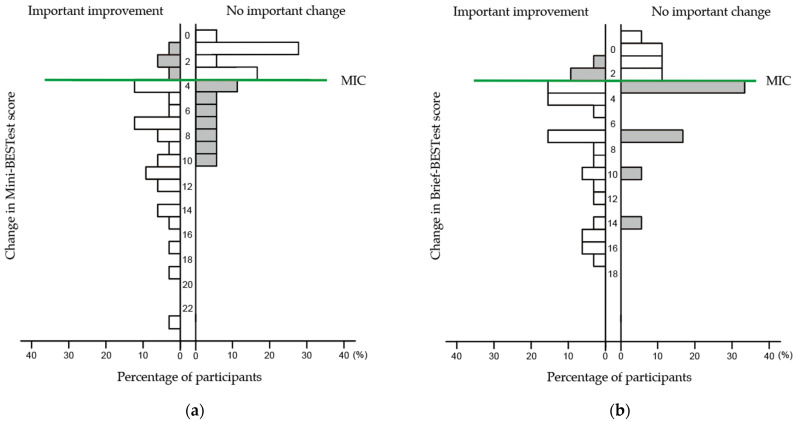 Figure 5
Peer Reviews
No public reviews on file for this paper yet. If you reviewed it on a platform where reviews are public (OpenReview, ICLR, NeurIPS, ICML), you can paste yours below so the community can read it here.
Videos
No videos yet. Explain this paper in a talk, walkthrough, or lecture? Add one.
Taxonomy
TopicsSpinal Cord Injury Research · Spinal Fractures and Fixation Techniques · Spinal Dysraphism and Malformations