Improving HCV Screening in Addiction Care Centers with Plasma Separation Cards
Fernando Velásquez Orozco, David Tabernero, María Gabriela Barbaglia, Lara Treviño, Begoña Trujillo, Andrés Marco, Miguel Ángel Carrillo, Gerard Ruiz Salinas, Francesc Xavier Majo Roca, Joan Colom Farran, María Buti, Tomas Pumarola-Sunyer, Francisco Rodriguez-Frias

TL;DR
Using finger-prick blood samples on special cards improved HCV screening in addiction centers, especially for those who can't undergo traditional blood draws.
Contribution
Demonstrates the effectiveness of plasma separation cards for HCV screening in high-risk populations with limited access to traditional diagnostics.
Findings
79.6% of PSC clients tested positive for HCV antibodies, compared to 9.1% of venipuncture clients.
PSC clients contributed to 62.5% of active HCV infections detected, with a 34.9% HCV RNA positivity rate.
Refusal or inability to undergo venipuncture was associated with a 26.3 odds ratio for active HCV infection.
Abstract
Globally, 50 million people are infected with hepatitis C virus (HCV), many of whom are people who inject drugs. These individuals face healthcare barriers, necessitating innovative diagnostic tools. This study evaluated the impact of cobas plasma separation cards (PSCs) for dry plasma collection in Barcelona’s outpatient drug addiction centers (CAS). From February to December 2021, nine CASs were invited to implement PSC for HCV screening; three centers participated, allowing for the assessment of its impact on HCV detection. Of the 679 clients screened, 54 (8%) provided finger-prick blood samples via PSC due to their refusal or inability to undergo venipuncture. Overall, 100 (14.7%) clients tested positive for HCV antibodies, with 24 (24%) confirmed as HCV-RNA positive. Among venipuncture clients, 9.1% had positive antibodies, with 15.8% showing active infection. In contrast, 79.6% of…
Genes, proteins, chemicals, diseases, species, mutations and cell lines named across the full text — each resolved to its canonical identifier and authoritative record.
Click any figure to enlarge with its caption.
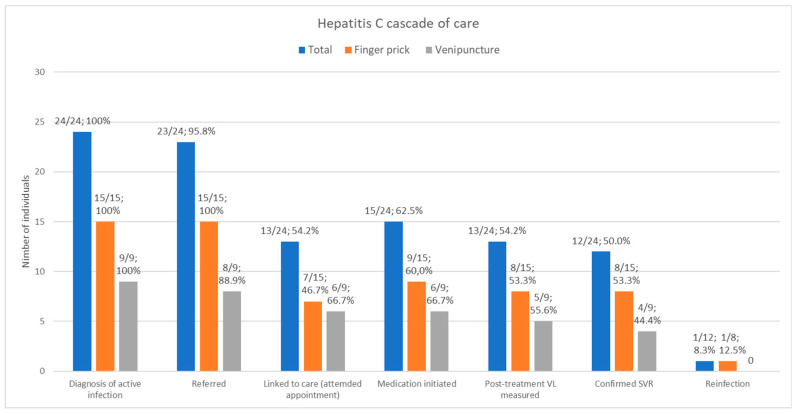 Figure 1
Peer Reviews
No public reviews on file for this paper yet. If you reviewed it on a platform where reviews are public (OpenReview, ICLR, NeurIPS, ICML), you can paste yours below so the community can read it here.
Videos
No videos yet. Explain this paper in a talk, walkthrough, or lecture? Add one.
Taxonomy
TopicsHepatitis C virus research · HIV, Drug Use, Sexual Risk · Hepatitis B Virus Studies