A Man Living in the Wilderness Presents With a Unique Case of Erysipelothrix rhusiopathiae Causing Primary CNS Infection
Kevin Andrew Smith, Alejandra Méndez, Lindsey J. Reese

TL;DR
A man living in the wilderness developed a rare brain infection caused by Erysipelothrix rhusiopathiae, which was successfully treated with surgery and penicillin.
Contribution
This is the second reported case of Erysipelothrix rhusiopathiae causing central nervous system infection and the first to describe subdural empyema.
Findings
The infection was successfully treated with craniectomy and 6 weeks of aqueous penicillin G.
Erysipelothrix rhusiopathiae remains susceptible to narrow-spectrum beta-lactams despite its varied clinical manifestations.
Exposure to wildlife and living in remote areas may be risk factors for this rare CNS infection.
Abstract
We report the first published case of Erysipelothrix rhusiopathiae causing subdural empyema. This 66-year-old male patient had relevant exposure history including living in a tent in the woods and having direct contact with wildlife. His main symptom which triggered his presentation was diplopia with exam findings consistent with a left partial oculomotor nerve palsy. Initial attempts at less invasive source control via burr holes alone failed. He was treated successfully with craniectomy and aqueous penicillin G with a duration of 6 weeks following surgery. CNS infection as the primary manifestation of Erysipelothrix rhusiopathiae has been reported in only one other case based on our review of the literature. This pathogen demonstrates an ability to manifest infection in many ways and remains susceptible to narrow spectrum beta-lactams.
Genes, proteins, chemicals, diseases, species, mutations and cell lines named across the full text — each resolved to its canonical identifier and authoritative record.
Click any figure to enlarge with its caption.
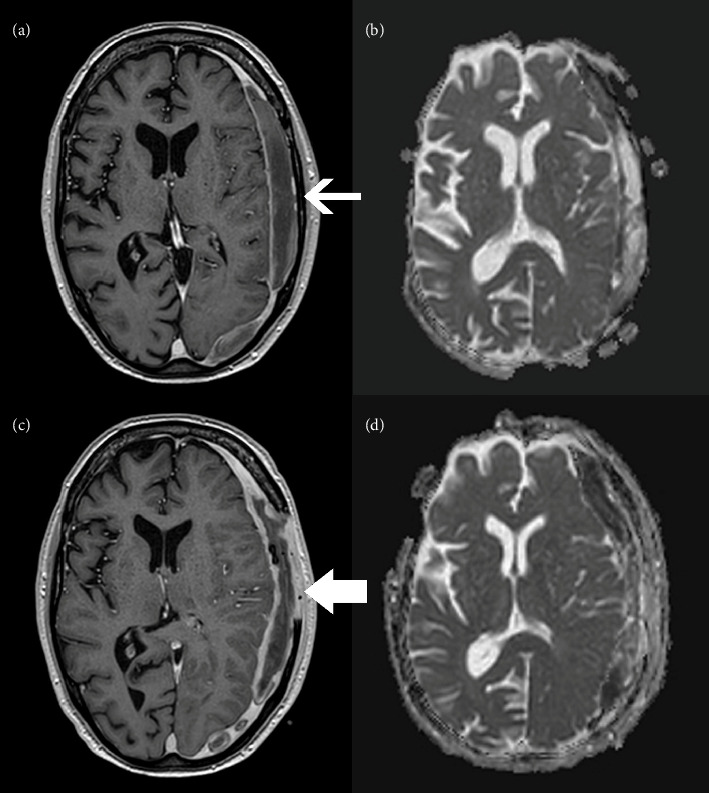 Figure 1
Peer Reviews
No public reviews on file for this paper yet. If you reviewed it on a platform where reviews are public (OpenReview, ICLR, NeurIPS, ICML), you can paste yours below so the community can read it here.
Videos
No videos yet. Explain this paper in a talk, walkthrough, or lecture? Add one.
Taxonomy
TopicsMicrobial infections and disease research · Streptococcal Infections and Treatments · Bacterial Identification and Susceptibility Testing