Case Report: Long-Term Follow-Up of Visceral Leishmaniasis and HIV Coinfected Patients Without Relapse: Lymphoproliferative Response After Stimulation with Soluble Leishmania Antigen
Begoña Monge-Maillo, Daniel Roger-Zapata, Fernando Dronda, Eugenia Carrillo, Javier Moreno, María Dolores Corbacho-Loarte, Diego Gayoso Cantero, Oihane Martín, Sandra Chamorro-Tojeiro, Jose A. Perez-Molina, Francesca Norman, Marta González-Sanz, Rogelio López-Vélez

TL;DR
This case report examines long-term outcomes of three patients coinfected with visceral leishmaniasis and HIV, finding no relapses and varied immune responses.
Contribution
The study provides long-term follow-up data on VL/HIV coinfected patients and evaluates lymphoproliferative responses as potential markers for relapse risk.
Findings
No relapses were observed in three patients followed for 8 to 19 years.
Only one patient showed specific cellular immunity against Leishmania.
Immune response markers showed significant heterogeneity among the cases.
Abstract
Highly active antiretroviral therapy (HAART) has reduced the incidence of VL/HIV dramatically. However, HAART only partially prevents relapses, with one-year relapse rates ranging from 30 to 60%. Consequently, secondary prophylaxis is recommended for patients with <200 CD4+ cells/μL. In clinical practice, characterizing cellular immune response could help estimate the risk of relapse in VL/HIV coinfected patients. In this study, the lymphoproliferative response after stimulation with soluble Leishmania antigen was assessed in 2022 and 2023 in three cases of VL/HIV coinfection with long-term follow-up (17, 8 and 19 years). PCR and rK-39 results for Leishmania, HIV viral load, CD4 cell count, proliferation index, IFN-γ, IL-2, IP-10, IL-10 and TNF-α were determined. Heterogeneous results were obtained, with only one patient having developed specific cellular immunity against Leishmania. No…
Genes, proteins, chemicals, diseases, species, mutations and cell lines named across the full text — each resolved to its canonical identifier and authoritative record.
Click any figure to enlarge with its caption.
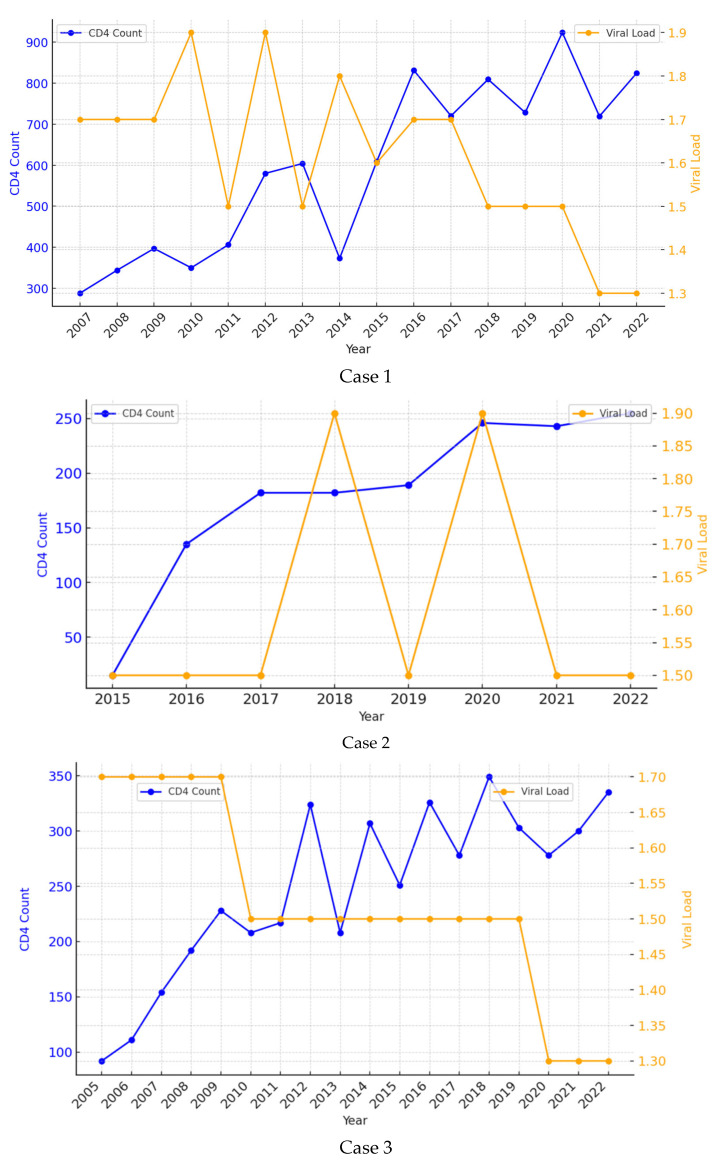 Figure 1
Peer Reviews
No public reviews on file for this paper yet. If you reviewed it on a platform where reviews are public (OpenReview, ICLR, NeurIPS, ICML), you can paste yours below so the community can read it here.
Videos
No videos yet. Explain this paper in a talk, walkthrough, or lecture? Add one.
Taxonomy
TopicsResearch on Leishmaniasis Studies