Infection with Jujube Witches’ Broom Phytoplasma Alters the Expression Pattern of the Argonaute Gene Family in Ziziphus jujuba
Jia Yao, Zesen Qiao, Ziming Jiang, Xueru Zhao, Ziyang You, Wenzhe Zhang, Jiancan Feng, Chenrui Gong, Jidong Li

TL;DR
This study shows that infection by a specific phytoplasma in jujube plants changes the expression of certain Argonaute genes, which may be important for the plant's response to the disease.
Contribution
The study identifies specific Argonaute genes in jujube that are up-regulated in response to JWB phytoplasma infection.
Findings
Nine jujube AGO genes were identified, each containing conserved domains.
ZjAGO1 and ZjAGO8 were up-regulated during phytoplasma infection in multiple sampling periods.
These genes may play a key role in the plant's response to JWB phytoplasma.
Abstract
The cultivation of jujube (Ziziphus jujuba) in China is threatened by jujube witches’ broom (JWB) disease, a devastating infectious disease associated with JWB phytoplasma (‘Candidatus Phytoplasma ziziphi’). In many plants, proteins in the Argonaute (AGO) family, as main components of the RNA-induced silencing complex (RISC), play important roles in RNA silencing and pathogen resistance. The jujube telomere-to-telomere genome was searched by BLAST using Arabidopsis AGOs as probes. A total of nine jujube AGO gene members were identified, with each containing the conserved N-terminal, PZA, and PIWI domains. Phylogenetic analysis revealed that the nine jujube AGOs scattered into all three Arabidopsis AGO clades. Expression patterns of the ZjAGO genes were analyzed in response to phytoplasma in transcriptome data and by qRT–PCR. The jujube–phytoplasma interaction altered the expression of…
Genes, proteins, chemicals, diseases, species, mutations and cell lines named across the full text — each resolved to its canonical identifier and authoritative record.
Click any figure to enlarge with its caption.
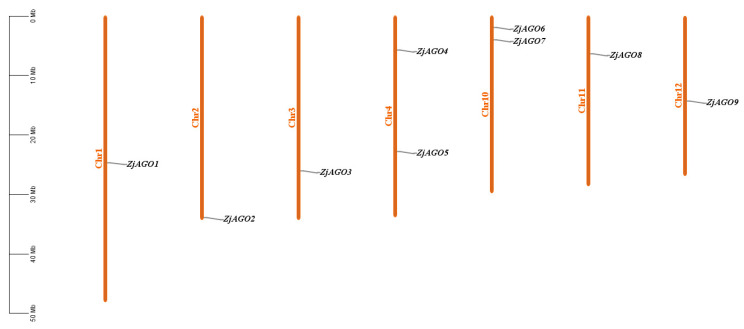 Figure 1
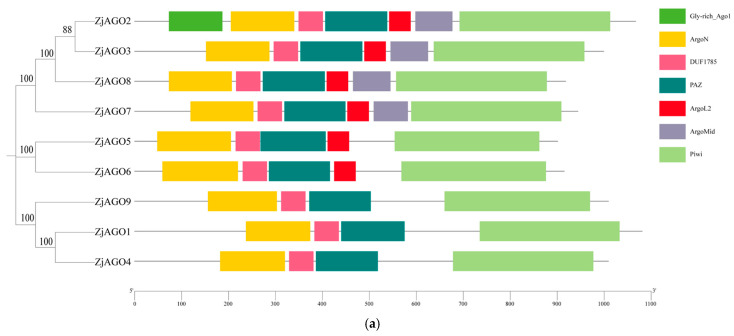 Figure 2
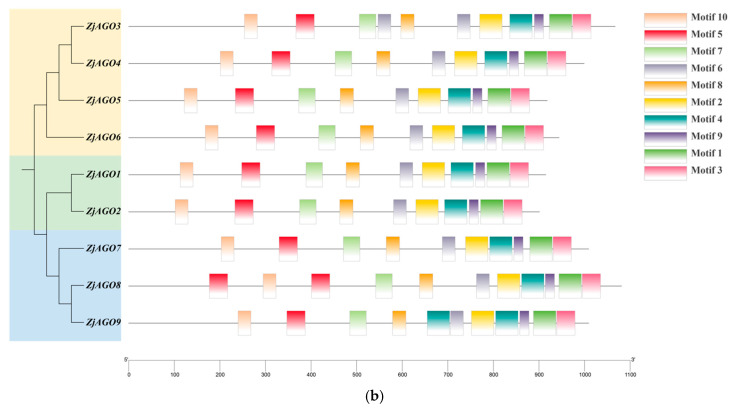 Figure 3
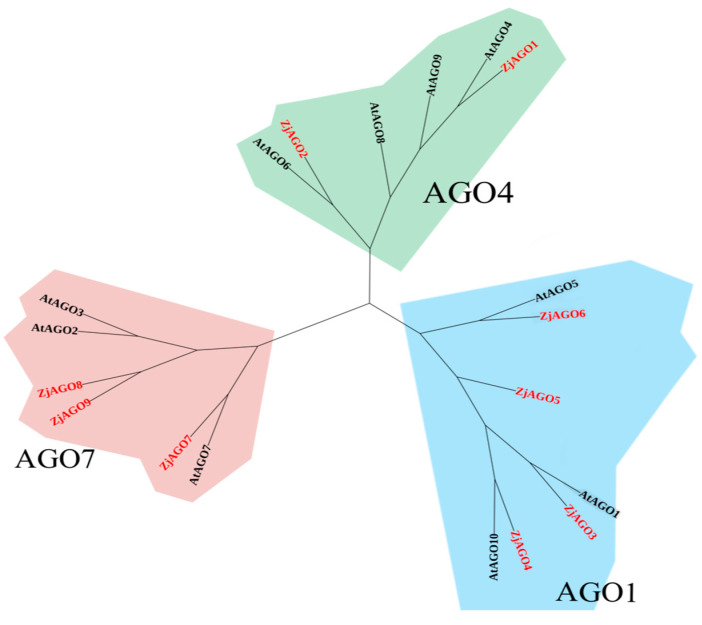 Figure 4
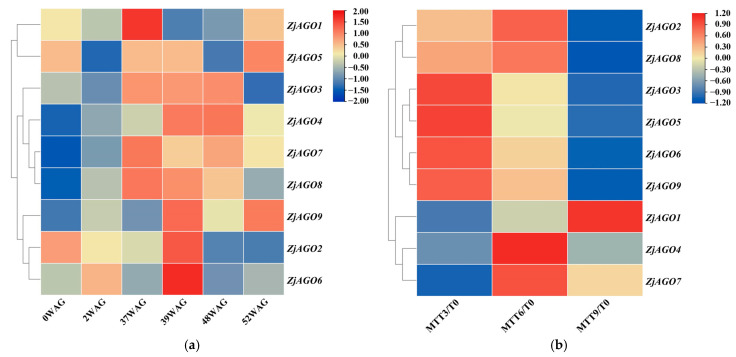 Figure 5
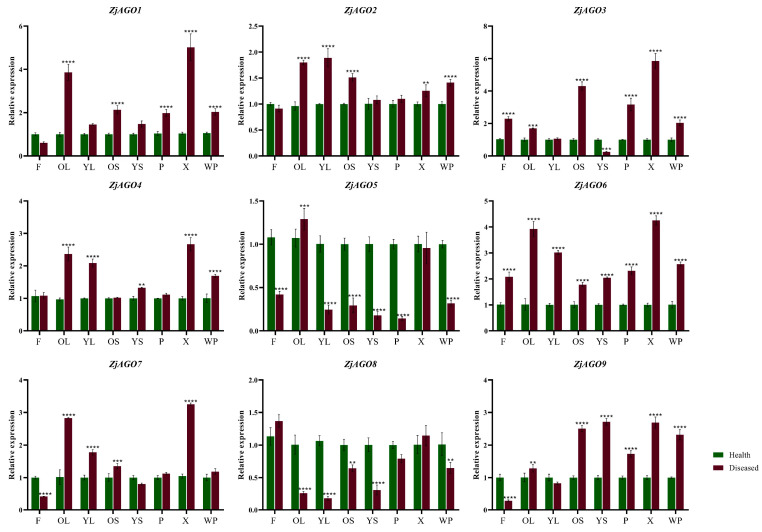 Figure 6
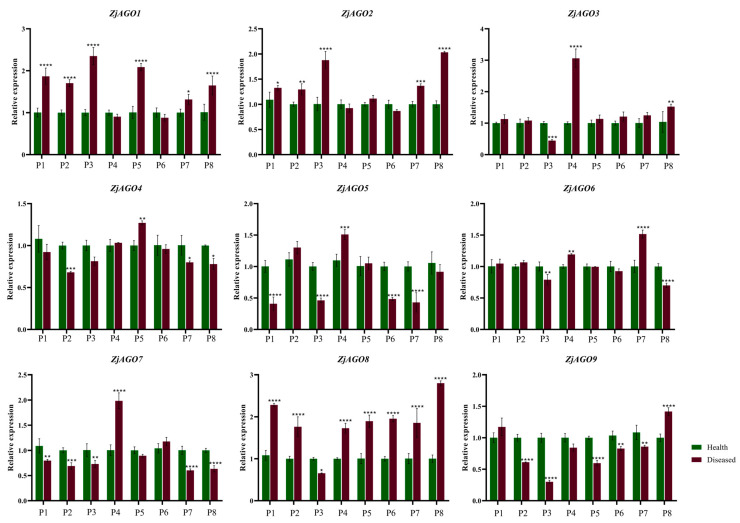 Figure 7
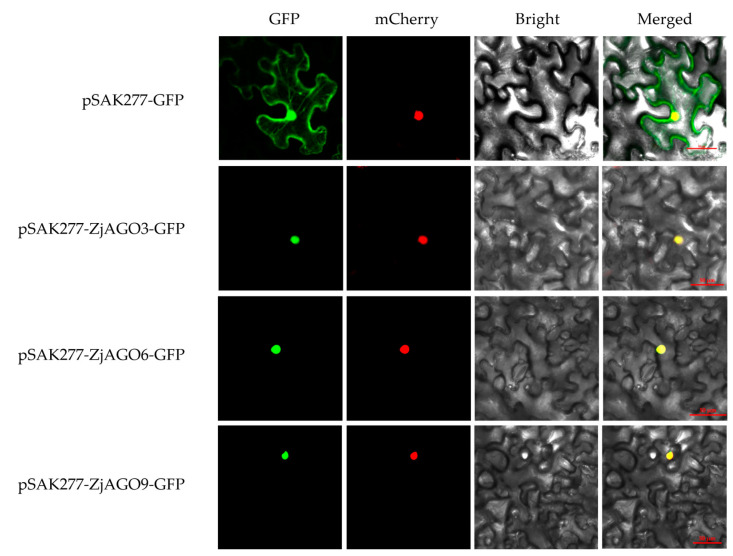 Figure 8
Peer Reviews
No public reviews on file for this paper yet. If you reviewed it on a platform where reviews are public (OpenReview, ICLR, NeurIPS, ICML), you can paste yours below so the community can read it here.
Videos
No videos yet. Explain this paper in a talk, walkthrough, or lecture? Add one.
Taxonomy
TopicsPlant Virus Research Studies · Phytoplasmas and Hemiptera pathogens · Plant and Fungal Interactions Research