Structural Characterization of Pinnatoxin Isomers
Andrew I. Selwood, Christopher O. Miles, Alistair L. Wilkins, Frode Rise, Sarah C. Finch, Roel van Ginkel

TL;DR
Researchers identified and characterized new isomers of pinnatoxins, marine toxins with lower toxicity than previously known forms.
Contribution
The study reports the structural characterization and toxicity assessment of previously unidentified isomers of pinnatoxins.
Findings
Isopinnatoxins D, E, F, and H were identified through LC–MS analysis and structural elucidation using LC–MS/MS and NMR.
Isomerization involves the transformation of a spiro-linked tetrahydropyranyl ring into a tetrahydrofuranyl ring.
Isopinnatoxin E showed significantly lower toxicity compared to pinnatoxin E in mouse models.
Abstract
Pinnatoxins, a group of marine biotoxins primarily produced by the dinoflagellate Vulcanodinium rugosum, have garnered significant attention due to their potent toxic effects and widespread distribution in marine ecosystems. LC–MS analysis of shellfish and V. rugosum cultures revealed the presence of previously unidentified isomers of pinnatoxins D, E, F, and H, at levels approximately six times lower than those of known isomers. The chemical structures of these isopinnatoxins were determined using a combination of LC–MS/MS and NMR spectroscopy, which demonstrated that the isomerization of each pinnatoxin occurred through the opening and recyclization of the spiro-linked tetrahydropyranyl D-ring to form a smaller tetrahydrofuranyl ring. The acute toxicity of isopinnatoxin E was determined by intraperitoneal injection into mice and was found to be significantly lower than that of…
Genes, proteins, chemicals, diseases, species, mutations and cell lines named across the full text — each resolved to its canonical identifier and authoritative record.
Click any figure to enlarge with its caption.
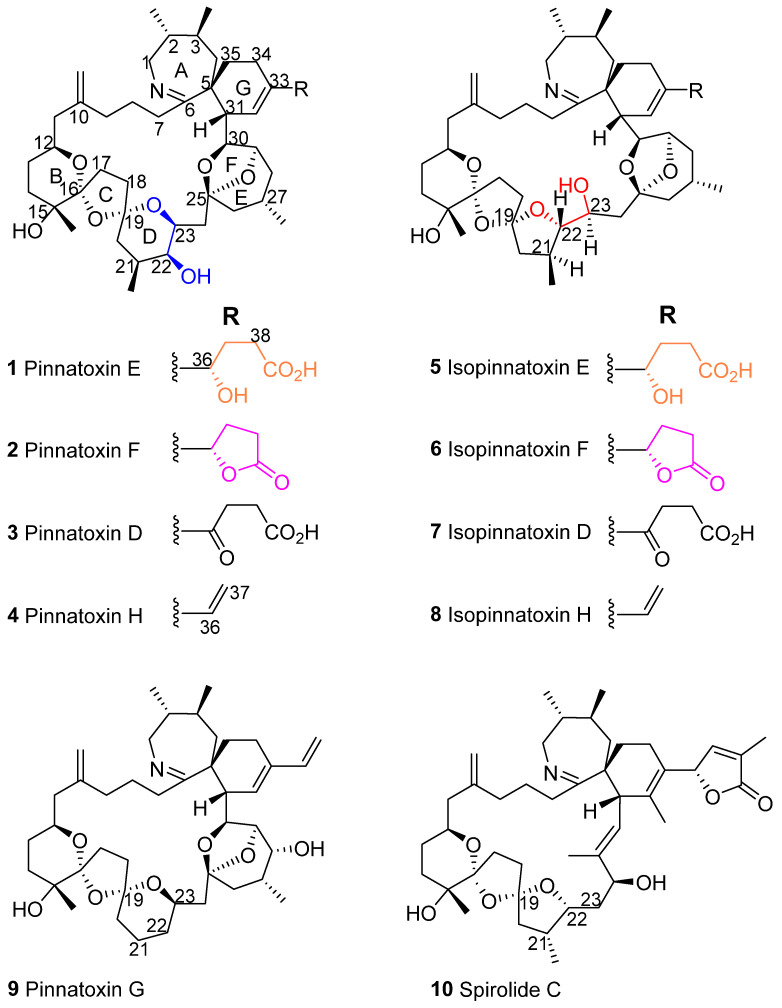 Figure 1
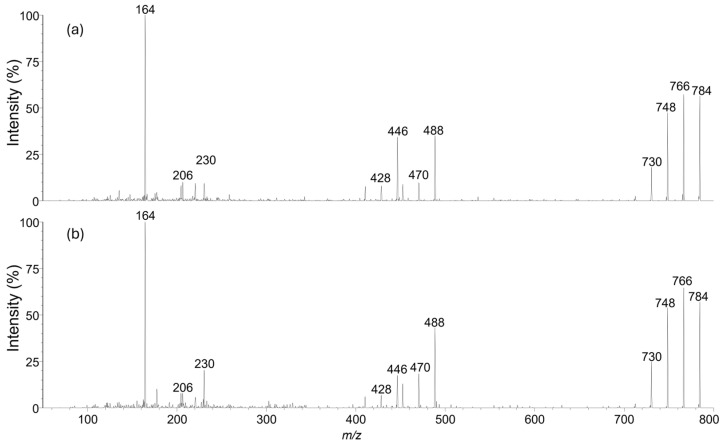 Figure 2
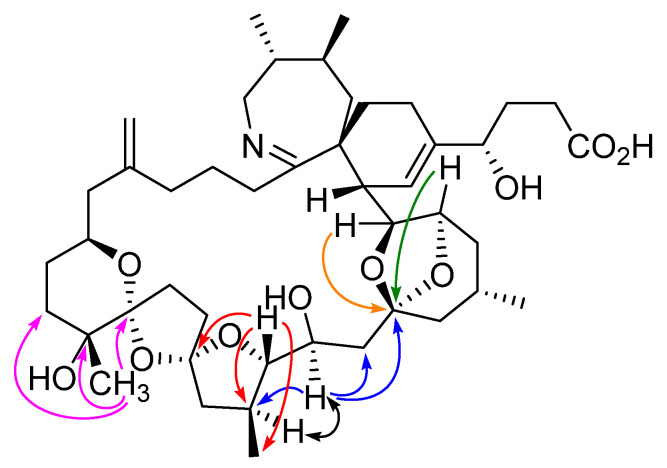 Figure 3
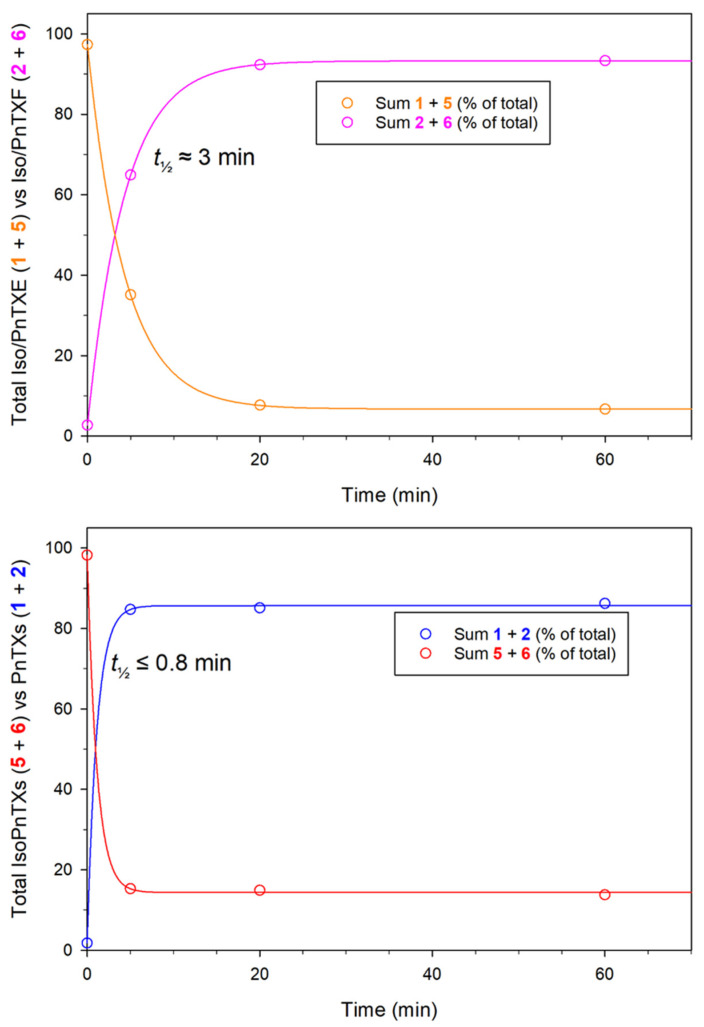 Figure 4
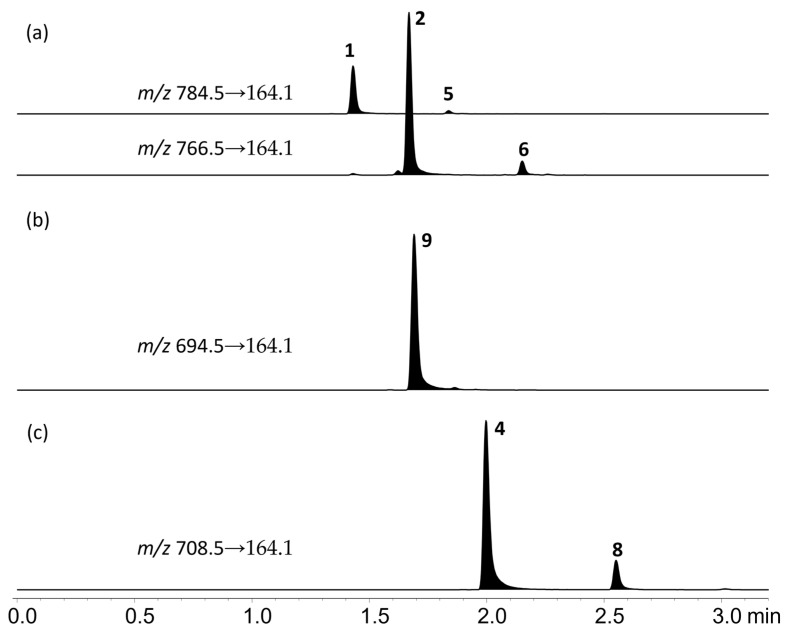 Figure 5
- —New Zealand Ministry of Business, Innovation and Employment Seafood Safety research programme
- —Marie Curie International Incoming Fellowship
Peer Reviews
No public reviews on file for this paper yet. If you reviewed it on a platform where reviews are public (OpenReview, ICLR, NeurIPS, ICML), you can paste yours below so the community can read it here.
Videos
No videos yet. Explain this paper in a talk, walkthrough, or lecture? Add one.
Taxonomy
TopicsMarine Toxins and Detection Methods · Marine Biology and Environmental Chemistry · Protist diversity and phylogeny
1. Introduction
Pinnatoxins (Figure 1), are a group of cyclic imines that have distinctive structural features, including a macrocycle incorporating a dispiroketal (BCD rings), a bicycloketal (EF rings), and a cyclic imine (A ring) that is spirolinked to a cyclohexene (G ring) [1,2,3,4,5]. Pinnatoxins E (1), F (2), G (9), and H (4) are produced by the benthic dinoflagellate Vulcanodium rugosum, and strain-dependent toxin profiles have been found in numerous isolates from around the world [6,7,8,9,10,11,12]. These toxins can accumulate in a variety of bivalves, and pinnatoxins A–D, along with pteriatoxins A–C [2], and pinnatoxin fatty acid esters [13], are thought to be shellfish metabolites of pinnatoxins produced by V. rugosum.
Pinnatoxins are highly toxic to mice by intraperitoneal (i.p) injection and oral administration [14]. They are fast-acting neurotoxins that target muscle and neuronal nicotinic acetylcholine receptors [15], leading to death by respiratory failure at high doses. Despite the frequent detection of these potent neurotoxins in shellfish, no human intoxications have been reported [16,17,18]. Ongoing investigations into the occurrence, chemistry, and toxicology of these toxins continue to refine our understanding of the potential risks they pose to shellfish consumers.
In this study, we expanded on the previous discovery of unidentified pinnatoxin isomers in pacific oysters, razor fish, sediment and water samples [2]. These pinnatoxin isomers were previously reported as epi-pinnatoxin E and epi-pinnatoxin F, but are now referred to as isopinnatoxin E (5) and isopinnatoxin F (6). Here, we report on the occurrence of isopinnatoxins in cultures of V. rugosum, the acid-catalyzed isomerization of pinnatoxins, and the isolation and structural elucidation of isopinnatoxin E (5). Furthermore, the acute toxicity of 5 was determined in mice by i.p. injection.
2. Results
2.1. Structural Charaterization of Isopinnatoxin E
Isopinnatoxin E (5) (290 µg) was obtained as a colorless, amorphous solid. The collision-induced fragmentation mass spectrum of 5 showed no significant differences from that of 1 (Figure 2), suggesting that only a minor structural rearrangement had occurred.
The structure of isopinnatoxin E (5) was established by the examination of 1- and 2-D NMR spectra (Figures S1–S7), together with a series of isomerization experiments. The ^13^C APT and g-HSQC spectra of 5 revealed the presence of 5 methyl (4 doublets and one singlet), 18 methylene, 13 methine, and 6 quaternary carbon atoms. Three further quaternary carbon signals were observed in the g-HMBC spectrum at 179.9 ppm (C-6), 148.3 ppm (C-10), and 182.2 ppm (C-39). Correlations observed in the two-dimensional NMR spectra established the assignments for 5 (Table 1), in a manner analogous to that used to establish the identity and NMR assignments of 1 [2]. The majority of the resonances of 5 possessed very similar chemical shifts and multiplicities to those of the analogous resonances of 1. However, the ^1^H and ^13^C resonances associated with C-19–C-24, and the ^1^H resonances associated with C-1–C-4, C-7–C-9, C-11, and C-12, differed significantly from the equivalent resonances of 1. The chemical shifts of many of these resonances more closely resembled those of spirolide C (10) (Table 1) than they did 1 (Figure S8).
Of particular importance in determining the structure of 5 were the correlations observed in the HMBC and NOESY spectra (Figure 3 and Figure S9). Although H-23 of 5 showed HMBC correlations to C-21, C-24, and C-25, it did not show a correlation to C-19 as might be expected if the tetrahydropyranyl D-ring had remained intact. Furthermore, H-22 of 5 showed HMBC correlations to C-19, C-21, and 21-CH_3_, establishing the presence of a tetrahydrofuranyl ring with an ether linkage connecting C-19 and C-22 to form a dispiro[4.1.5.2] spiroketal system. The strong NOESY correlation observed between H-21 and H-23 of 5 confirms that they are on the same face of the molecule, opposite to H-22, as do the observed coupling constants for H-23 (Table 1, Figure S9). This indicates 23S-stereochemistry, consistent with that of compound 1. These and other correlations established the structure of 5 to be that shown in Figure 1.
2.2. Isomerization
Upon heating in aqueous acetonitrile (MeCN) solutions containing trifluoroacetic acid (TFA), the D-ring in compounds 1–5 rapidly rearranged to form equilibrated mixtures of pinnatoxin isomers with the thermodynamically favored tetrahydropyranyl form being the major isomer (85:15) (Table 2, Figure 4 and Figure S15). However, this isomerization did not occur in compound 9, attributable to the absence of the 22-OH group. The equilibrated ratio of the isomers under these conditions was consistent with the ratio observed in extracts of V. rugosum (Figure 5).
2.3. Toxicity of Isopinnatoxin E
The acute toxicity of 5 by i.p. injection to mice was determined according to the principles of OECD guideline 425 [20]. Mice dosed with 280 (1 mouse), 400 (1), 700 (1) or 980 (3) µg/kg all survived. Observed symptoms of toxicity included abdominal stretching and orbital tightening, as well as a flat posture with the ears back. These symptoms were evident within 10 min post-dosing and were resolved within 2 h. During the subsequent 14-day observation period, all surviving mice exhibited normal growth and feeding behavior. At necropsy no abnormalities were detected, and organ weights were within normal limits. Mice (2) dosed at 1390 µg/kg both died with death times of 12- and 7-min post-dosing. The median lethal dose (LD_50_) for 5 by i.p. injection was calculated to be 1250 µg/kg with a 95% confidence interval of 980 to 1390 µg/kg.
3. Discussion
The initial discovery of low levels of compounds 5 and 6 in environmental samples, along with the observation that they were formed in acidic solutions [2], prompted an investigation to determine the chemical structures of these compounds. We hypothesized that the hydroxy group at C-22 was involved in the isomerization because the isomerization only occurred in pinnatoxins which contained a hydroxy group at that position. Cultures of V. rugosum were found to contain isopinnatoxins, which enabled the isolation and characterization of 5. The structure of 5 was elucidated from 1-D and 2-D NMR spectra, confirming that a rearrangement of the D-ring spiroketal with the 22-OH had occurred. The equilibrium favored the six-membered tetrahyropyranyl D-ring in pinnatoxins over the five-membered tetrahydrofuranyl D-ring in isopinnatoxins, with isopinnatoxins comprising only 15% of the total.
In addition to characterizing the structures of isopinnatoxins, experiments were conducted to provide insight into how they might contribute to the toxicity of shellfish containing pinnatoxins. The LD_50_ of 5 (1250 µg/kg) was significantly lower than that of 1 (57 µg/kg) [14]. This result parallels the diminished toxicity observed for another class of dinoflagellate toxins, pectenotoxins, where the rearrangement of a spiroketal ring system greatly reduces toxicity [21]. Both pinnatoxins and pectenotoxins consist of polyether rings within a macrocycle. Changes to the spiro-ether ring structures alter the overall conformation of the macrocycles, which likely explains the reduction in toxicity. Based on this structure–activity relationship, it is likely that the other isopinnatoxins will also exhibit a similar reduction in toxicity.
Two different health-based guidance values have been proposed for pinnatoxins in shellfish: 23 μg/kg by Arnich et al. [17] and 268 μg/kg by Finch et al. [16], with the discrepancy due to the application of different uncertainty factors. The i.p toxicities of 1, 2, 9, and 4 were, respectively, 27, 98, 25, and 19 times greater than that of 5, respectively. Given the low toxicity and low abundance of isopinnatoxins, it is unlikely that they could make any meaningful contribution toward the health guidance figures set for total pinnatoxins.
4. Materials and Methods
4.1. Purification of Isopinnatoxin E
Cells from a culture of V. rugosum isolate CAWD167 were lyophilized and extracted with methanol (MeOH) containing 0.1% (v/v) acetic acid. The extract was evaporated to dryness in vacuo, and the resulting residue was dissolved in ethanol–H_2_O (1:1 v/v) and defatted with an equal volume of hexane. The ethanolic layer was then extracted with an equal volume of ethyl acetate (EtOAc), and the upper organic layer was evaporated to dryness in vacuo. The residue was then dissolved in 10% MeOH–H_2_O (1:9 v/v) containing 0.1% (v/v) acetic acid and dichloromethane (DCM). The DCM was separated and evaporated in vacuo, and the residue was dissolved in MeCN–H_2_O (1:4 v/v) in aqueous 100 mM triethylamine.
This solution was left for 24 h at 21 °C to hydrolyze compounds 2 and 6 to compounds 1 and 5. Water was then added to the solution to lower the MeCN concentration to approximately 10% (v/v), and the pH was adjusted to pH 5.5 using acetic acid. The solution was desalted by applying it to a 200 mg Strata-X solid phase extraction (SPE) column (Phenomenex, Torrance, CA, USA), pre-conditioned with 6 mL MeOH, followed by 6 mL MeCN–H_2_O (3:17 v/v). The column was washed with 6 mL MeCN–H_2_O (3:17 v/v), and compound 5 was eluted with 5 mL MeOH.
The MeOH was evaporated under a gentle stream of nitrogen, and the residue was dissolved in 2 mL DCM. This was loaded onto a 5 g silica gel column (32–63 µm, Scientific Adsorbents Inc., Atlanta, GA, USA), which had been pre-conditioned with 20 mL DCM. The column was eluted using a stepwise gradient of MeOH in DCM (5%, 10%, 20%, 25%, 30%, 40%, 60%, 80% and 100%; 4 × 10 mL each). Fractions 12–30 were combined and evaporated in vacuo.
The residue was then dissolved in 5 mL MeOH–H_2_O (1:3 v/v) and applied to a 200 mg Strata-X SPE column pre-conditioned with 6 mL MeOH, followed by 6 mL MeOH–H_2_O (1:3 v/v). The SPE column was eluted using a stepwise gradient of MeCN in aqueous 10 mM NaH_2_PO_4_ (20%, 25%, 30% and 40%; 3 × 7.5 mL each). Fractions 10–12 were combined and partially evaporated in vacuo to reduce the MeCN content prior to desalting on a 200 mg Strata-X SPE column using the previously described protocol.
Final purification was achieved by preparative HPLC using a Luna C18(2) 10 µm column (250 × 10 mm, Phenomenex Torrance, CA, USA) eluted at 5 mL/min with 40% MeCN in aqueous 10 mM NaH_2_PO_4_, and was monitored using a photodiode array detector scanning 200–300 nm. Compound 5 was collected from 10.1 to 11.2 min. The solution of 5 was partially evaporated to reduce the MeCN content prior to desalting on a 200 mg Strata-X SPE column, following the previously described protocol.
4.2. LC–MS Analysis
A Shimadzu LCMS-8050 with Nexera Series LC-30 UHPLC (Shimadzu, Kyoto, Japan) was used for analysis. Separation was achieved with a Waters Acquity BEH C18 1.7 µm 50 × 2.1 mm column (Phenomenex, Torrance, CA, USA) at 30 °C, eluted at 0.5 mL/min with a linear gradient of 0.1% (v/v) formic acid in water (A) to MeCN (B). The gradient consisted of 20 to 60% B over 2 min, held for 8 min before returning to the initial conditions. The electrospray ionization was operated in positive ion mode with the following settings: interface voltage 4 kV, nebulizing gas flow 2 L/min, heating and drying gas flows 10 L/min, interface temperature 300 °C, desolvation temperature 525 °C, DL temperature 250 °C, heat block temperature 400 °C, and CID gas 270 kPa. For MS/MS experiments, the collision energy was set to −50 eV. The following single-ion monitoring (SIM) transitions were acquired with 20 ms dwell times: m/z 694.5, 708.5, 766.5, 782.5, and 784.5. For the analysis of V. rugosum cultures, multiple-reaction monitoring (MRM) transitions were acquired with 20 ms dwell times: m/z 694.5→164.1, 708.5→164.1, 766.5→164.1, 784.5→164.1. The m/z 164.1 ion corresponds to the common iminium ring fragment (C_11_H_18_N^+^).
The concentration of 5 was determined by calibrating against the certified reference material of 1 (Sigma–Aldrich, Merck Life Science Ltd., Buchs, Switzerland) using the same SIM LC–MS method, using an isocratic elution consisting of 35% mobile phase B. An equimolar response of 1 and 5 under these conditions was confirmed by the quantitative isomerization experiment.
4.3. Pinnatoxin Isomerization
Solutions of 1–5 and 9 were prepared in MeCN–water–TFA (1:1:0.2). The solutions were heated to 50 °C in a chemical reaction oven, and samples were taken at 0, 5, 20, and 60 min for LC–MS/MS analysis. These samples were diluted 100-fold by adding 10 µL aliquots to 990 µL of MeCN–water (1:1 v/v) and analyzing immediately by LC-MS/MS.
4.4. NMR Spectroscopy
NMR (^1^H, COSY, TOCSY, g-HSQC, g-HMBC, NOESY, and ^13^C APT) spectra were obtained from solutions of CD_3_OD (99.8+ atom-% D; Aldrich) using a Bruker Avance AVI-600 MHz NMR spectrometer, with a 5 mm inverse TCI (^1^H^13^C^15^N) cryoprobe, equipped with Z-gradient coils, at 30 °C, using TopSpin version 1.3. Chemical shifts are reported relative to internal CHD_2_OD (3.31 ppm) and CD_3_OD (49.0 ppm) and NMR data were processed using TopSpin version 3.6.
4.5. Toxicity Determination for Isopinnatoxin E
Acute toxicity was determined according to the principles of OECD guideline 425 [20]. This guideline uses the minimum number of animals while still being able to determine a robust LD_50_, along with an estimate of confidence intervals. Mice (female, Swiss, 18–22 g) were weighed immediately prior to dosing, and 5 was administered on a µg/kg basis. Aliquots of an EtOH solution containing 5 were taken gravimetrically and diluted with 1% Tween in saline prior to dosing (500 µL). All mice were dosed between 8.00 and 9.30 a.m. to avoid diurnal variations. All mice were monitored intensely on the day of dosing, and any survivors were monitored for a further 14 d with bodyweight and food consumption being measured regularly. After 14 d, the mice were euthanized with carbon dioxide and necropsied. Major organs (liver, spleen, kidney, heart, lungs, gut) were immediately weighed and expressed as a percentage of bodyweight (Table S1).
The reference list from the paper itself. Each links out to its DOI / PubMed record.
- 1Uemura D. Chou T. Haino T. Nagatsu A. Fukuzawa S. Zheng S.Z. Chen H.S. Pinnatoxin A: A toxic amphoteric macrocycle from the Okinawan bivalve Pinna muricata J. Am. Chem. Soc.19951171155115610.1021/ja 00108 a 043 · doi ↗
- 2Selwood A.I. Miles C.O. Wilkins A.L. Van Ginkel R. Munday R. Rise F. Mc Nabb P.S. Isolation, structural determination, and acute toxicity of novel pinnatoxins E, F and GJ. Agric. Food Chem.2010586532654210.1021/jf 100267 a 20408554 · doi ↗ · pubmed ↗
- 3Takada N. Umemura N. Suenaga K. Chou T. Nagatsu A. Haino T. Yamada K. Uemura D. Pinnatoxins B and C, the most toxic components in the pinnatoxin series from the Okinawan bivalve Pinna muricata Tetrahedron Lett.2001423491349410.1016/S 0040-4039(01)00480-4 · doi ↗
- 4Chou T. Kamo O. Uemura D. Relative stereochemistry of pinnatoxin A, a potent shellfish poison from Pinna muricata Tetrahedron Lett.1996374023402610.1016/0040-4039(96)00752-6 · doi ↗
- 5Chou T. Haino T. Kuramoto M. Uemura D. Isolation and structure of pinnatoxin D, a new shellfish poison from the Okinawan bilvalve Pinna muricata Tetrahedron Lett.1996374027403010.1016/0040-4039(96)00753-8 · doi ↗
- 6Zeng N. Gu H. Smith K.F. Rhodes L. Selwood A.I. Yang W. The first report of Vulcanodinium rugosum (Dinophyceae) from the South China Sea with a focus on the life cycle N. Z. J. Mar. Freshw. Res.20124651152110.1080/00288330.2012.719911 · doi ↗
- 7Smith K.F. Rhodes L.L. Suda S. Selwood A.I. A dinoflagellate producer of pinnatoxin G, isolated from sub-tropical Japanese waters Harmful Algae 20111070270510.1016/j.hal.2011.05.006 · doi ↗
- 8Rhodes L. Smith K. Selwood A. Mc Nabb P. Molenaar S. Munday R. Wilkinson C. Hallegraeff G. Production of pinnatoxins E, F and G by scrippsielloid dinoflagellates isolated from Franklin Harbour, South Australia N. Z. J. Mar. Freshw. Res.20114570370910.1080/00288330.2011.586041 · doi ↗