Sodium Patterns and Their Variables in a Cohort of ELBW Infants in the First 10 Days of Life
Stijn van Sas, Myrna Pace, Thomas Salaets, Annouschka Laenen, Anke Raaijmakers, Karel Allegaert

TL;DR
This study examines sodium levels in extremely low-birth-weight infants during their first 10 days of life and identifies factors influencing these levels.
Contribution
The study identifies new variables, such as ibuprofen and inotropes, that influence sodium patterns in ELBW infants.
Findings
Gestational age and birth weight independently impact sodium concentration patterns in ELBW infants.
Ibuprofen use remains a significant variable affecting sodium levels after adjusting for gestational age and birth weight.
Prenatal betamethasone use and delivery mode are associated with postnatal serum sodium concentration patterns.
Abstract
Background: Sodium regulation is critical in extremely low-birth-weight (ELBW, <1000 g) infants. In a recent systematic review, a sodium pattern over postnatal age and its variables (care factors, fluid regimens, and maturational factors) has been summarized. However, this systematic review also illustrated the shortages and limitations of reported cohorts, and the need to report on additional datasets. This study therefore aims to describe the postnatal sodium patterns and their variables in a cohort of ELBW neonates in the first 10 days of postnatal life. Methods: Data on 1704 serum sodium observations in the first 10 days of life from 211 ELBW infants hospitalized in a single neonatal intensive care unit were available to explore associations between serum sodium and perinatal variables. Multivariate linear models with sodium as a response variable and postnatal day as a factor were…
Genes, proteins, chemicals, diseases, species, mutations and cell lines named across the full text — each resolved to its canonical identifier and authoritative record.
Click any figure to enlarge with its caption.
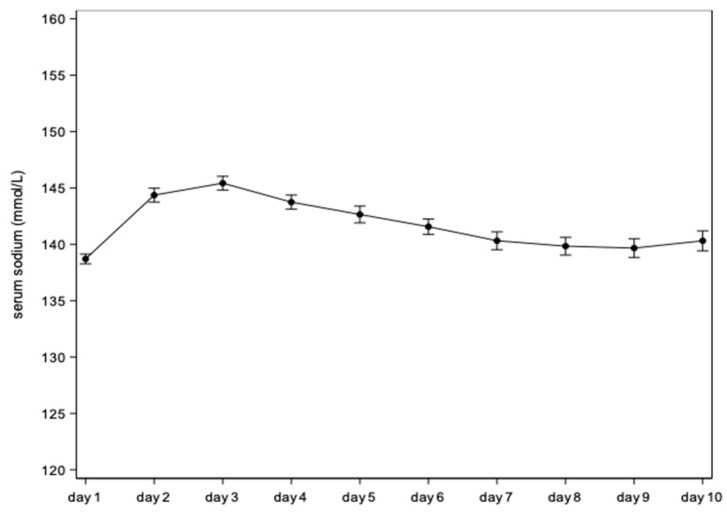 Figure 1
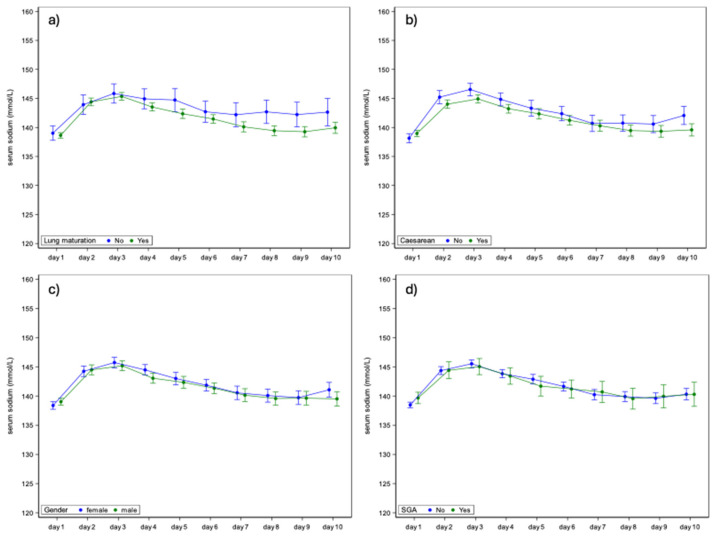 Figure 2
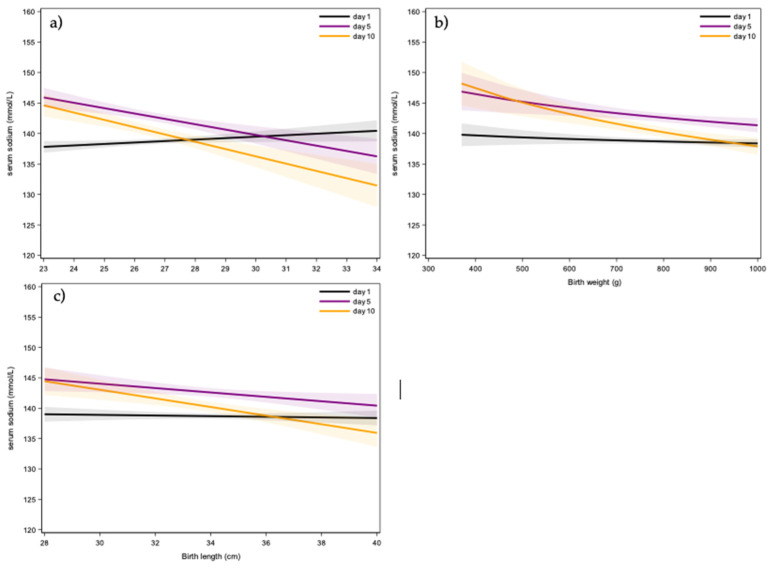 Figure 3
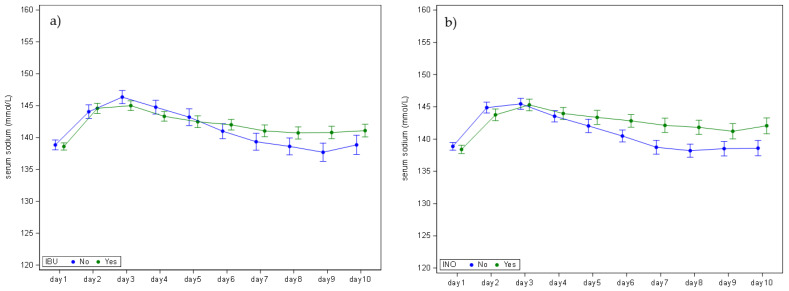 Figure 4
Peer Reviews
No public reviews on file for this paper yet. If you reviewed it on a platform where reviews are public (OpenReview, ICLR, NeurIPS, ICML), you can paste yours below so the community can read it here.
Videos
No videos yet. Explain this paper in a talk, walkthrough, or lecture? Add one.
Taxonomy
TopicsNeonatal Respiratory Health Research · Birth, Development, and Health · Infant Nutrition and Health
1. Introduction
While significant improvements in survival and outcome occurred over the last decades, extremely low-birth-weight (ELBW, <1000 g) infants still have to confront short- as well as long-term outcome variables [1,2]. Sodium dysregulation, particularly in the first 10 days of life, poses a significant concern as a modifiable indicator of short- and long-term outcomes. Unfortunately, aspects of patterns, reference values, or variables of sodium remain rather poorly reported in this specific ELBW population [3].
In a recent systematic review on this topic, patterns on sodium changes over postnatal age in ELBW cases were summarized [4]. Besides care-related variables (incubator humidity and temperature settings, occlusive skin care, or fluid regimens), these patterns are mainly related to maturational factors of the ELBW infant (age-related aspects, like postnatal or gestational age, or being either appropriate or small for gestational age, AGA, or SGA, respectively). However, only eight studies (observational studies, n = 5; case control studies, n = 2; and one randomized controlled trial) were retained [4]. Consequently, the extensive heterogeneity among the studies retained in this review called for further reflections and interpretation of the pooled data, while additional validation studies are needed to better document normative values and to improve electrolyte (like sodium) or fluid supplementation practices and protocols. Because of the specific characteristics of the sodium values as reported in the individual papers, we also failed to provide data on mean sodium values over postnatal age [4]. This makes studies on, e.g., associations between hyper- or hyponatremia and outcome variables even more difficult to interpret.
Since the recently published systematic review illustrated the shortage of reported cohorts, hereby confirmed as being relevant to the new datasets, this study aims to describe the early postnatal sodium patterns and their variables in a large cohort of ELBW neonates.
2. Materials and Methods
2.1. Clinical Characterstics and Fluid Administration Strategy
This study utilized previously collected longitudinal serum sodium concentrations of neonates (neonatal intensive care unit (NICU), University Hospitals Gasthuisberg Leuven, July 2007–August 2011), pooled with another dataset (June 2015–March 2017) from the same unit. All ELBW infants who had sodium serum observations collected within the first 10 days were included [5]. We defined day 1 as the first 24 h of life [6]. In addition, clinical data [birth weight, length, gestational age, SGA or AGA, sex, neonatal death, prenatal lung maturation, type of delivery (caesarean/vaginal), ibuprofen prescription, and exposure to inotropes] were extracted from medical records as previously described [5]. Ethics approval (S63405, KU Leuven, Belgium) has been provided to extract these data and perform the analysis [5].
All ELBW neonates were cared for in closed incubators, with temperature setting to sustain normothermia and with humidity settings at 50–80%. The fluid and sodium management in this cohort was standardized based on the Leuven protocol, with an increment in fluid volume over postnatal age (60 mL/kg, based on 40 mL/kg/24 h glucose 10% + 20 mL/kg plasma on day 1; day of birth—day of birth, 80 mL/kg/24 h on day 2; 100 mL/kg on day 3; 120 mL/kg/24 h on day 4; and 150–180 mL/kg/24 h for day 5 onwards). Sodium (2.5 mmol/kg/day) was commonly administrated as part of parenteral nutrition from day 4 onwards [7].
2.2. Statistical Analysis
Statistical analysis explored the patterns and trends in sodium levels in the first 10 days of postnatal life, and how these patterns were associated with perinatal and neonatal variables. The variables included prenatal betamethasone lung maturation treatment, mode of delivery, SGA status, gestational age, sex, birth weight and length, ibuprofen treatment, and inotropic agents. We applied multivariate linear models with sodium as the response variable and postnatal day as the factor. Baseline or treatment characteristics were included as variables, with an unstructured covariance matrix to account for longitudinal data.
We tested interactions between day and each characteristic, presenting mean differences with 95% confidence intervals (CIs) per day if significant, or overall effects if not. If applicable, non-linear effects of continuous variables were estimated using log-transformation. Results were presented as slopes with 95% Cis, applying SAS software (SAS System for Windows, version 9.4) [8].
3. Results
3.1. Clinical Characteristics of the ELBW Cohort
Data were collected on 211 ELBW neonates, with population characteristics, as well as the prescription of betamethasone (prenatal lung maturation), ibuprofen, and inotropic agents, as summarized in Table 1.
The study measured 1704 serum sodium concentrations in the cohort of ELBW newborns in their first 10 days of postnatal life. Figure 1 illustrates the variation of serum sodium concentration over time. Serum sodium was significantly higher after day 1, with a peak serum sodium concentration on day 3 at 145.4 mmol/L, followed by a subsequent blunted decrease until day 9.
Table 2 displays the daily mean (95% confidence interval) of sodium concentrations starting from the day of birth (referred to as day 1). The mean difference versus day 1 hereby quantifies the trends illustrated in Figure 1.
3.2. Perinatal Variables
We evaluated the associations between prenatal betamethasone lung maturation administration and sodium serum concentration in ELBW infants over postnatal age (day 1 until day 10) but found no significant correlations. The mean serum sodium concentration did not differ significantly between infants with or without lung maturation treatment (Figure 2a). Additionally, we studied the impact of delivery mode (caesarean vs. vaginal) on serum sodium concentrations (Table S1). While some differences were noted on specific days, overall, no consistent significant associations were found (Figure 2b).
3.3. Neonatal Variables
Associations between neonatal variables such as sex (Figure 2c), SGA status (Figure 2d), and serum sodium concentrations were evaluated. No significant associations were observed. The serum sodium concentrations between male and female ELBW infants, or between SGA and AGA infants, were not significantly different.
We also assessed the impact of gestational age (Figure 3a, Table S2), birth weight (Figure 3b, Table S3), and birth length (Figure 3c) on serum sodium concentration. The associations for these different variables varied across the postnatal time interval explored (day 1–10). Specifically, gestational age showed a positive correlation on day 1 and a negative correlation on the subsequent days (Figure 3a). Birth weight and birth length were negatively associated with serum sodium concentrations from day 3 onward (Figure 3b,c, Tables S9 and S10).
We compared serum sodium concentrations between infants who were exposed to ibuprofen and those who were not (Figure 4a, Table S4), as well as between those exposed to inotropic agents and those who were not exposed (Figure 4b, Table S5). Both ibuprofen and inotropic agent exposure showed significant day-to-group interactions, with differences in sodium concentrations observed from day 6 onwards (Tables S4 and S5).
Multivariate analyses confirmed that gestational age and birth weight independently impacted sodium levels, and that ibuprofen use remained a significant variable after adjusting for these variables (Table S6).
4. Discussion
Sodium homeostasis in neonates is very important, most prominent in the most immature ELBW subpopulation. This study reports on an analysis of sodium patterns and the variables associated of these sodium values in a cohort of 211 ELBW’s from a single neonatal intensive care unit.
When considering the overall pattern over postnatal life (Figure 1, Table 2), we noticed the expected increase in sodium values over the first days of life, followed by a subsequent blunted decline to attain sodium values similar to those at birth from the end of the first week of life onwards. This pattern largely confirms the pattern recently described in the systematic review [4], assuming that the initial increase in sodium levels is enhanced by a physiological fluid shift in the very first days of life (more pronounced water losses), to attain a peak on day 3, followed by a gradual decrease [1,2,3,4]. In this way, the currently reported sodium reference values validate those previously described findings [4].
Since ELBW infants display prolonged water losses, sodium and fluid supplementation after initial weight loss are necessary [1,9,10]. The targeted outcome hereby lies in titrating the need for fluids to avoid hypernatremia, as well as dehydration or hyperbilirubinemia, while at the very same time mitigating the potential complications of excessive fluid administration like patent ductus arteriosus, or bronchopulmonary dysplasia. In the best case scenario, appropriate fluid supplementation should allow sufficient contraction of the extracellular space while still avoiding excessive fluid loss to avoid early hypernatremia and providing sufficient sodium supplement to facilitate postnatal growth [9,10]. Costarino et al. [11] (bronchopulmonary dysplasia) and Eibensteiner et al. [12] (high-grade intraventricular hemorrhage, necrotizing enterocolitis, and mortality) observed that sodium intake restriction resulted in better outcomes [11,12].
When reflecting on the variables associated with sodium patterns in the first 10 days of postnatal age, gestational age’s association with sodium values varied across the first 10 days in the current analysis. Higher gestational age was correlated with higher sodium values on day 1, while days 3–10 showed a correlation with lower sodium values. It is important to stress that newborns who were born at 34 weeks of gestational age yet <1 kg were severely growth-restricted. Correspondingly, Boubred et al. reported that there was a non-significant trend to lower sodium serum values in SGA newborns, compared to AGA newborns [13]. The sodium decreases associated with a decreasing gestational age observed in the research of Strizke et al. align with the finding from our cohort on day 1 of life [14].
Similarly, the effect of birth weight on sodium serum values also varied, with lower sodium values associated with higher birth weight, on all days analyzed, except for days 1 and 2. Higher birth weight was associated with lower average sodium values. Monnikendam et al. also reported a link between moderate and severe hypernatremia and lower gestational age, or birth weight [3].
Besides largely confirming the relevance of these maturational differences, additional and new variables were identified. Infants who received ibuprofen had higher sodium levels than those who were not exposed. This was somewhat unexpected as non-steroidal anti-inflammatory drugs (NSAIDs) inhibit prostaglandin synthesis, potentially causing a range of disturbances in acid-base or electrolyte balance and inducing fluid retention. These disturbances can include sodium retention and a decrease in renal function, which can further reduce renal free water clearance and lead to hyponatremia [15]. Additionally, ibuprofen can also impact renal function directly by causing tubular toxicity, leading to a decrease in the concentrating ability of the kidneys. A likely explanation for the hypernatremia observed in this cohort is that the infants who were administered ibuprofen also had fluid restriction as a part of their treatment [15].
Sodium values were significantly higher for infants who were exposed to ionotropic agents compared to their counterparts. Inotropes are commonly used in NICUs to treat hypotension and poor perfusion. However, their impact on serum sodium levels in neonates is not well-studied, and the evidence is limited [16]. One possible explanation could be related to the physiological effects of inotropes. They can increase blood pressure and improve organ perfusion, which might influence renal function and subsequently affect electrolyte balance, including sodium levels [16]. Another variable could be the fluid management in neonates who are on inotropes. These neonates likely receive additional sodium containing fluid boluses compared to those not on inotropes, which could influence their serum sodium levels. However, it is important to note that this is a complex issue, and other variables could also be involved. More research is warranted to further explore the relationship between inotrope prescription use, and sodium serum levels in neonates.
Interestingly, infants born by vaginal delivery in the current cohort exhibited higher sodium values on days 3, 4, and 10 compared to those born by caesarean section. To our knowledge, this association has not yet been observed, and we can only speculate on the underlying mechanisms, perhaps related to peripartal fluid shifts. Stritzke et al. looked at the impact of caesarean delivery on cord blood electrolytes, but no significant association was observed after correcting for gestational age [14]. Dimitrou et al. reported that insensible water loss was lower and urine output higher in preterms who were exposed to prenatal lung maturation [17]. The absence of significant differences in the current cohort can be explained by their overall high exposure rate (87%).
Obviously, our study has its limitations. The retrospective analysis of this cohort presents inherent limitations in establishing causation. Future research should aim to unveil normative values and optimize sodium and fluid administration protocols. Additionally, the association of different variables with sodium homeostasis in ELBW infants should be established in additional longitudinal assessments. While we have explored the impact of SGA or AGA on sodium serum trends, we have not explored potential differences in sodium handling in later life [18]. Because of the retrospective design, we were unable to capture potential osmotic diuresis, associated with hyperglycemia, and the fluid regimen was somewhat different from the latest guidelines [19,20].
To conclude, we confirmed sodium serum patterns and reference values in ELBW cases over postnatal age (day 1–10), while additional variables of these sodium trends were suggested. While associations between sodium serum levels and birth weight, gestational age, or length at birth are in line with what has been previously described in the literature, we observed the association between exposure to inotropic agents or ibuprofen, and serum sodium values, in ELBW infants. This should be further prospectively validated and confirmed in larger cohorts. Such reference values are useful to provide clinicians guidance to interpret single sodium observations or postnatal trends in individual ELBW newborns.
The reference list from the paper itself. Each links out to its DOI / PubMed record.
- 1Wada M. Kusuda S. Takahashi N. Nishida H. Fluid and electrolyte balance in extremely preterm infants < 24 weeks of gestation in the first week of life Pediatr. Int.20085033133610.1111/j.1442-200X.2008.02577.x 18533947 · doi ↗ · pubmed ↗
- 2Stritzke A. Thomas S. Amin H. Fusch C. Lodha A. Renal consequences of preterm birth Mol. Cell. Pediatr.20174210.1186/s 40348-016-0068-028101838 PMC 5243236 · doi ↗ · pubmed ↗
- 3Monnikendam C.S. Mu T.S. Aden J.K. Lefkowitz W. Carr N.R. Aune C.N. Ahmad K.A. Dysnatremia in extremely low birth weight infants is associated with multiple adverse outcomes J. Perinatol.20193984284710.1038/s 41372-019-0359-030932030 · doi ↗ · pubmed ↗
- 4Pace M. van Sas S. Salaets T. Laenen A. Raaijmakers A. Allegaert K. Hypo- and hypernatriemia in extremely low birth weight infants in the first 10 days of life: A review Children 20251223110.3390/children 1202023140003333 PMC 11854672 · doi ↗ · pubmed ↗
- 5van Donge T. Allegaert K. Gotta V. Smits A. Levtchenko E. Mekahli D. van den Anker J. Pfister M. Characterizing dynamics of serum creatinine and creatinine clearance in extremely low birth weight neonates during the first 6 weeks of life Pediatr. Nephrol.20213664965910.1007/s 00467-020-04749-332944826 PMC 7851041 · doi ↗ · pubmed ↗
- 6Allegaert K. Hildebrand H. Singh K. Turner M.A. The publication quality of laboratory values in clinical studies in neonates Pediatr. Res.202394969810.1038/s 41390-022-02385-136550353 PMC 10356592 · doi ↗ · pubmed ↗
- 7Devlieger H. De Pourcq L. Casneuf A. Vanhole C. de Zegher F. Jaeken J. Eggermont E. Standard two-compartment formulation for total parenteral nutrition in the neonatal intensive care unit: A fluid tolerance based system Clin. Nutr.19931228228610.1016/0261-5614(93)90047-816843327 · doi ↗ · pubmed ↗
- 8SAS Institute Inc SAS Software, version 9.4SAS Institute Inc.Cary, NC, USA 2014