Maxwellian Distribution-Based Hall Transport Coefficients for Charged Particles in Magnetic Disk Array
Linlin An, Peifeng Fan

TL;DR
This paper investigates how charged particles move in magnetic disk arrays using a Maxwellian distribution model to calculate transport properties like diffusivity and conductivity.
Contribution
The novel contribution is the calculation of Hall transport coefficients using an anisotropic framework and local Maxwellian distribution in magnetic disk arrays.
Findings
Hall diffusivity, electrical conductivity, and thermal Hall conductivity tensors were calculated.
An anisotropic framework with Fourier transformation was applied to charged particle dynamics in magnetic disk arrays.
The study enhances understanding of Hall transport in chiral active systems.
Abstract
This study explores Hall transport phenomena by expanding upon prior research on magnetic disk arrays (MDAs). We examine the dynamics of charged particles using collision models akin to those in Lorentzian plasma. Previously, we derived transport coefficients under isotropic and mono-kinetic conditions. In this study, we adopt an anisotropic framework, enhanced by Fourier transformation, and employ the local Maxwellian distribution function. These assumptions allow us to calculate the Hall diffusivity, electrical conductivity, and thermal Hall conductivity tensors. Our findings contribute to a deeper understanding of the Hall transport in magnetic disk arrays and chiral active systems.
Genes, proteins, chemicals, diseases, species, mutations and cell lines named across the full text — each resolved to its canonical identifier and authoritative record.
Click any figure to enlarge with its caption.
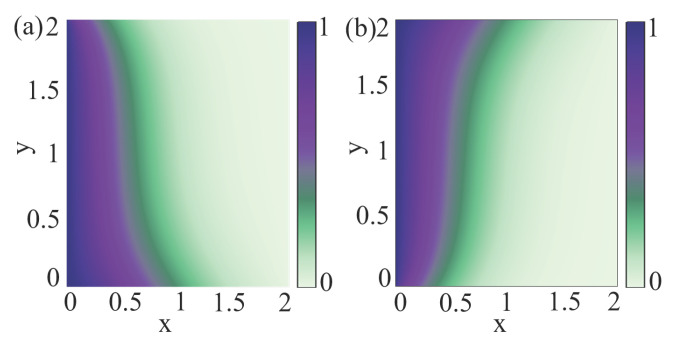 Figure 1
- —National Natural Science Foundation of China
- —Natural Science Foundation of Anhui Province of China
Peer Reviews
No public reviews on file for this paper yet. If you reviewed it on a platform where reviews are public (OpenReview, ICLR, NeurIPS, ICML), you can paste yours below so the community can read it here.
Videos
No videos yet. Explain this paper in a talk, walkthrough, or lecture? Add one.
Taxonomy
TopicsPhysics of Superconductivity and Magnetism · Theoretical and Computational Physics · Quantum, superfluid, helium dynamics
1. Introduction
Hall transport phenomena, commonly known as odd transport [1], have attracted significant interest in the field of physics in recent times. This interest is driven by the exploration of various Hall effects, such as Hall diffusion [2,3], Hall mobility [4], Hall viscosity [1,5,6,7,8,9,10,11], and thermal Hall effects [12,13,14,15,16]. These phenomena are particularly prevalent in chiral active matter [17], systems that are characterized by a continuous injection of microscopic energy [18], resulting in behaviors that elude traditional equilibrium thermodynamics. Such systems typically consist of particles propelled by internal forces, as observed in active colloids [19] and biological cells [20,21,22], where they exhibit intrinsic chiral motion. The concept of chirality in these systems is intrinsically linked to their breaking of time-reversal or parity symmetry [9,23,24], which leads to unique transport behaviors.
A common method for breaking time-reversal symmetry is by applying a magnetic field. In our previous study [25], we introduced a discrete magnetic field configuration called a magnetic disk array (MDA) to theoretically investigate the dynamics of the charged particles within this setup. The presence of the magnetic field inherently breaks time-reversal symmetry, thus facilitating the emergence of Hall transport phenomena. Our investigation focused on deriving the collision integral and the corresponding Boltzmann equation, subsequently utilizing the assumptions of isotropy and mono-kinetic equilibrium to determine the transport coefficients.
In this study, we advance our theoretical approach by relaxing the assumption of isotropy in the calculation of the perturbation distribution functions. Instead, we employ an anisotropic framework, enhanced by Fourier transformation techniques. Departing from the mono-kinetic distribution function, we adopt the local Maxwellian distribution function, which is more prevalent in physical systems, to characterize the equilibrium state. Under these revised conditions, we calculate the Hall diffusivity tensor, the Hall conductivity tensor, and the thermal Hall conductivity tensor. Moreover, we verify the Einstein relation connecting the diffusivity and conductivity tensors, thereby expanding our understanding of the Hall transport phenomena in chiral active systems. We aim to provide a more comprehensive understanding of the charged particle dynamics in magnetic disk arrays, contributing to advancements in the field of Hall transport phenomena.
The rest of this paper is organized as follows: In Section 2, the linear perturbed distribution function is derived under anisotropic conditions. In Section 3, the Hall diffusivity tensor, the Hall conductivity tensor, and the thermal Hall conductivity tensor are calculated using the Maxwellian equilibrium distribution function.
2. Linear Solution to the Boltzmann Equation Under Anisotropic Conditions
Consider a system where charged particles of the -species are confined to a 2D plane. The distribution function for these particles is represented by , where and denote the particle’s position and velocity, respectively. For convenience, we can use complex variables to describe a 2D object, rewriting the position as and the velocity as , thus associating with r and with v.
In this study, we examine a 2D transport process for the charged particles within a discrete magnetic field configuration characterized by a repeating pattern. The fundamental repeating unit is a localized magnetic field confined to a circular region, oriented in the z-direction, which we refer to as a magnetic disk (MD). These magnetic disks (MDs) are arranged on a 2D plane without overlapping, thereby constructing a magnetic disk array (MDA). As charged particles move through this MDA, they will be scattered, and we aim to investigate the transport characteristics within this particular setup. We assume that the motion of the MDs is independent of the scattering process; specifically, if the MDs are initially fixed, they remain stationary and are unaffected by the charged particles. Under these conditions, the system can be described using the Lorentz model [26,27,28], where the MDs are analogous to fixed ions, and the interactions between the charged particles and the MDs are simplified as collisions.
Using the results from Ref. [25], the collision integral in this scenario is expressed as
where represents the density of the MDs in the local 2D domain, and is the radius of an individual MD. Here,
denotes the velocity (expressed as a complex variable) at which the particle enters the MD and exits with the velocity v. In Equation (2), the parameter is the ratio of the gyroradius of the charged particle to the radius of the MD, i.e.,
where
and we have
as the gyrofrequency, is the magnetic field within MD, c is the speed of light, and and are the charge and mass of the charged particle of the -species, respectively.
From Equations (1) and (2), we can see how the interactions between charged particles and magnetic disks (MDs) influence the collision integral. It is evident that the collision integral is proportional to the density of the MDs, , and the radius of the MDs, . Based on a physical interpretation of the collision integral, this can be understood: the greater the density of the MDs and the larger their radius, the higher the probability that a charged particle will be scattered by the MDA. The contributions of the magnetic field’s strength and particle velocity are implicit in the fundamental ratio , which is contained within . By rewriting the fundamental ratio as , we can observe that both the magnetic field and the particle velocity are factors in the collision integral. Detailed derivations of Equation (1) were presented in our previous work; for more information, see Ref. [25].
In Equations (1) and (2), the superscript “+” corresponds to the scenario where , whereas “−” corresponds to the case where . Having provided the collision integral, the Boltzmann equation for charged particles is subsequently expressed as follows:
We proceed to derive the linear Boltzmann equation and compute the perturbed distribution function. Suppose the distribution function can be decomposed into
where denotes the local equilibrium distribution, and represents a small deviation from . Substituting Equation (7) into Equation (6) and neglecting the higher-order terms, we obtain the linear Boltzmann equation
where
Since , we can express v and as
Since can be considered a function of and , and is periodic with respect to , we can solve Equation (8) using Fourier’s method. Assuming that and considering that and are the Fourier components of and , respectively, this means that and can be expressed as
Substituting Equations (12) and (13) into Equation (8) can be rewritten as
using Equations (10) and (11), where denotes the external force. Here, is defined as
where is a special integral function given by
This function (Appendix A) satisfies the following basic properties
By reorganizing the terms in Equation (14), we arrive at the following expression:
The Fourier coefficients on the left-hand side (LHS) of Equation (21) are given by . Consequently, Equation (21) can be simplified into
Here, the notation denotes the inner product of any two complex functions and , defined as
Next, we determine the perturbed distribution function using Equation (22). For a case where , we find that using Equations (15) and (17). Equation (22) then is simplified into
If the right-hand side (RHS) of Equation (24) is not zero, we cannot set the frequency to zero to nullify the LHS of Equation (24). Consequently, it is not possible to achieve a time-independent or stable distribution function, meaning that a dynamic equilibrium transport scenario cannot exist. However, if the equilibrium distribution satisfies the isotropic condition—meaning is independent of —then we have , resulting in and . The first term on the RHS of Equation (24) can also be shown to be zero (see Ref. [25]). In this situation, the frequency can be set to zero, allowing dynamic equilibrium to exist.
For , we have
Combining Equations (24) and (25), we obtain the perturbed distribution function
3. Hall Transport Coefficients with the Local Maxwellian Equilibrium Distribution
We now assume that the local equilibrium distribution is the 2D local Maxwellian distribution function, given by
where and are the local density and temperature of the charged particles of the -species. Here, we have set the Boltzmann constant .
Under these conditions, the isotropy condition is met, with . As discussed in Section 2, dynamic equilibrium can be established. This stable transport scenario ( ) can be utilized to determine the transport coefficients. The key inner product is simplified into
where is the unit vector in the radial direction of velocity space, satisfying
and the operator is defined as
The last term on the right-hand side of Equation (28) can be directly integrated as
Substituting Equations (28), (30), and (31) into Equation (2), the perturbed distribution function is simplified into
In Equation (32), the tensor is characterized by the matrix representation
where and are related to the inverse of (see Equation (15)), defined as
It can easily be seen that the off-diagonal elements of in Equation (33) are antisymmetric, i.e.,
We next utilize the fundamental equations outlined above to determine the transport coefficients.
3.1. The Hall Diffusivity Tensor
We begin by calculating the diffusion tensor. Assuming that the external force and the temperature are uniform throughout the entire space such that is a constant, the operator is then reduced to . Consequently, the perturbed distribution function can then be expressed as
Substituting Equation (27) into Equation (36), can be transformed into
Using Equation (37), the particle flux of the -species can be calculated as
where
is the Hall diffusivity tensor. In deriving Equation (38), we use
where is the 2D identity tensor. Since the off-diagonal elements of in Equation (39) are antisymmetric, this renders the Hall diffusivity tensor “odd”. Then the off-diagonal elements of are antisymmetric and can be expressed as
where is a function of , which can be determined from Equation (39).
For the density gradient along the x-axis, , the particle flux becomes
Equation (42) indicates that even if the particle density varies only along the x-axis, the flux can still have a y-direction component. This phenomenon can be understood according to the micromotion of the particles scattered by the magnetic field.
For example, the electrons scattered by a magnetic field in the z-direction move according to an anticlockwise trajectory. The projection of the flux along the y-axis becomes
when . On the other hand, for the ions scattered by a z-direction magnetic field, the electrons move clockwise, and the projection of flux along the y-axis becomes
when .
Using the continuity equation , we can derive the diffusion equation as
Equation (45) can be non-dimensionalized as follows:
where , , , and are the corresponding non-dimensional quantities. In Figure 1, we present a simulation of the particle diffusion process. We assume that is a constant tensor, leading to and being constants. We set the parameters to and . The boundary conditions are defined as follows: a flux condition is imposed at the top and bottom boundaries, ensuring a zero net particle flux across these boundaries, . Dirichlet boundary conditions are applied at the left and right boundaries to specify the particle density. At the left boundary, the density is fixed at , where . At the right boundary, the density is set to . The initial particle density follows a Gaussian distribution, , with . Form Figure 1, we observe that the particles move “downward” for the tensor and “upward” for the tensor, consistent with Equations (43) and (44), respectively.
3.2. The Hall Conductivity Tensor
To derive the Hall conductivity tensor, we assume that the system is under a uniform electric field and the force field acting on the -species is thus given by Assume the system is composed of electrons and ions, with the ions stationary on the timescale of electron motion since electrons move much faster due to their lighter mass. The electron density and temperature are uniform throughout the system, meaning and are constants. In this scenario, the operator becomes . Consequently, the perturbed distribution functions and become
The electric current, defined as , is then calculated as
where is the Hall conductivity tensor, defined by
By comparing Equations (39) and (50), we find that
which is consistent with the Einstein relation.
3.3. The Thermal Hall Conductivity Tensor
Finally, we analyze the heat transport and calculate the thermal Hall conductivity tensor. We consider a system comprising two species of particles: electrons and ions. In this context, the ions are cold and relatively stationary compared to the hot, mobile electrons. Assuming there is no equilibrium flow and no external force field, we have The temperature is now position-dependent, , creating a temperature gradient ( ). The electron pressure follows the ideal gas equation of state
The condition of no equilibrium flow suggests that the electron pressure is constant across the two-dimensional plane; that is, is a constant or . By applying the gradient operation to the ideal gas Equation (52), we obtain
This equation implies that the electron density cannot be uniform across the 2D plane. The operator is then reduced into . We substitute Equation (27) into (32) and the perturbed distribution function for the electrons can be transformed into
Substituting Equation (53) into Equation (54), we obtain
Using Equation (55), the electron heat flux is then determined as
where is the electron thermal Hall conductivity tensor, defined as
Since the off-diagonal elements of in Equation (57) are antisymmetric, this renders the electron thermal Hall conductivity tensor “odd”.
4. Conclusions
This study has advanced our understanding of the Hall transport phenomena in magnetic disk arrays (MDAs), where the discrete magnetic field configuration facilitates the emergence of Hall effects by breaking time-reversal symmetry. As a natural progression of this work, we propose two potential future directions. First, the investigation of magnetic dipole arrays in 3D systems could provide a more comprehensive understanding of the role of spatial dimensions in Hall transport. Second, the exploration of dynamic MDAs, where the time-dependent evolution of the magnetic field is controlled by external coils, could reveal how varying magnetic field conditions influence particle transport. These future studies would not only expand the theoretical framework of Hall transport but also potentially inform the development of novel technologies that harness these phenomena.
The introduction of the MDA concept in this work holds promise for influencing a range of related fields. For example, in magnetohydrodynamics, MDAs could be used to study MHD waves in periodic structures, potentially enabling the development of plasma wave filters with band gap characteristics. Furthermore, the structured magnetic fields in MDAs create unique transport behaviors for charged particles. The transport coefficients derived here provide a foundation for understanding these behaviors and could guide future studies aiming to optimize the particle dynamics in such systems.
Finally, in both laboratory and natural plasma environments, the Hall transport tensor remains a critical tool for describing the diffusion and drift of charged particles under the influence of magnetic fields. The results of this study can contribute to refining theoretical models and simulations of magnetized plasmas, broadening their applicability to practical systems and experimental setups.
The reference list from the paper itself. Each links out to its DOI / PubMed record.
- 1Fruchart M. Scheibner C. Vitelli V. Odd Viscosity and Odd Elasticity Annu. Rev. Condens. Matter Phys.20231447151010.1146/annurev-conmatphys-040821-125506 · doi ↗
- 2Vega Reyes F. López-Castaño M.A. Rodríguez-Rivas A. Diffusive regimes in a two-dimensional chiral fluid Commun. Phys.2022525610.1038/s 42005-022-01032-9 · doi ↗
- 3Hargus C. Epstein J.M. Mandadapu K.K. Odd Diffusivity of Chiral Random Motion Phys. Rev. Lett.202112717800110.1103/Phys Rev Lett.127.17800134739294 · doi ↗ · pubmed ↗
- 4Poggioli A.R. Limmer D.T. Odd Mobility of a Passive Tracer in a Chiral Active Fluid Phys. Rev. Lett.202313015820110.1103/Phys Rev Lett.130.15820137115888 · doi ↗ · pubmed ↗
- 5Zhao Z. Yang M. Komura S. Seto R. Odd viscosity in chiral passive suspensions Front. Phys.20221095146510.3389/fphy.2022.951465 · doi ↗
- 6Hosaka Y. Komura S. Andelman D. Hydrodynamic lift of a two-dimensional liquid domain with odd viscosity Phys. Rev. E 202110406461310.1103/Phys Rev E.104.06461335030884 · doi ↗ · pubmed ↗
- 7Epstein J.M. Mandadapu K.K. Time-reversal symmetry breaking in two-dimensional nonequilibrium viscous fluids Phys. Rev. E 202010105261410.1103/Phys Rev E.101.05261432575182 · doi ↗ · pubmed ↗
- 8Han M. Fruchart M. Scheibner C. Vaikuntanathan S. Irvine W. de Pablo J. Vitelli V. Statistical mechanics of a chiral active fluidar Xiv 20202002.07679