Religiosity, Sexual Double Standard, and Intimate Partner Coercive Victimization in Dating Relationships: An Explanatory Model and Psychometric Evidence
Alhena L. Alfaro-Urquiola, Beatriz Pérez, Francisco Javier Rodríguez-Díaz, Francisco Javier Herrero Diez

TL;DR
This study explores how religiosity and gender norms influence coercive victimization in dating relationships, finding that religiosity can both increase and decrease risks depending on gender.
Contribution
The study introduces a new explanatory model linking religiosity, the sexual double standard, and coercive victimization with gender-specific psychometric evidence.
Findings
Religiosity was found to be a risk factor for coercive victimization in both men and women.
Religiosity showed a protective effect specifically for women.
The Sexual Double Standard Scale and Relationship Control Factor Subscale revealed different structures by gender.
Abstract
The literature identifies coercive violence in dating relationships as one of the most prevalent forms of violence and a precursor to more severe types of abuse. While the relationship between the sexual double standard (SDS) and religion with intimate partner violence has been studied, there is a lack of research exploring the direct and indirect influence of religiosity through the promotion of the SDS. This gap is particularly evident when considering measurement invariance by gender, despite these variables being shaped by gender norms. Using a sample of Chilean university students, this study examined the structure and factorial invariance by gender of the Sexual Double Standard Scale (DSS) (N = 909) and the Relationship Control Factor Subscale (RCFS) (N = 855). Additionally, the study analyzed, for each gender, the impact of religiosity on experiences of coercive victimization…
Genes, proteins, chemicals, diseases, species, mutations and cell lines named across the full text — each resolved to its canonical identifier and authoritative record.
Click any figure to enlarge with its caption.
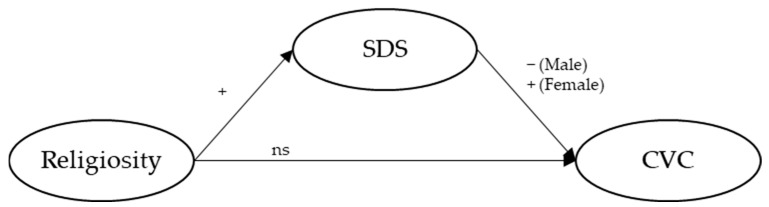 Figure 1
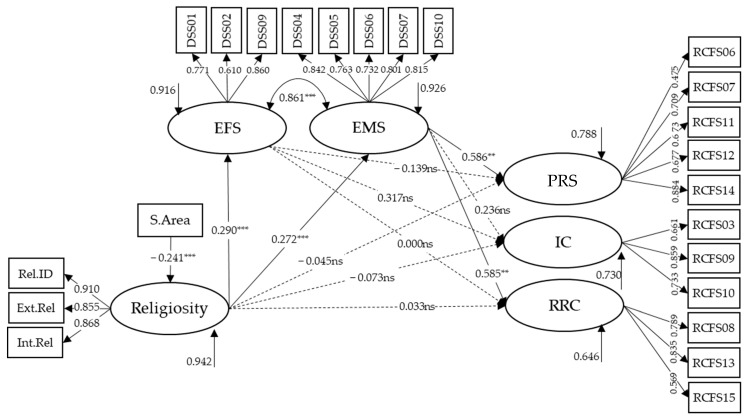 Figure 2
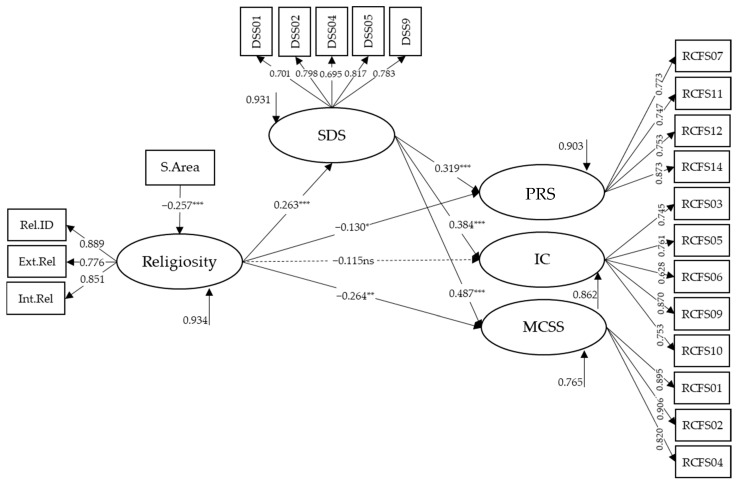 Figure 3
Peer Reviews
No public reviews on file for this paper yet. If you reviewed it on a platform where reviews are public (OpenReview, ICLR, NeurIPS, ICML), you can paste yours below so the community can read it here.
Videos
No videos yet. Explain this paper in a talk, walkthrough, or lecture? Add one.
Taxonomy
TopicsIntimate Partner and Family Violence · Sexual Assault and Victimization Studies · Sex work and related issues