Violence in the Family of Origin, Reflective Functioning, and the Perpetration of Isolating Behaviors in Intimate Relationships: A Mediation Model
Tommaso Trombetta, Maria Noemi Paradiso, Fabrizio Santoniccolo, Luca Rollè

TL;DR
This study explores how childhood exposure to family violence relates to isolating behaviors in adult relationships, with mentalization acting as a key factor.
Contribution
The study introduces a mediation model showing how reflective functioning explains the link between family violence and isolating behaviors.
Findings
Violence in the family of origin directly correlates with isolating behaviors in adult relationships.
Reflective functioning, specifically certainty and uncertainty of mentalization, mediates the relationship between family violence and isolating behaviors.
The findings support the role of mentalization in the intergenerational transmission of violence.
Abstract
Background: The intergenerational transmission of violence from the family of origin to couple relationships in adulthood is well-known in the scientific literature. However, the perpetration of isolating behaviors (IBs) is still poorly explored, and additional studies are required to comprehend the mechanisms that intervene in the association between Violence in the family of origin (VFO) and isolating behaviors. Drawing from Fonagy’s mentalization model, which describes reflective functioning as the capacity to conceive mental states as explanations for one’s own and other people’s behavior, the present study aims to examine the mediating role of reflective functioning in the link between VFO and the perpetration of isolating behaviors. Methods: Online self-report questionnaires were completed by 663 Italian participants (66.8% women; Mage = 28.4, SD = 8.5) who were in a couple…
Genes, proteins, chemicals, diseases, species, mutations and cell lines named across the full text — each resolved to its canonical identifier and authoritative record.
Click any figure to enlarge with its caption.
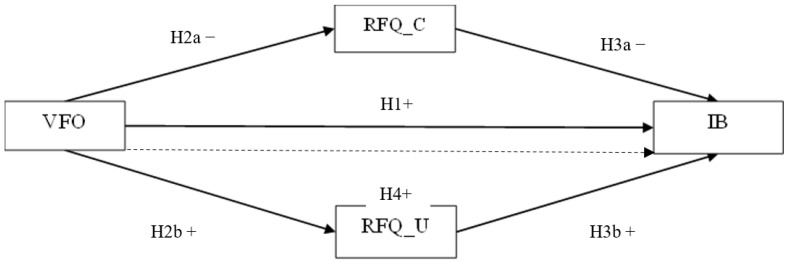 Figure 1
Peer Reviews
No public reviews on file for this paper yet. If you reviewed it on a platform where reviews are public (OpenReview, ICLR, NeurIPS, ICML), you can paste yours below so the community can read it here.
Videos
No videos yet. Explain this paper in a talk, walkthrough, or lecture? Add one.
Taxonomy
TopicsAttachment and Relationship Dynamics · Suicide and Self-Harm Studies · Family Dynamics and Relationships