The Trade-Off Between Sanitizer Resistance and Virulence Genes: Genomic Insights into E. coli Adaptation
Vinicius Silva Castro, Yuri Duarte Porto, Xianqin Yang, Carlos Adam Conte Junior, Eduardo Eustáquio de Souza Figueiredo, Kim Stanford

TL;DR
This study explores how E. coli strains balance resistance to sanitizers and their ability to cause disease, using genomic data to reveal patterns in resistance and virulence.
Contribution
The study reveals a significant inverse relationship between sanitizer resistance genes and virulence genes in E. coli using large-scale genomic analysis.
Findings
O45 and O157 E. coli serogroups showed the highest resistance to sanitizers.
Strains with stx genes (encoding Shiga toxin) were more likely to be sensitive to QAC sanitizers.
A significant association was found between qac genes and the absence of stx1 and stx2 toxin genes.
Abstract
Background: Escherichia coli is one of the most studied bacteria worldwide due to its genetic plasticity. Recently, in addition to characterizing its pathogenic potential, research has focused on understanding its resistance profile to inhibitory agents, whether these be antibiotics or sanitizers. Objectives: The present study aimed to investigate six of the main serogroups of foodborne infection (O26, O45, O103, O111, O121, and O157) and to understand the dynamics of heterogeneity in resistance to sanitizers derived from quaternary ammonium compounds (QACs) and peracetic acid (PAA) using whole-genome sequencing (WGS). Methods: Twenty-four E. coli strains with varied resistance profiles to QACs and PAA were analyzed by WGS using NovaSeq6000 (150 bp Paired End reads). Bioinformatic analyses included genome assembly (Shovill), annotation via Prokka, antimicrobial resistance gene…
Genes, proteins, chemicals, diseases, species, mutations and cell lines named across the full text — each resolved to its canonical identifier and authoritative record.
Click any figure to enlarge with its caption.
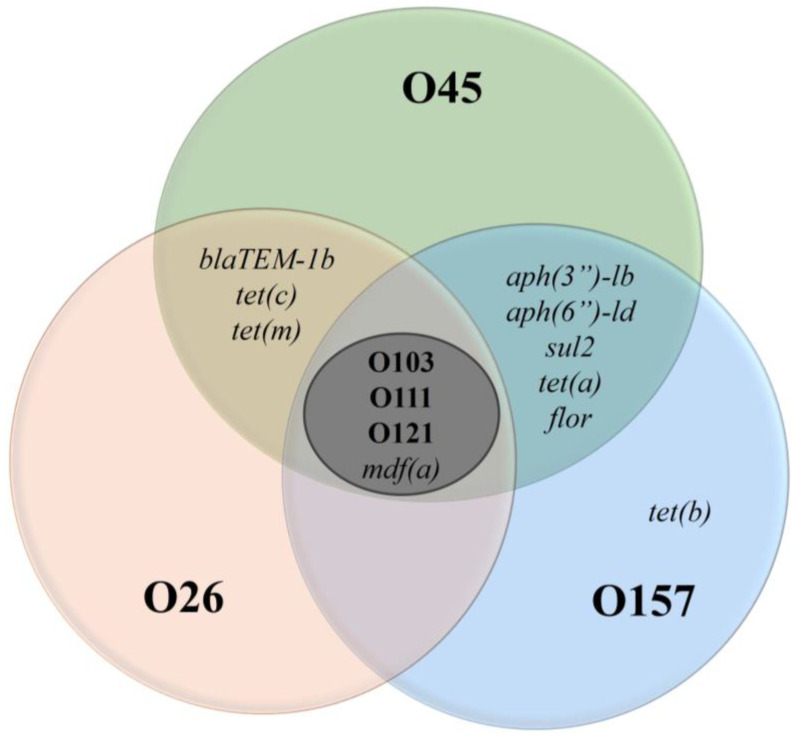 Figure 1
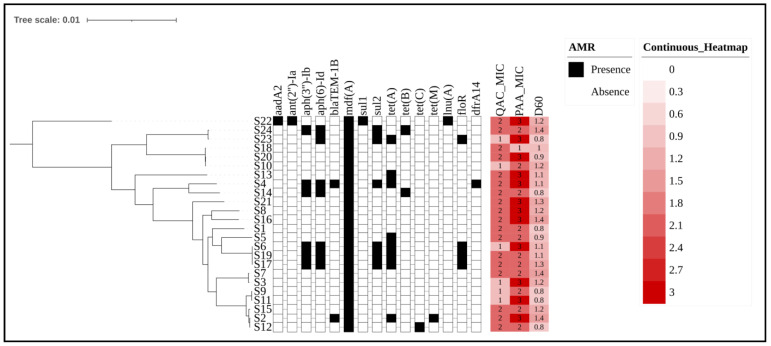 Figure 2
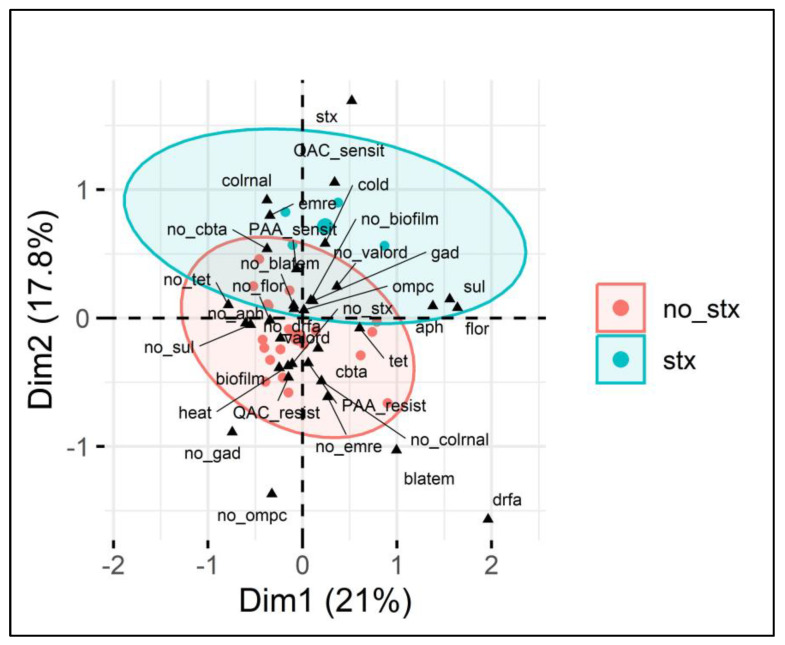 Figure 3
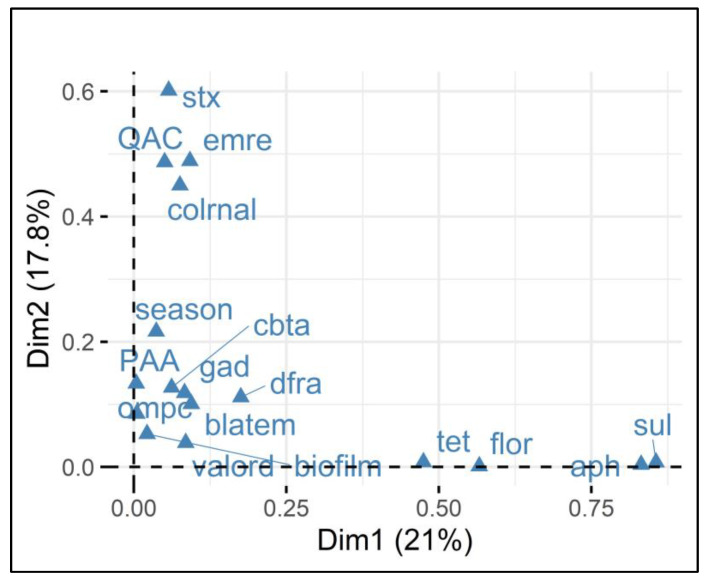 Figure 4
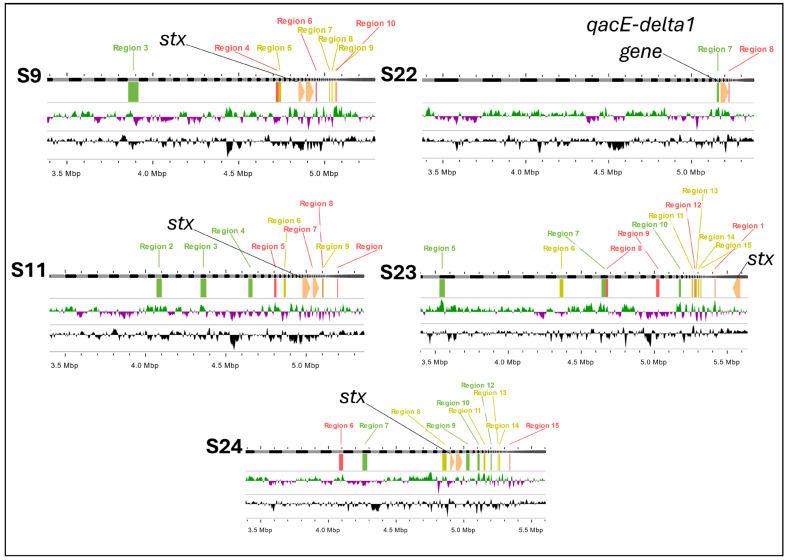 Figure 5
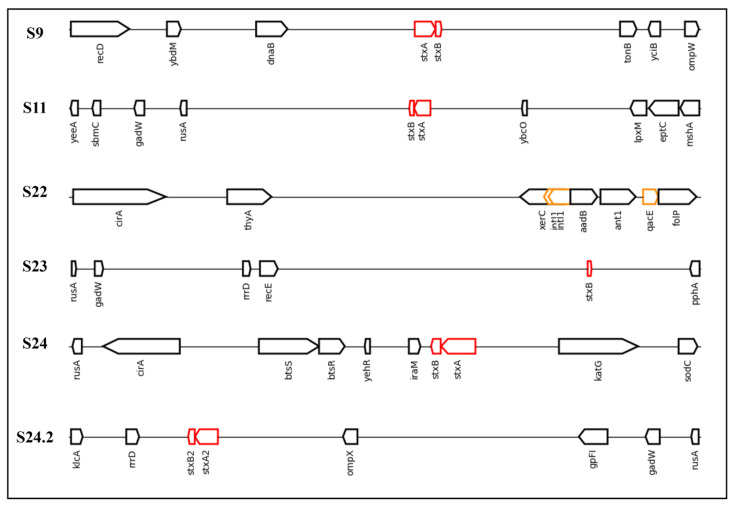 Figure 6
Peer Reviews
No public reviews on file for this paper yet. If you reviewed it on a platform where reviews are public (OpenReview, ICLR, NeurIPS, ICML), you can paste yours below so the community can read it here.
Videos
No videos yet. Explain this paper in a talk, walkthrough, or lecture? Add one.
Taxonomy
TopicsSalmonella and Campylobacter epidemiology · Probiotics and Fermented Foods · Bacteriophages and microbial interactions