Bromethalin Exposure in Dogs and Cats: A 14‐Year Retrospective Study (2010–2023) From the California Animal Health and Food Safety Laboratory System
Sigal Klainbart, Marcos Pérez‐López, Michael S. Filigenzi, Robert H. Poppenga

TL;DR
This study examines bromethalin poisoning in pets over 14 years, finding it's becoming more common and that cats are more affected than dogs.
Contribution
The study provides new insights into the rising prevalence and diagnostic methods for bromethalin intoxication in companion animals.
Findings
Bromethalin exposure cases increased 2.8-fold from 2010–2016 to 2017–2023.
Cats were more likely to test positive for DMB and showed more consistent autopsy results than dogs.
MRI findings supported bromethalin intoxication in 77% of cases.
Abstract
Bromethalin, a rodenticide, is increasingly used due to restrictions on other rodenticides. The study aimed to analyze the frequency, demographics, clinical signs, and diagnostics of suspected bromethalin intoxication in dogs and cats. Two hundred twenty‐three cases (249 samples) involving 123 dogs and 100 cats suspected or confirmed to have bromethalin intoxication were submitted to the toxicology laboratory at the California Animal Health and Food Safety Laboratory. This was a retrospective cohort study. Between 2010 and 2023, Liquid Chromatography–Mass Spectrometry was used to detect desmethylbromethalin (DMB), bromethalin's metabolite, in various tissues and serum. Cases increased 2.8‐fold from 59 (2010–2016) to 164 (2017–2023). Cats were significantly younger (median 24 months, IQR: 41.5) than dogs (36 months, IQR: 60.0; p = 0.016) and were more likely to have confirmed DMB…
Genes, proteins, chemicals, diseases, species, mutations and cell lines named across the full text — each resolved to its canonical identifier and authoritative record.
Click any figure to enlarge with its caption.
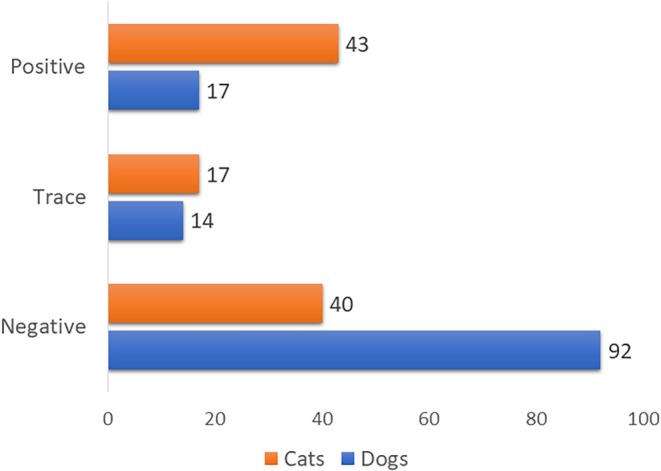 Figure 1
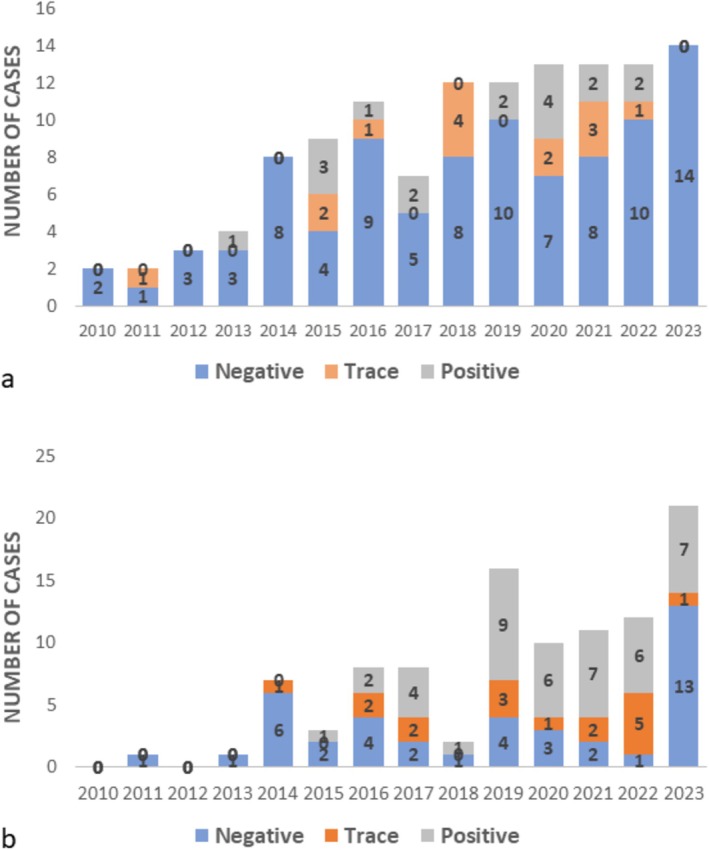 Figure 2
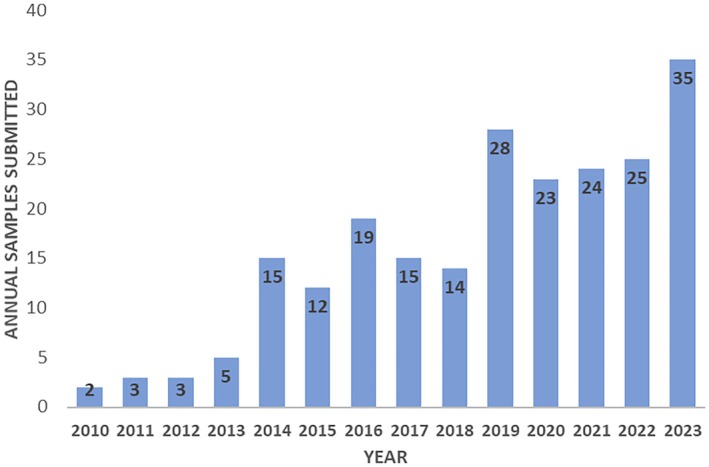 Figure 3
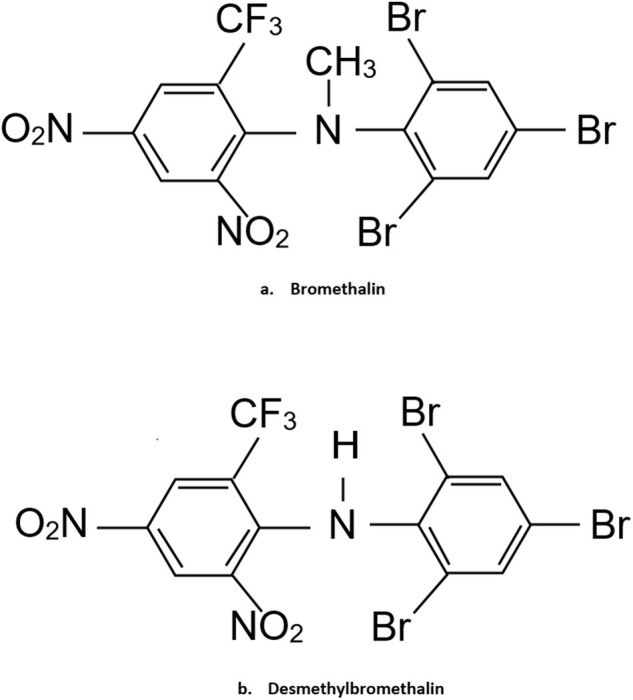 Figure 4
 Figure 5
 Figure 6
Peer Reviews
No public reviews on file for this paper yet. If you reviewed it on a platform where reviews are public (OpenReview, ICLR, NeurIPS, ICML), you can paste yours below so the community can read it here.
Videos
No videos yet. Explain this paper in a talk, walkthrough, or lecture? Add one.
Taxonomy
TopicsAnimal Ecology and Behavior Studies · Poisoning and overdose treatments · Veterinary Pharmacology and Anesthesia