Txnip deficiency causes a susceptibility to acute cold stress with brown fat dysfunction in mice
Meng Zou, Katsuya Tanabe, Kikuko Amo-Shiinoki, Daisuke Kohno, Syota Kagawa, Hideki Shirasawa, Kenji Ikeda, Akihiko Taguchi, Yasuharu Ohta, Shigeru Okuya, Tetsuya Yamada, Tadahiro Kitamura, Hiroshi Masutani, Yukio Tanizawa

TL;DR
This study shows that Txnip is essential for brown fat to function properly in cold conditions, and its absence makes mice vulnerable to hypothermia.
Contribution
The study reveals Txnip's novel role in cold-induced thermogenesis and brown fat function in mice.
Findings
Txnip deficiency leads to brown fat dysfunction and cold susceptibility in mice.
Txnip−/− mice fail to activate fatty acid and amino acid catabolism during acute cold stress.
Acclimation to moderate cold (16 °C) rescues BAT function and prevents lethal hypothermia in Txnip−/− mice.
Abstract
Mammals adaptively regulate energy metabolism in response to environmental changes such as starvation and cold circumstances. Thioredoxin-interacting protein (Txnip), known as a redox regulator, serves as a nutrient sensor regulating energy homeostasis. Txnip is essential for mice to adapt to starvation, but its role in adapting to cold circumstances remains unclear. Here, we identified Txnip as a pivotal factor for maintaining nonshivering thermogenesis in mice. Txnip protein levels in brown adipose tissue (BAT) were upregulated by the acute cold exposure. Txnip-deficient (Txnip−/−) mice acclimated to thermoneutrality (30 °C) exhibited significant BAT enlargement and triglyceride accumulation with downregulation of BAT signature and metabolic gene expression. Upon acute cold exposure (5 °C), Txnip−/− mice showed a rapid decline in BAT surface temperatures with the failure of increasing…
Genes, proteins, chemicals, diseases, species, mutations and cell lines named across the full text — each resolved to its canonical identifier and authoritative record.
Click any figure to enlarge with its caption.
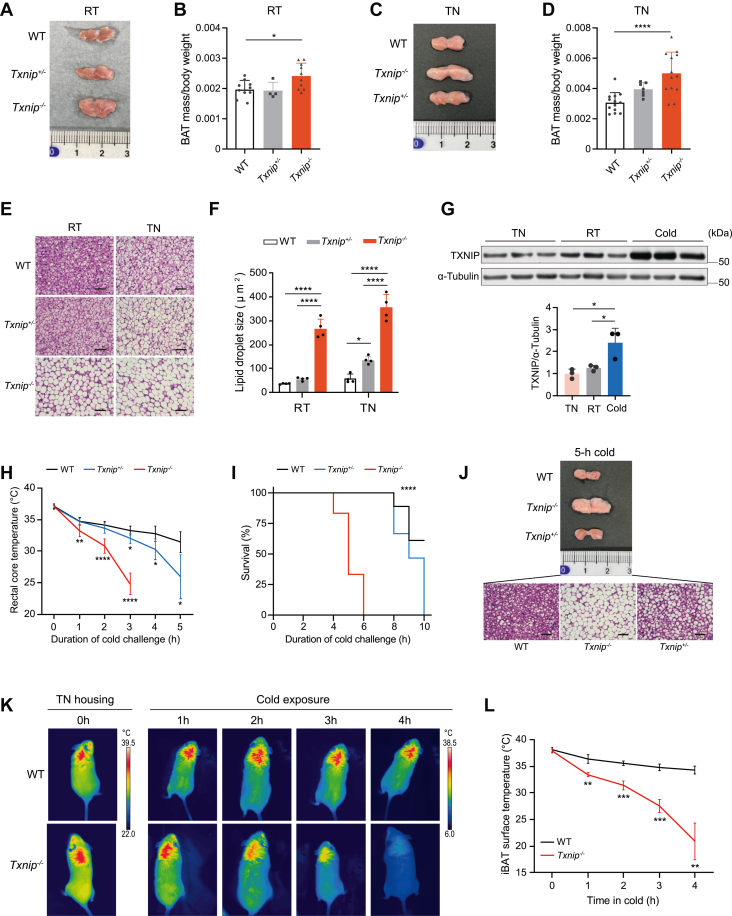 Figure 1
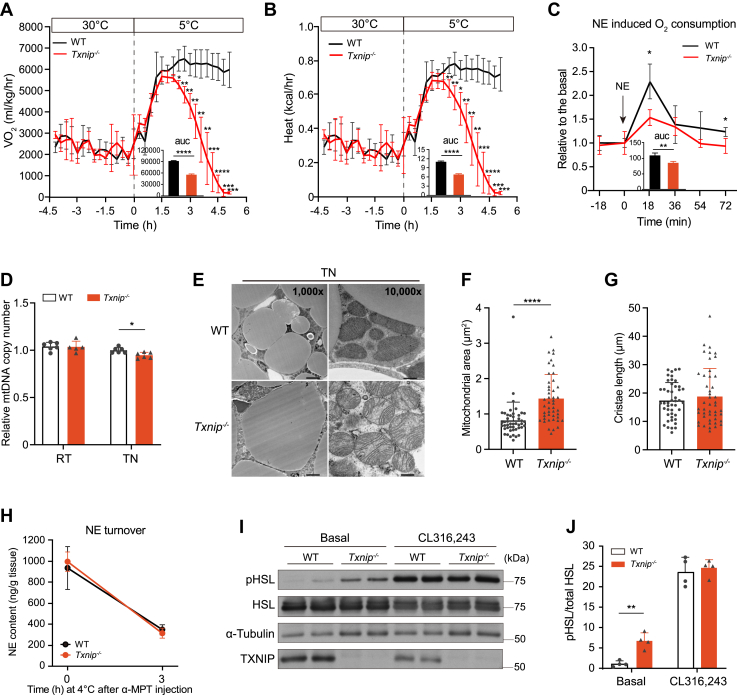 Figure 2
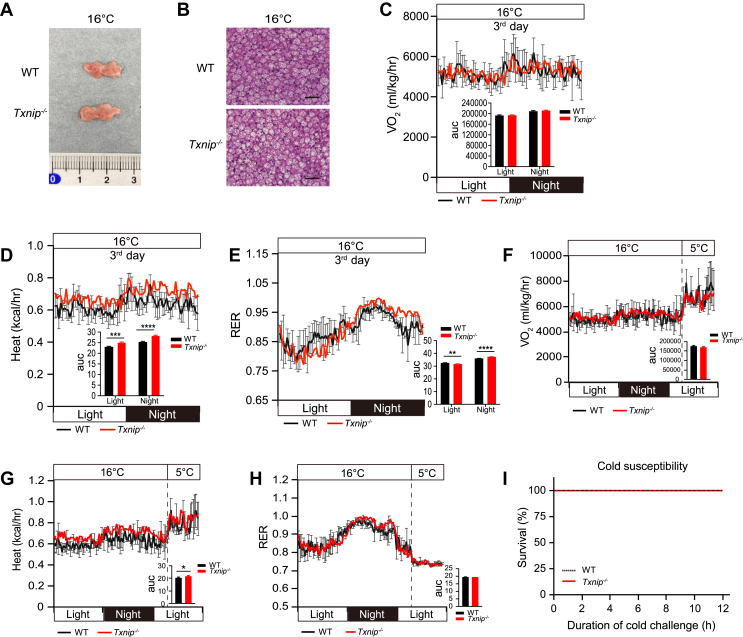 Figure 3
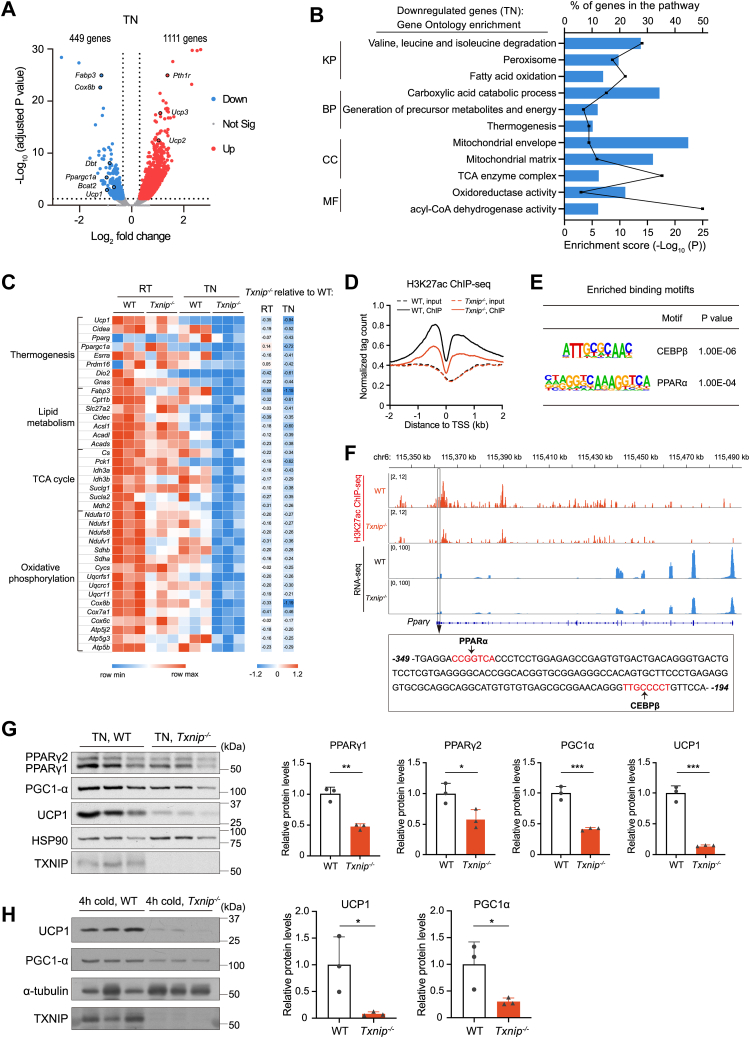 Figure 4
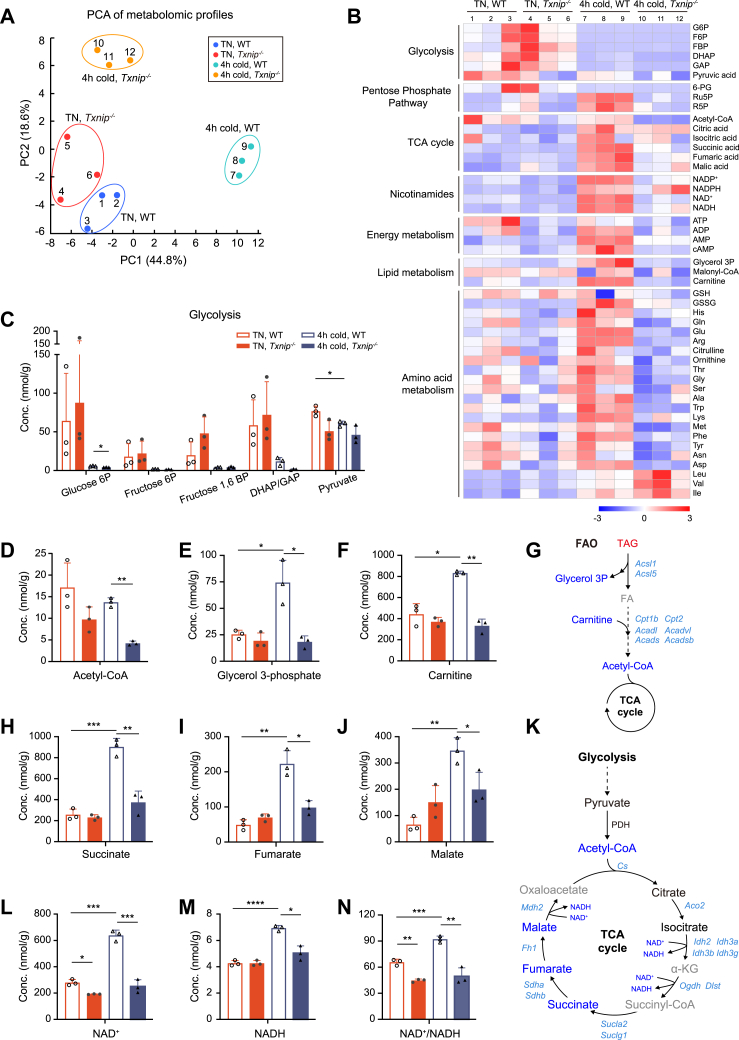 Figure 5
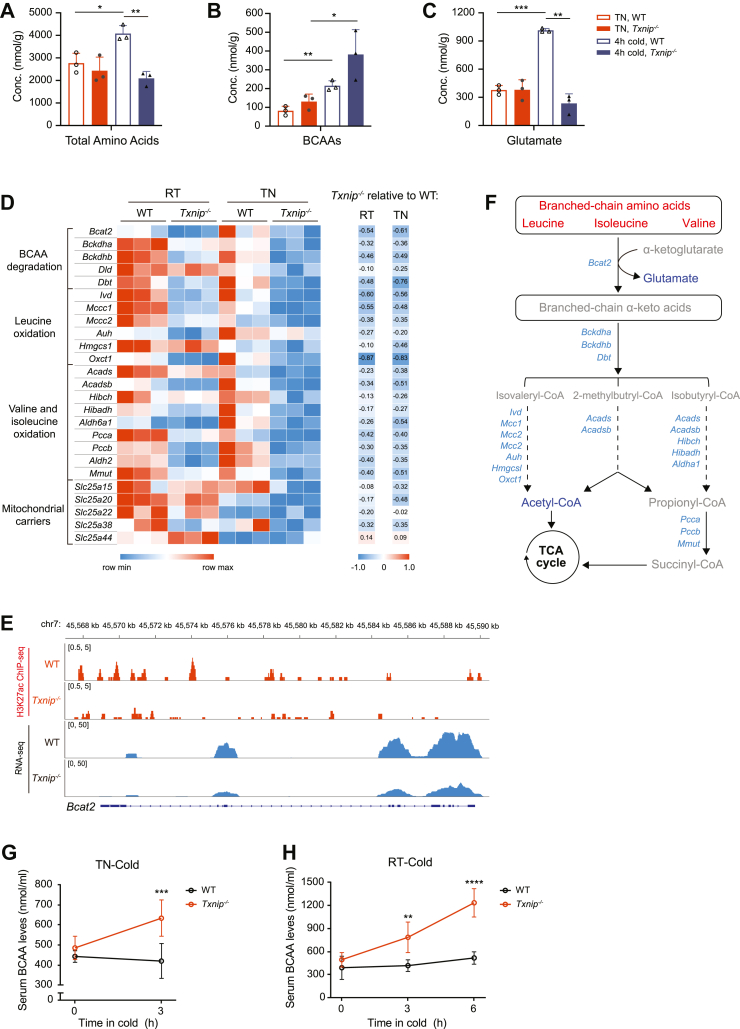 Figure 6
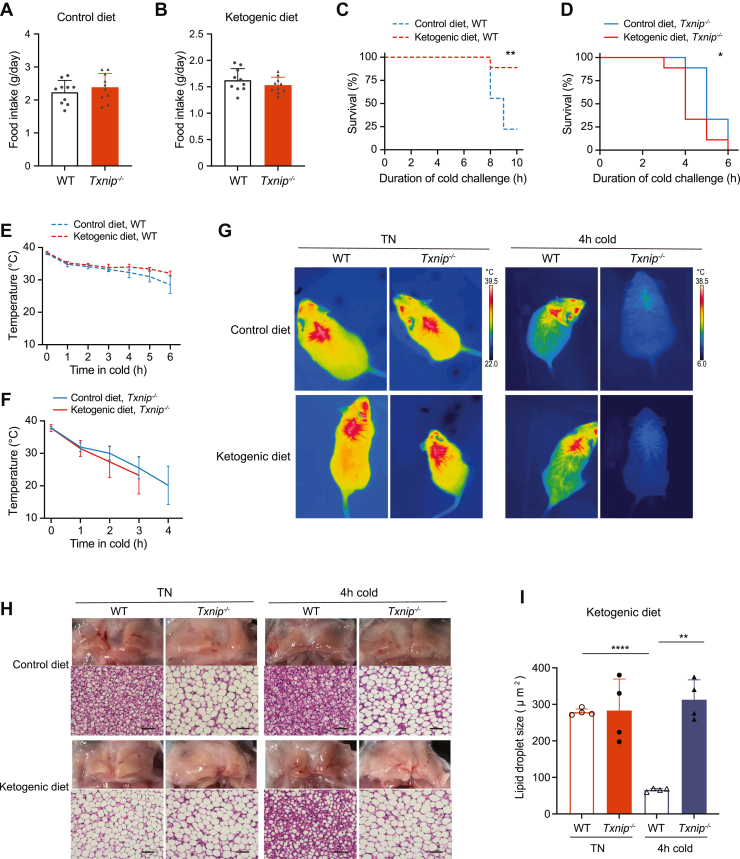 Figure 7
Peer Reviews
No public reviews on file for this paper yet. If you reviewed it on a platform where reviews are public (OpenReview, ICLR, NeurIPS, ICML), you can paste yours below so the community can read it here.
Videos
No videos yet. Explain this paper in a talk, walkthrough, or lecture? Add one.
Taxonomy
TopicsAdipose Tissue and Metabolism · Adipokines, Inflammation, and Metabolic Diseases · Mitochondrial Function and Pathology