Genetic Prediction of the Phosphate‐to‐Glucose Ratio Mediates the Association Between CXCL5 and Vascular Dementia
Guifeng Zhuo, Wei Chen, Yanan Hu, Jinzhi Zhang, Xiaomin Zhu, Mingyang Su, Yulan Fu, Wu Lin

TL;DR
This study finds that higher CXCL5 levels increase the risk of vascular dementia, with the phosphate-to-glucose ratio partially explaining this link.
Contribution
The study identifies a causal relationship between CXCL5 and vascular dementia and introduces the phosphate-to-glucose ratio as a potential mediator.
Findings
Higher CXCL5 levels are causally linked to increased vascular dementia risk (OR = 1.265).
The phosphate-to-glucose ratio mediates 11.1% of the CXCL5 effect on vascular dementia risk.
Most of the CXCL5 effect on vascular dementia remains unexplained, suggesting other mediators exist.
Abstract
A variety of observational studies suggest a possible connection between C‐X‐C Motif Chemokine Ligand 5 (CXCL5) and vascular dementia (VaD), though the exact causal relationship is still uncertain. This research aims to investigate the causal connection between CXCL5 and VaD risk through a Mendelian randomization (MR) method and to examine the phosphate‐to‐glucose ratio as a possible mediator. Using summary‐level data from genome‐wide association studies (GWAS), we conducted a two‐sample MR analysis to investigate the genetic prediction of CXCL5 and VaD. Horizontal pleiotropy, heterogeneity, and sensitivity analyses were also performed on the MR findings. Additionally, a two‐step MR was utilized to quantify the proportion of the effect of CXCL5 on VaD mediated by the phosphate‐to‐glucose ratio. MR analysis identified that higher levels of CXCL5 (IVW: p = 0.022, OR = 1.265, 95% CI =…
Genes, proteins, chemicals, diseases, species, mutations and cell lines named across the full text — each resolved to its canonical identifier and authoritative record.
Click any figure to enlarge with its caption.
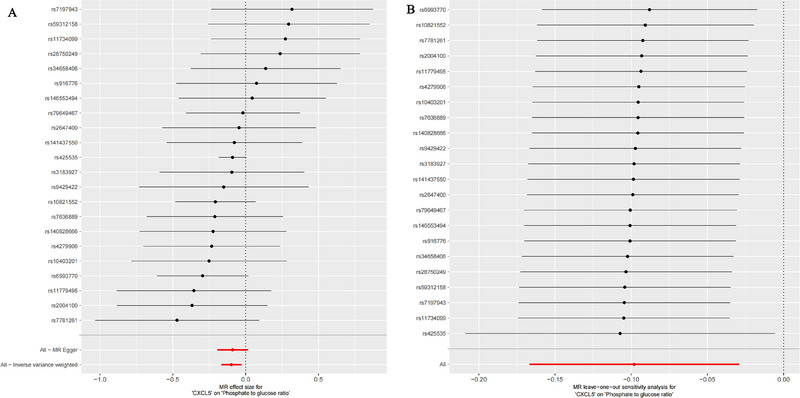 Figure 1
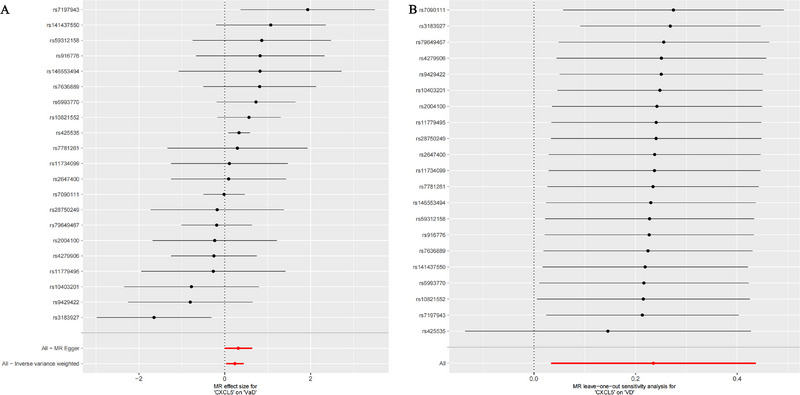 Figure 2
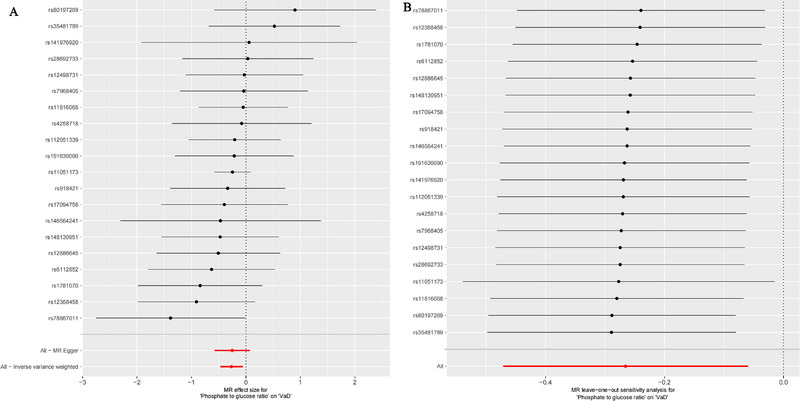 Figure 3
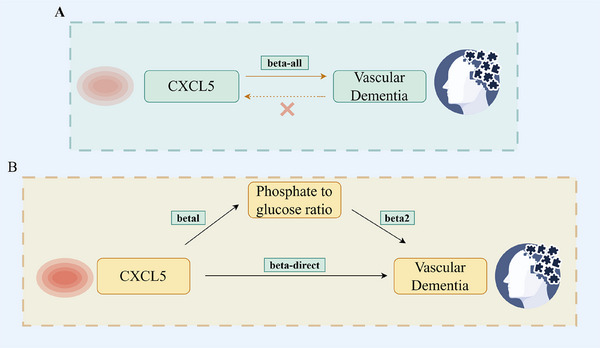 Figure 4
Peer Reviews
No public reviews on file for this paper yet. If you reviewed it on a platform where reviews are public (OpenReview, ICLR, NeurIPS, ICML), you can paste yours below so the community can read it here.
Videos
No videos yet. Explain this paper in a talk, walkthrough, or lecture? Add one.
Taxonomy
TopicsNeuroinflammation and Neurodegeneration Mechanisms · Atherosclerosis and Cardiovascular Diseases · Neurological Disease Mechanisms and Treatments