Atypical Electrophysiological Pattern in Hypokalemic Periodic Paralysis With CACNA1S Mutation: A Case Report
Kamal Haddouali, Hajar El Omari, Hicham El Otmani, Bouchra El Moutawakil, Mohammed Abdoh Rafai

TL;DR
A 19-year-old man with a CACNA1S gene mutation showed atypical electrophysiological patterns in hypokalemic periodic paralysis, emphasizing the need for combined clinical and genetic assessments.
Contribution
The case presents an atypical long exercise test pattern (pattern IV) in PPHy-1, suggesting variability in the disorder's electrophysiological expression.
Findings
The patient exhibited tetraparesis and hypokalemia with a CACNA1S mutation confirmed via exome sequencing.
An atypical pattern IV was observed in the long exercise test, which is uncommon in PPHy-1.
Treatment with potassium supplementation and acetazolamide reduced attack frequency.
Abstract
Hypokalemic periodic paralysis type 1 (PPHy-1) is a rare autosomal dominant disorder caused by mutations in the CACNA1S gene, leading to recurrent muscle weakness associated with hypokalemia. We describe a 19-year-old male presenting with recurrent episodes of muscle weakness lasting from 2 to 48 hours. During an attack, clinical examination revealed tetraparesis with axial motor deficits, but no bulbar or facial involvement. Serum potassium levels were 2.5 mmol/L, and nerve conduction studies (NCS) showed asymmetrical decrement in motor amplitudes. A long exercise test (LET) post-attack revealed pattern IV, an atypical finding for PPHy-1. Whole exome sequencing confirmed a heterozygous mutation in the CACNA1S gene, establishing the diagnosis. The patient responded well to oral potassium supplementation and prophylactic acetazolamide, which reduced the frequency of attacks. This case…
Genes, proteins, chemicals, diseases, species, mutations and cell lines named across the full text — each resolved to its canonical identifier and authoritative record.
Click any figure to enlarge with its caption.
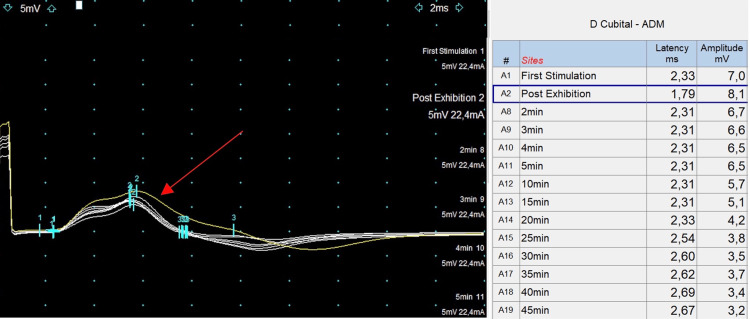 Figure 1
Peer Reviews
No public reviews on file for this paper yet. If you reviewed it on a platform where reviews are public (OpenReview, ICLR, NeurIPS, ICML), you can paste yours below so the community can read it here.
Videos
No videos yet. Explain this paper in a talk, walkthrough, or lecture? Add one.
Taxonomy
TopicsIon channel regulation and function · Cardiac electrophysiology and arrhythmias · Neurological disorders and treatments