Single piece craniotomy in the management of a patient with large vertex epidural haematoma and deteriorating brain function in a limited resources community. Case report from Southwestern Uganda
Robert Mugarura, Irene K. Nakitto, Nek A. Jonathan, Naphtali Kamusiime, Mary Katushabe

TL;DR
A patient with a large vertex epidural hematoma in rural Uganda was successfully treated with a single craniotomy by non-specialist doctors, highlighting the feasibility of emergency care in resource-limited settings.
Contribution
Demonstrates the successful use of single-piece craniotomy for vertex epidural hematoma in low-resource settings without neurosurgeons.
Findings
Single-piece craniotomy can be safely performed by non-neurosurgical specialists in rural areas.
Emergency surgical evacuation improves brain function in patients with large vertex epidural hematomas.
Preoperative planning is critical to reduce complications in the absence of neurosurgical resources.
Abstract
Vertex epidural haematoma is a rare form of epidural haemorrhage and a complication of head trauma that is both a diagnostic and therapeutic challenge for the trauma surgeon. It's usually as result of laceration in the superior sagittal sinus. Whereas most patients with small vertex epidural hematomas improve with conservative treatment, large or rapidly expanding lesions are fatal and require emergency craniotomy. Ours was a 28-year-old male patient who arrived at our emergency department in rural Southwestern Uganda with Glasgow coma scale of 12/15 following a head on collision of two Boda Boda motorcycles. CT scan imaging revealed a large acute Vertex Epidural haematoma and a linear skull fracture of the parietal bones crossing the midline. The haematoma was evacuated through a single piece craniotomy and hemostasia achieved by surgicel. Patient was transfused with two units of…
Genes, proteins, chemicals, diseases, species, mutations and cell lines named across the full text — each resolved to its canonical identifier and authoritative record.
Click any figure to enlarge with its caption.
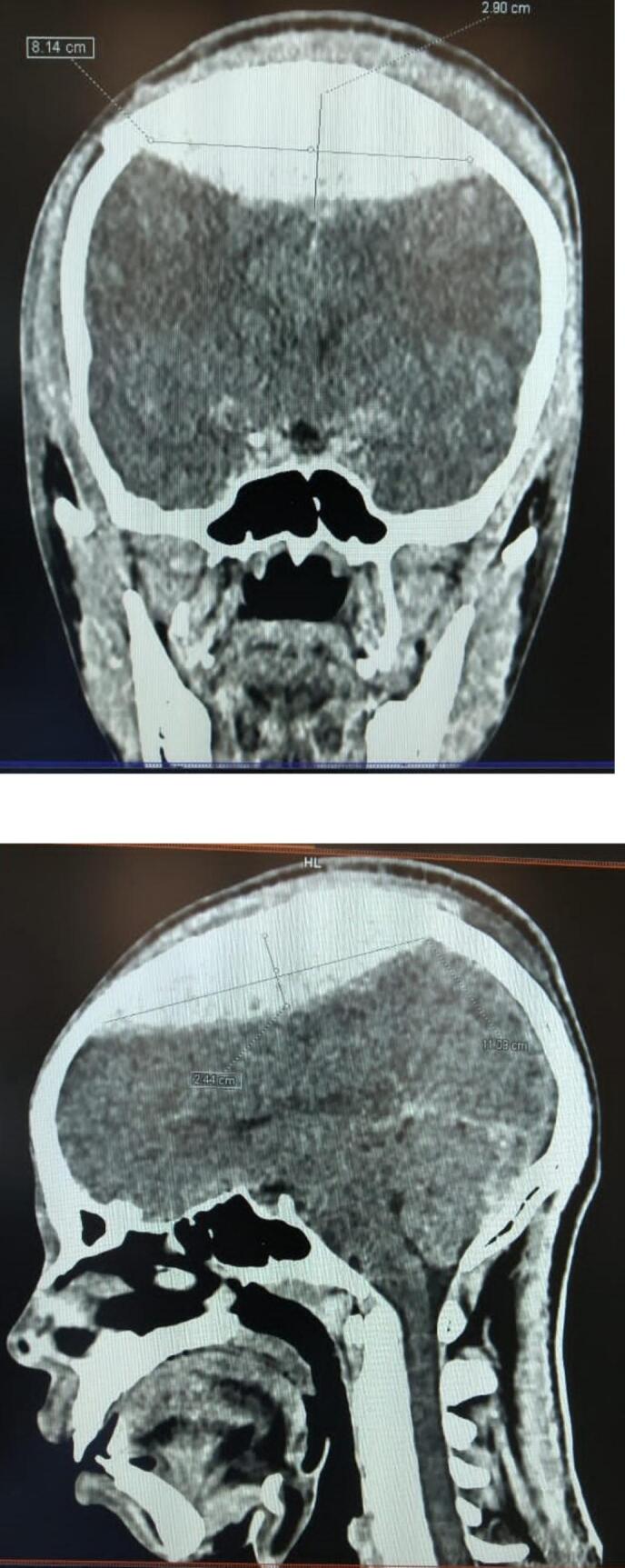 Figure 1
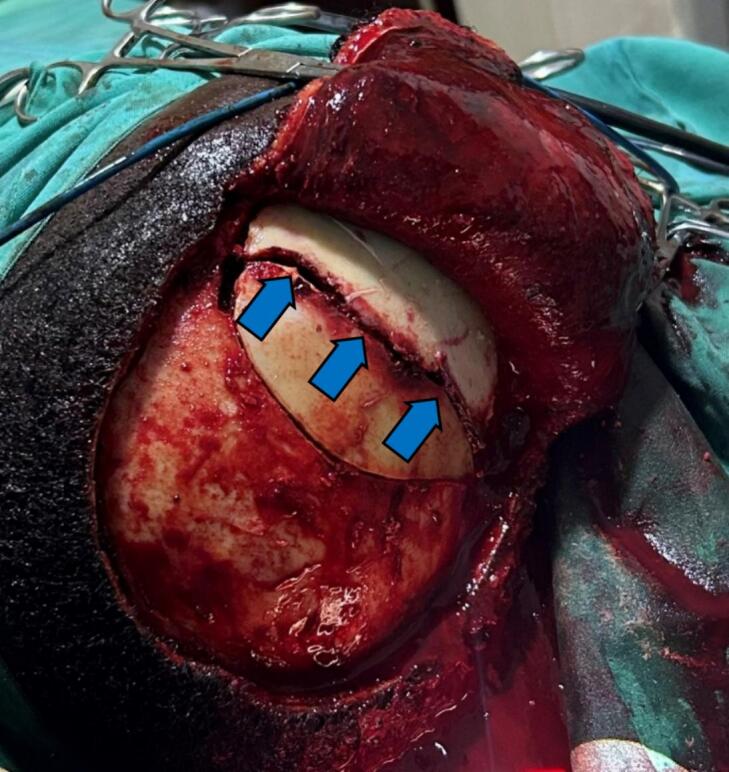 Figure 2
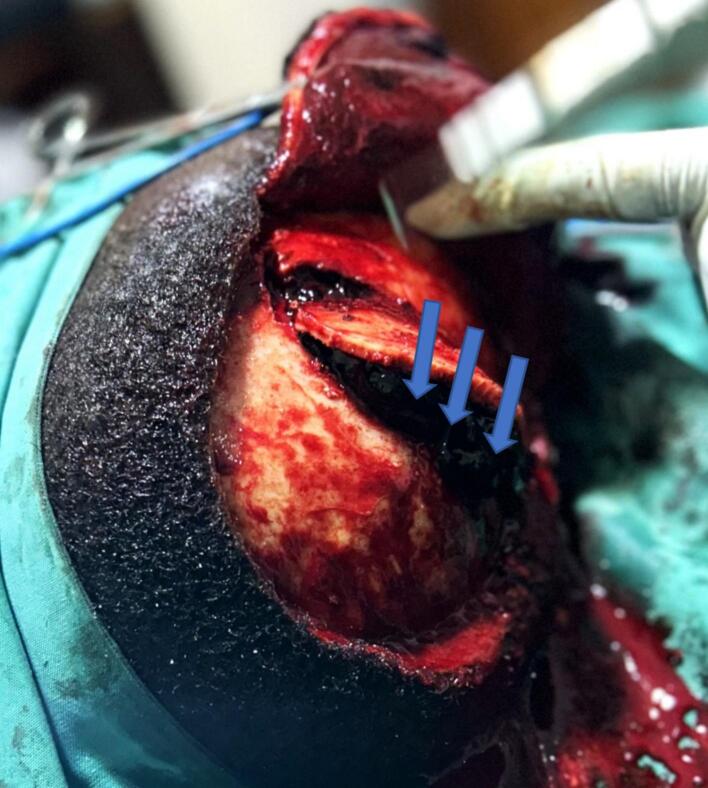 Figure 3
Peer Reviews
No public reviews on file for this paper yet. If you reviewed it on a platform where reviews are public (OpenReview, ICLR, NeurIPS, ICML), you can paste yours below so the community can read it here.
Videos
No videos yet. Explain this paper in a talk, walkthrough, or lecture? Add one.
Taxonomy
TopicsNeurosurgical Procedures and Complications · Spinal Fractures and Fixation Techniques · Traumatic Brain Injury and Neurovascular Disturbances