Bone microstructure of the basal anomodont Suminia getmanovi supports its arboreal lifestyle
Saskia Nieke, Jörg Fröbisch, Aurore Canoville

TL;DR
The bone structure of Suminia getmanovi suggests it was an early tree-dwelling animal, differing from other related species.
Contribution
The study reveals unique bone microstructure in Suminia that supports its arboreal lifestyle.
Findings
Suminia has a relative bone cortical thickness lower than 18%, differing from other anomodonts.
Its bones have open medullary cavities free of bony trabeculae, unlike most related species.
The bone architecture aligns with that of modern climbers, supporting its tree-dwelling behavior.
Abstract
The paleohistology of Permo-Triassic anomodonts has been extensively studied and, independent of phylogeny, body size and lifestyle, reflects a pattern of rapid growth indicated by a woven-parallel complex. Moreover, anomodonts uniformly show a relative bone cortical thickness (RBT) exceeding 30% and a medullary cavity generally filled by trabeculae. Here, we investigate the paleohistology of the basal anomodont Suminia getmanovi from the Permian of Russia, which has been hypothesized as one of the earliest arboreal tetrapods. Osteohistology and skeletal proportions reveal that our sample comprises at least two late juvenile to early subadult individuals, exhibiting well-vascularized and mostly uninterrupted woven-parallel complex or parallel-fibered tissues, suggesting relatively high growth rates, consistent with other anomodonts. However, all elements of Suminia present an open…
Genes, proteins, chemicals, diseases, species, mutations and cell lines named across the full text — each resolved to its canonical identifier and authoritative record.
Click any figure to enlarge with its caption.
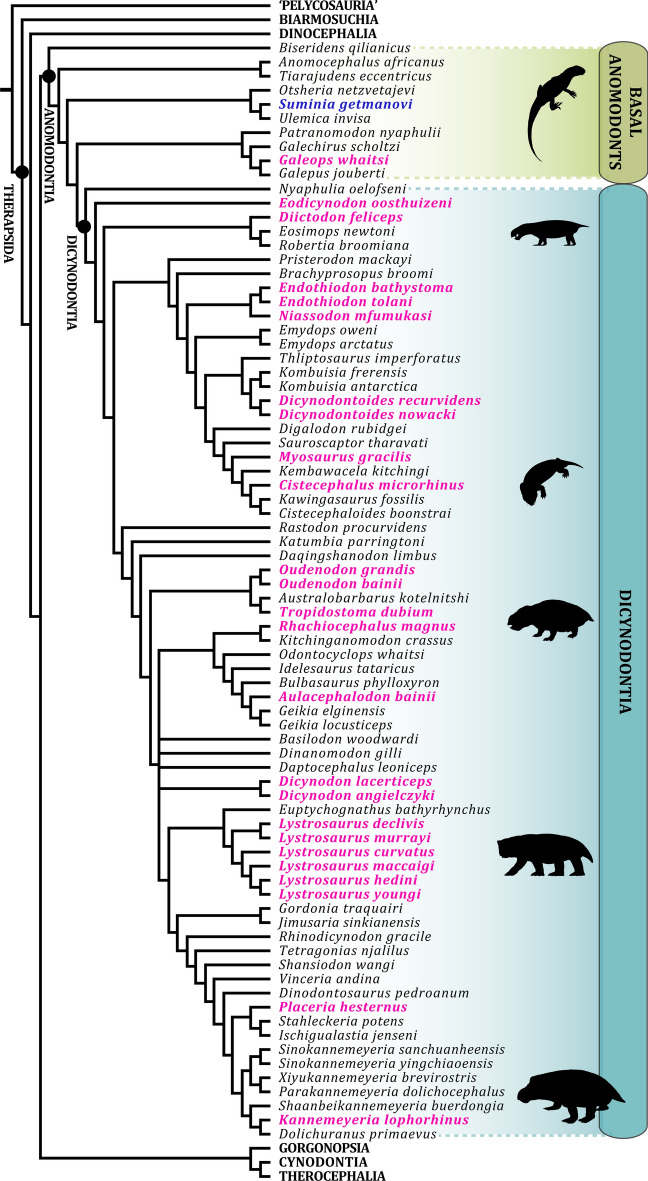 Figure 1
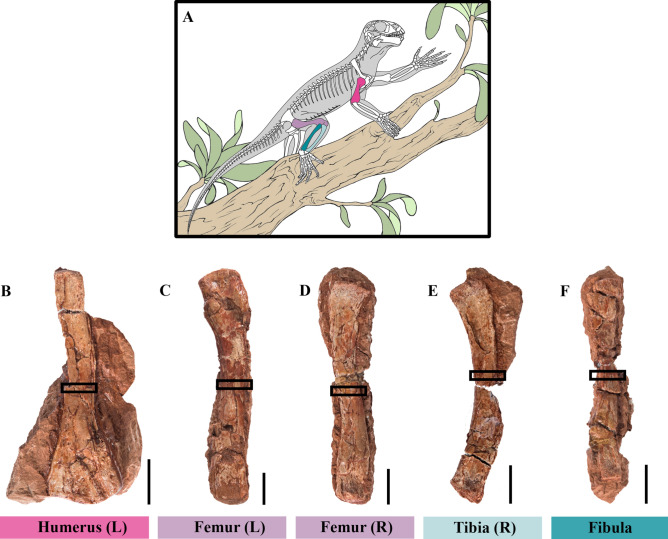 Figure 2
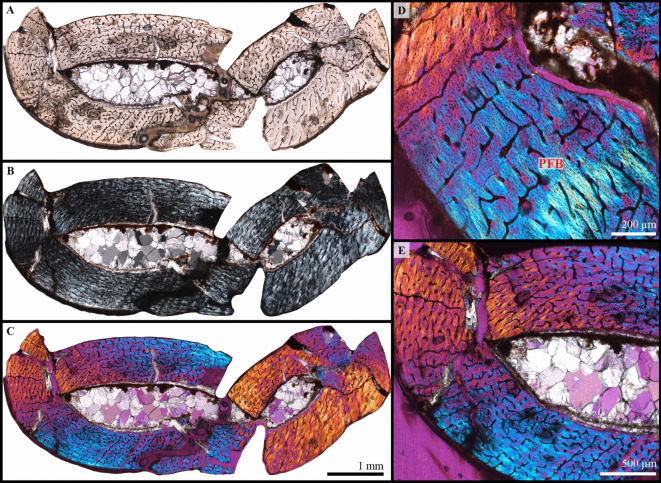 Figure 3
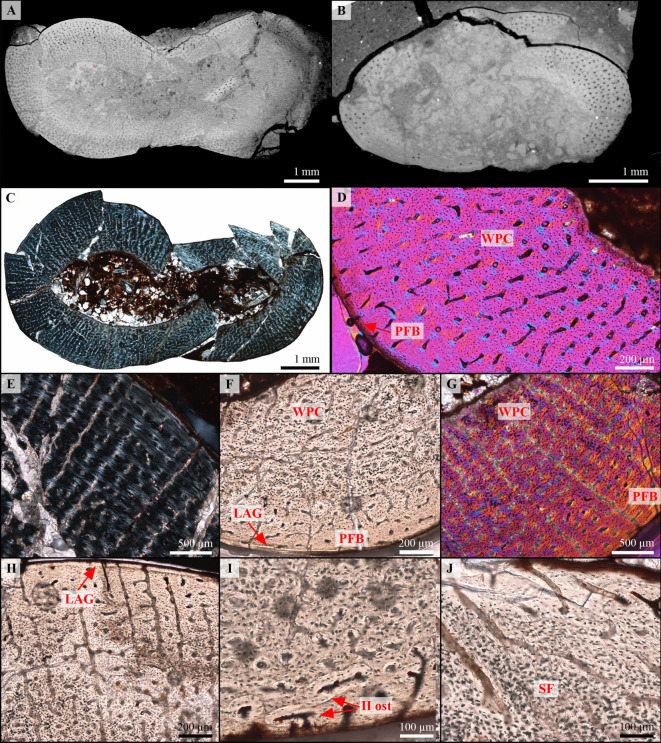 Figure 4
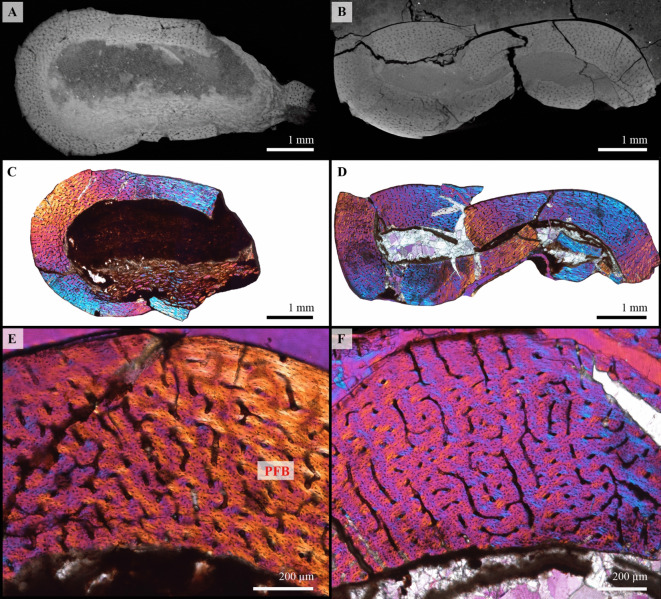 Figure 5
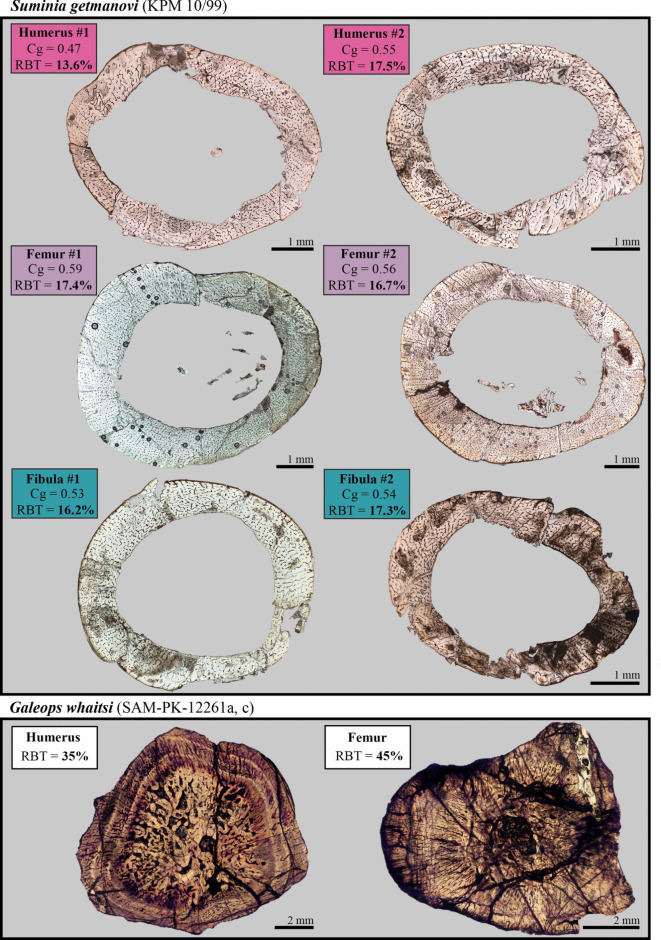 Figure 6
Peer Reviews
No public reviews on file for this paper yet. If you reviewed it on a platform where reviews are public (OpenReview, ICLR, NeurIPS, ICML), you can paste yours below so the community can read it here.
Videos
No videos yet. Explain this paper in a talk, walkthrough, or lecture? Add one.
Taxonomy
TopicsPaleontology and Evolutionary Biology · Evolution and Paleontology Studies · Ichthyology and Marine Biology