Analytical and Clinical Validation of Solo‐Test Driver: A Targeted Amplicon‐Based NGS Test‐System for FFPE and cfDNA Analysis in Clinical Oncology Setting
Maxim Ivanov, Alexandra Lebedeva, Ekaterina Belova, Tatiana Grigoreva, Egor Veselovsky, Alexandra Kavun, Anastasiia Taraskina, Olesya Kuznetsova, Vladislav Nikulin, Laima Belyaeva, Daria Kravchuk, Tatyana Lisitsa, Alexey Barinov, Natalia Pospekhova, Saida Aliyarova

TL;DR
The Solo-test Driver is a reliable and cost-effective NGS test for detecting cancer-related genetic changes in clinical settings.
Contribution
The paper introduces and validates a new NGS test system for clinical oncology with high sensitivity and specificity.
Findings
The test can identify additional cancer patients with actionable mutations compared to FDA-approved PCR tests.
It shows high intra-lab and inter-lab robustness with consistent coverage uniformity and correlation.
Clinical validation confirms high performance for detecting SNVs, CNVs, and MSI.
Abstract
Next‐generation sequencing (NGS) is increasingly integrated into cancer patient management, necessitating cost‐effective, reliable tests for companion diagnostics. We present the validation of the Solo‐test Driver panel, a custom NGS amplicon‐based tool for DNA analysis of 34 oncogenes, addressing key clinical needs. The panel's performance was validated for detecting SNVs, CNVs, and MSI. Analytical validation used 182 samples, while clinical validation involved 130 samples, both encompassing diverse tumor types and specimen formats. The Solo‐test Driver panel has the potential to identify an additional 18.3%, 16.5%, and 8.7% of RAS+ colorectal, PIK3CA+ breast, and EGFR+ lung cancer patients, respectively, when compared to FDA‐approved PCR tests. Analytical validation demonstrated high intra‐lab robustness (coefficient of variation of coverage uniformity 6.4%) and high inter‐lab…
Genes, proteins, chemicals, diseases, species, mutations and cell lines named across the full text — each resolved to its canonical identifier and authoritative record.
Click any figure to enlarge with its caption.
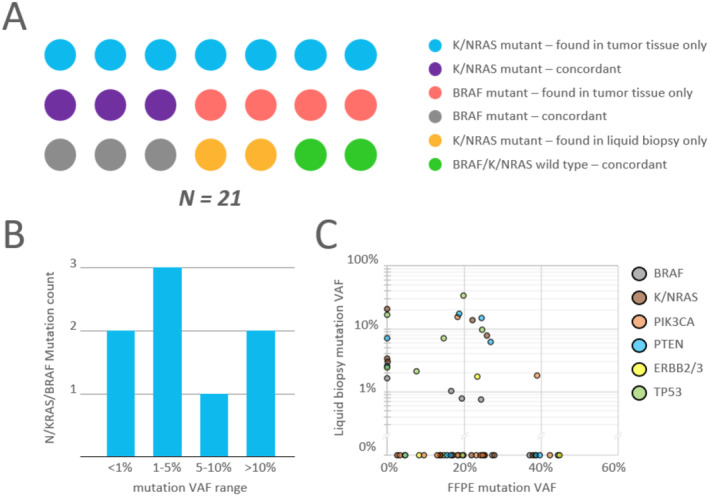 Figure 1
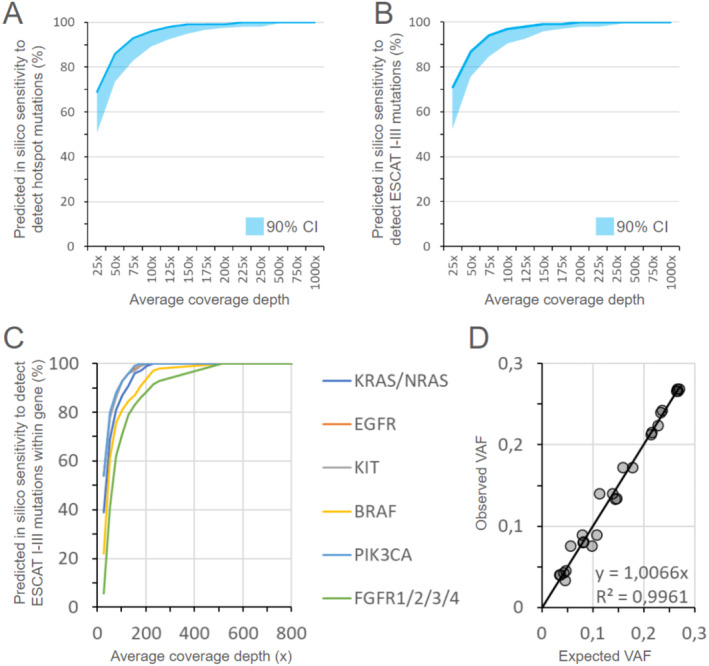 Figure 2
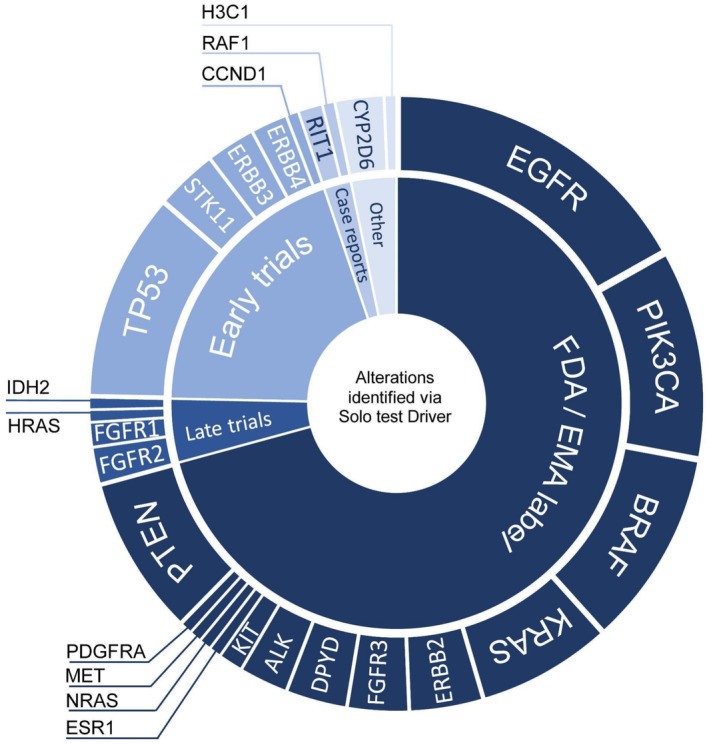 Figure 3
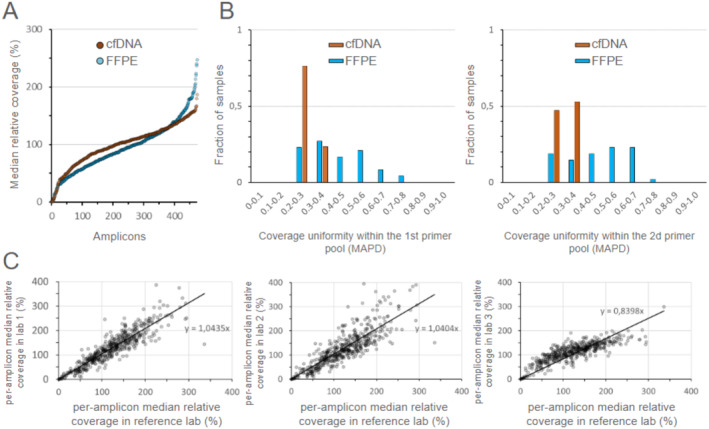 Figure 4
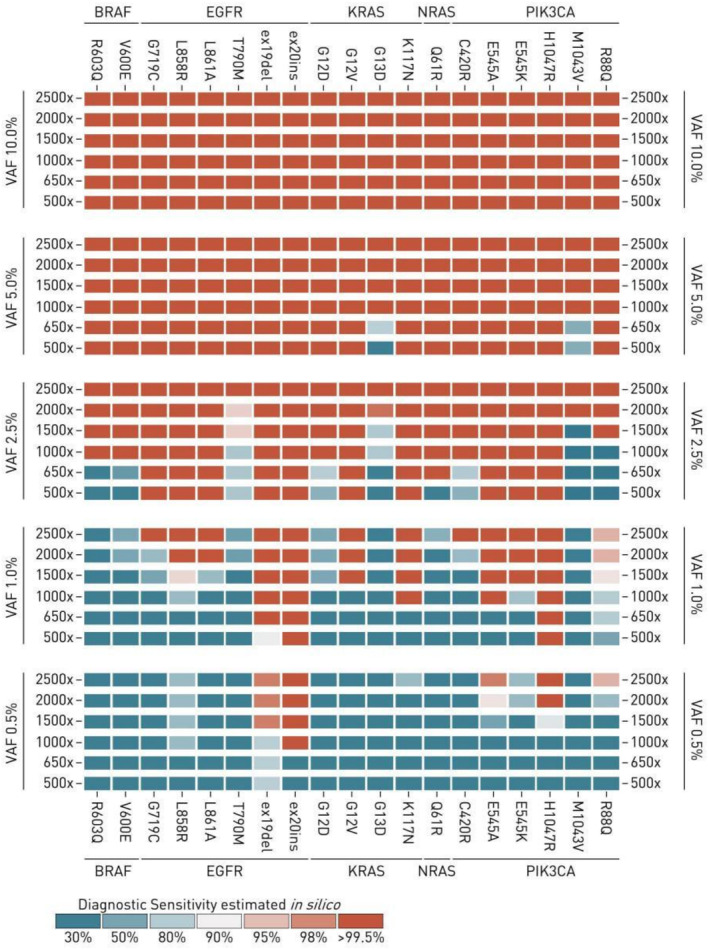 Figure 5
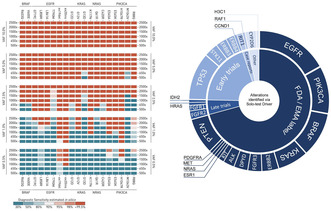 Figure 6
Peer Reviews
No public reviews on file for this paper yet. If you reviewed it on a platform where reviews are public (OpenReview, ICLR, NeurIPS, ICML), you can paste yours below so the community can read it here.
Videos
No videos yet. Explain this paper in a talk, walkthrough, or lecture? Add one.
Taxonomy
TopicsCancer Genomics and Diagnostics · Genetic factors in colorectal cancer · Molecular Biology Techniques and Applications