Case report: Behavioral variant FTD confounding a language variant FTD in a case of PSP-CBS
Alexandra V. Jürs, Elisabeth Kasper, Manuela Neumann, Jens Kurth, Bernd J. Krause, Daniel Cantré, Johannes Prudlo

TL;DR
This case report describes a patient whose behavioral symptoms of FTD were followed by language decline, highlighting the challenge of distinguishing secondary aphasia from primary language disorders.
Contribution
The paper presents a rare case where behavioral FTD transitions into secondary progressive aphasia, emphasizing the need for improved diagnostic approaches.
Findings
The patient's behavioral variant FTD transitioned into secondary progressive aphasia over 10 years.
Dysexecutive syndrome masked aphasia, complicating diagnosis.
Imaging showed left-sided brain atrophy and hypometabolism consistent with FTD-tau pathology.
Abstract
Frontotemporal dementia (FTD) occurs in two main clinical subtypes, which can transition into one another: the behavioral variant (bvFTD) and the language variant (primary progressive aphasia; PPA). It is common for the latter, as primary progressive aphasia (PPA), to transition into bvFTD; however, the opposite development, where bvFTD is followed by “secondary progressive aphasia,” has received little attention. This constellation is particularly challenging to recognize as frontal dysexecutive syndrome can confound subsequent progressive aphasia as impulsive behavior, a lack of inhibition, and apathy can lead to non-aphasic communication disturbances, including impoverished syntax, reduced cognitive flexibility, and insufficient error monitoring. A 78-year-old patient, with a disease duration of 10 years, was initially diagnosed in the 3rd year of the disease with corticobasal…
Genes, proteins, chemicals, diseases, species, mutations and cell lines named across the full text — each resolved to its canonical identifier and authoritative record.
Click any figure to enlarge with its caption.
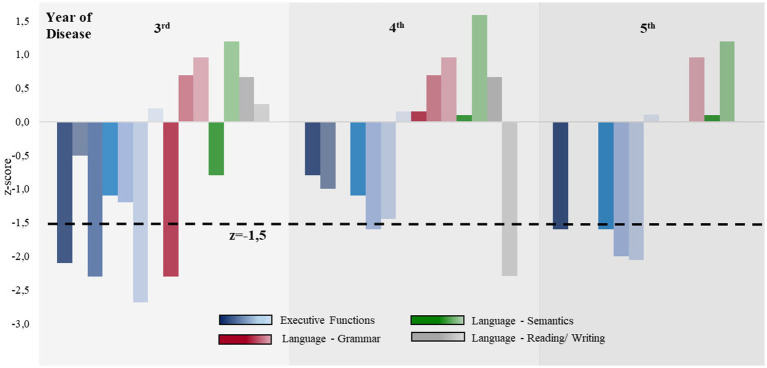 Figure 1
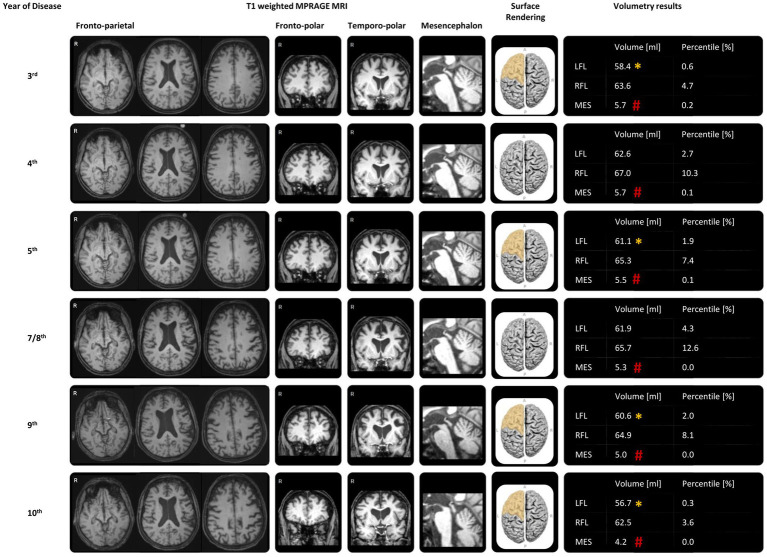 Figure 2
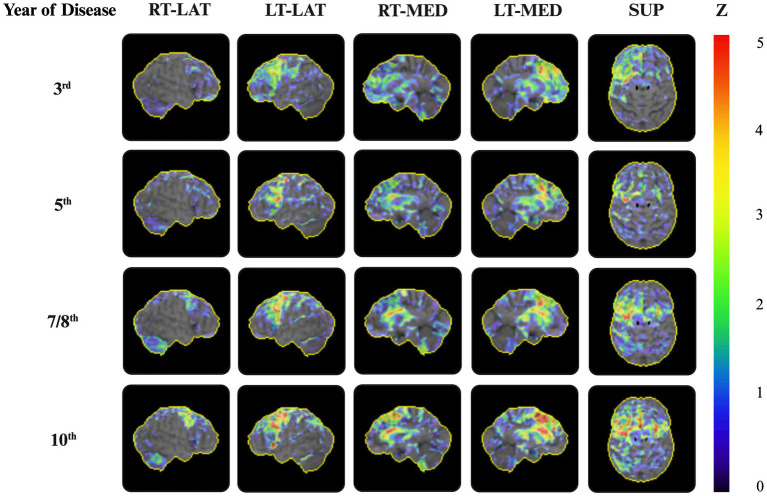 Figure 3
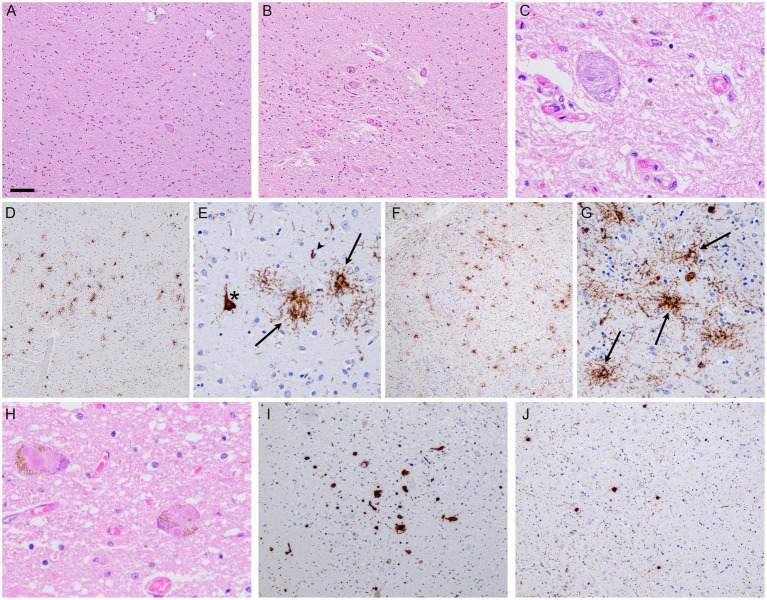 Figure 4
Peer Reviews
No public reviews on file for this paper yet. If you reviewed it on a platform where reviews are public (OpenReview, ICLR, NeurIPS, ICML), you can paste yours below so the community can read it here.
Videos
No videos yet. Explain this paper in a talk, walkthrough, or lecture? Add one.
Taxonomy
TopicsNeurobiology of Language and Bilingualism · Dementia and Cognitive Impairment Research · Epilepsy research and treatment