Fluorescence-guided lymphadenectomy in robot-assisted radical prostatectomy: the role of interventional radiology
Michele Usai, Emma Solinas, Claudio Fabio, Massimo Madonia, Alessandro Tedde, Giacomo Sica, Stefania Tamburrini, Salvatore Masala, Mariano Scaglione

TL;DR
This study explores using fluorescence imaging with ICG-Lipiodol to identify cancerous lymph nodes during prostate cancer surgery, showing promising accuracy.
Contribution
The study introduces fluorescence-guided lymph node dissection using ICG-Lipiodol embolization for real-time identification of metastatic nodes in prostate cancer surgery.
Findings
Fluorescent lymph nodes were confirmed as metastatic via histopathology, while non-fluorescent nodes were negative.
The phi coefficient showed a strong correlation (0.76) between fluorescence detection and metastatic positivity.
The method demonstrated 100% sensitivity in identifying metastatic lymph nodes.
Abstract
Bilateral extended pelvic lymph node dissection (ePLNR) is used in high-risk prostate cancer for assessing metastatic involvement and lymph node staging. Nevertheless, in patients with localized or locally advanced prostate cancer, loco-regional lymph nodes are not always metastatic. Based on this assumption, the aim of this study is to evaluate the potential of ePLND performed under fluorescence guidance after administration of the Indocyanine green (ICG)—Lipiodol mixture via embolization of the prostate arteries in order to identify metastatic lymph nodes, that are then confirmed by histopathology analysis. All participants underwent selective embolization of the prostatic arteries 24–48 h before the scheduled surgery. The embolization procedure involved the injection of 25 mg/ml ICG, distilled water, and Lipiodol adequately mixed. During ePLND, the “Firefly” mode integrated into the…
Genes, proteins, chemicals, diseases, species, mutations and cell lines named across the full text — each resolved to its canonical identifier and authoritative record.
Click any figure to enlarge with its caption.
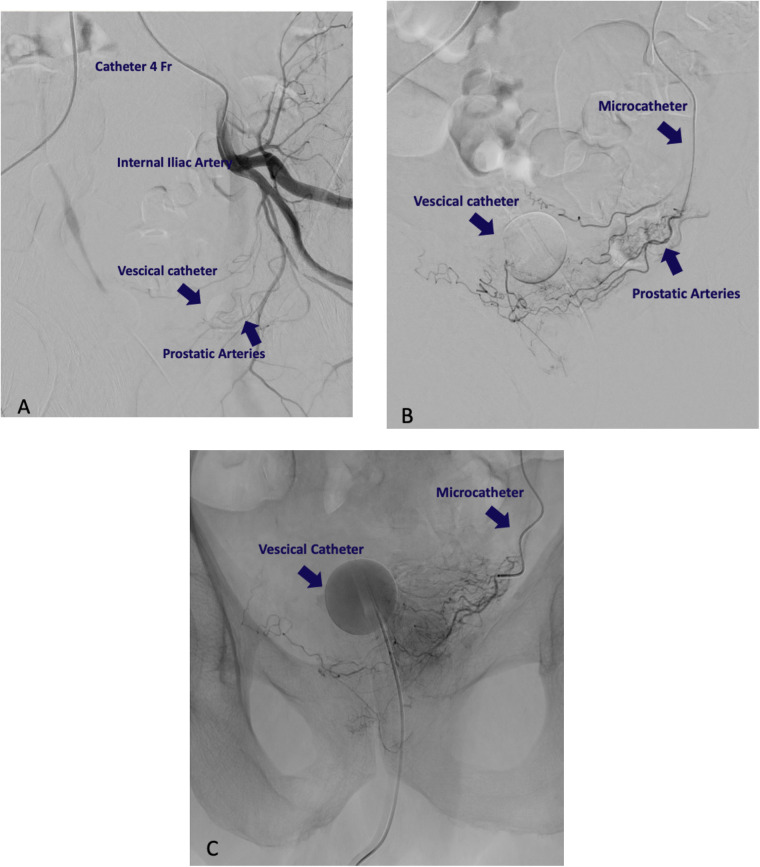 Figure 1
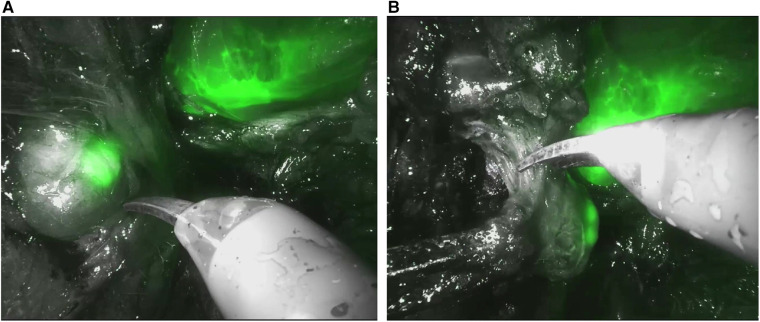 Figure 2
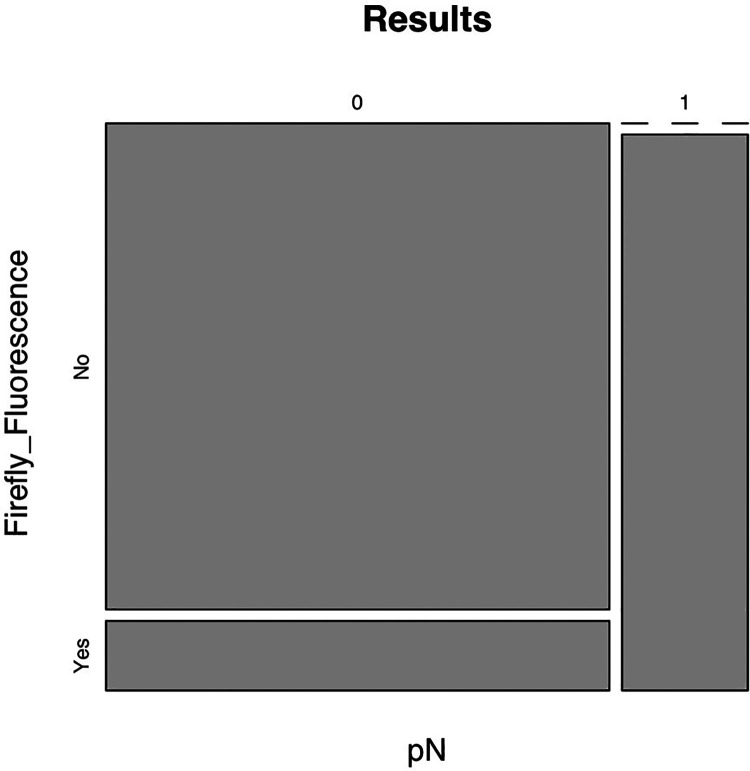 Figure 3
Peer Reviews
No public reviews on file for this paper yet. If you reviewed it on a platform where reviews are public (OpenReview, ICLR, NeurIPS, ICML), you can paste yours below so the community can read it here.
Videos
No videos yet. Explain this paper in a talk, walkthrough, or lecture? Add one.
Taxonomy
TopicsProstate Cancer Diagnosis and Treatment · Urologic and reproductive health conditions · Urological Disorders and Treatments