The CB1R of mPFC is involved in anxiety-like behavior induced by 0.8/2.65 GHz dual-frequency electromagnetic radiation
Bin Sun, Teng Xue, An-ning Gao, Xin-yu Wang, Shuang Wu, Xiao-man Liu, Li-hui Zhang, Meng-hua Li, Dong-fang Zou, Yan Gao, Chang-zhen Wang

TL;DR
Exposure to 0.8/2.65 GHz electromagnetic radiation in mice causes anxiety-like behavior linked to changes in the endocannabinoid system in brain regions.
Contribution
Identifies the role of mPFC CB1R in anxiety-like behavior caused by dual-frequency EMR and shows its modulation effects.
Findings
Dual-frequency EMR exposure induces anxiety-like behavior in mice.
CB1R levels in the mPFC decrease, downregulating the endocannabinoid system.
Modulating mPFC CB1R levels alters anxiety-like behavior in mice.
Abstract
As mobile phones and communication base stations become more widespread, concerns have arisen regarding the potential risks of environmental exposure to multi-frequency electromagnetic radiation (EMR) and its effects on mental health. To address these concerns, our study established a dual-frequency EMR mouse model at 0.8/2.65 GHz to explore potential molecular mechanisms and intervention targets. Our results revealed that exposure to this dual-frequency EMR significantly induced anxiety-like behavior in mice. Molecular experiments further showed a significant decrease in cannabinoid receptor type 1 (CB1R) levels in the medial prefrontal cortex (mPFC) of the mice, along with a notable reduction in the endogenous cannabinoids 2-arachidonoylglycerol and anandamide. This led to a downregulation of the entire endocannabinoid system (ECS). Additional confirmation was obtained by…
Genes, proteins, chemicals, diseases, species, mutations and cell lines named across the full text — each resolved to its canonical identifier and authoritative record.
Click any figure to enlarge with its caption.
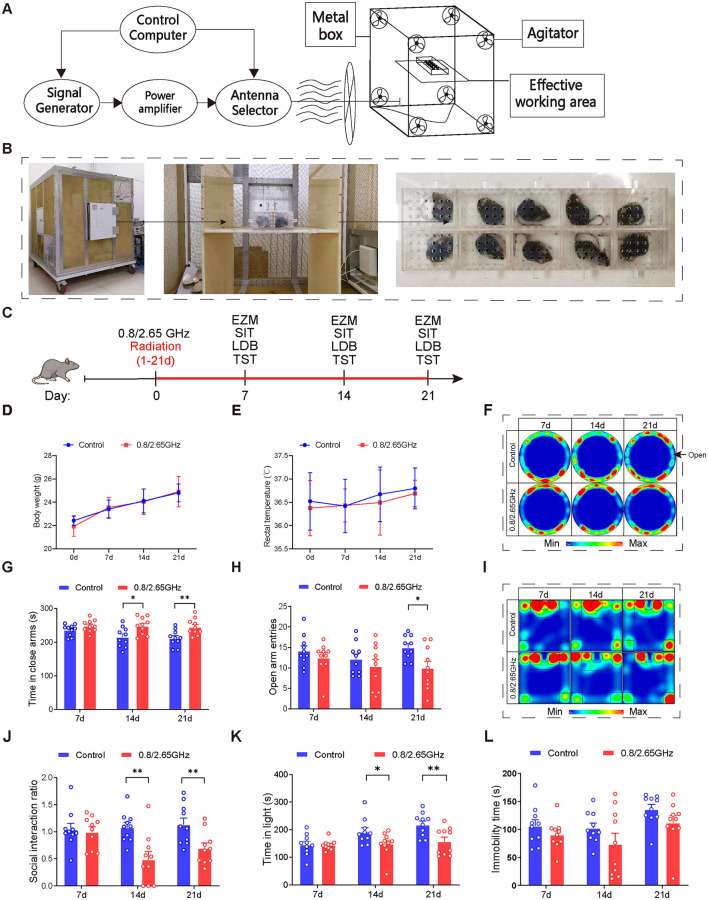 Figure 1
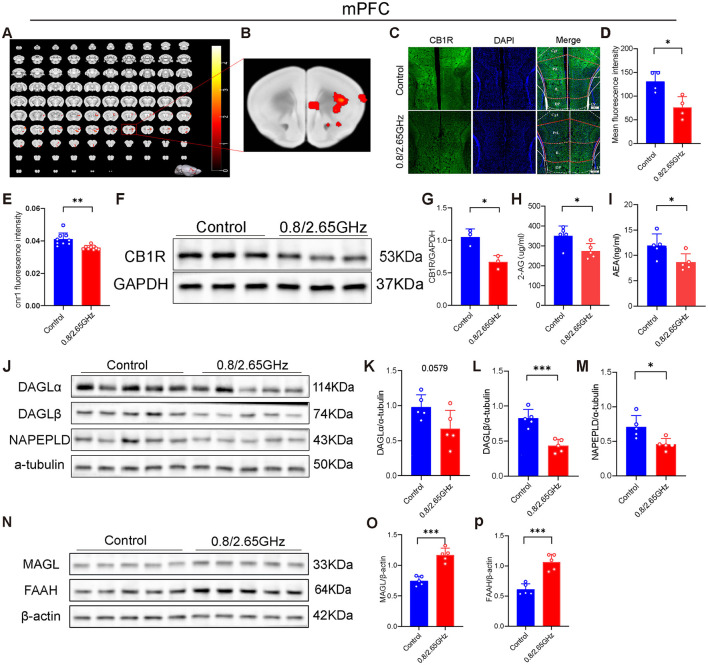 Figure 2
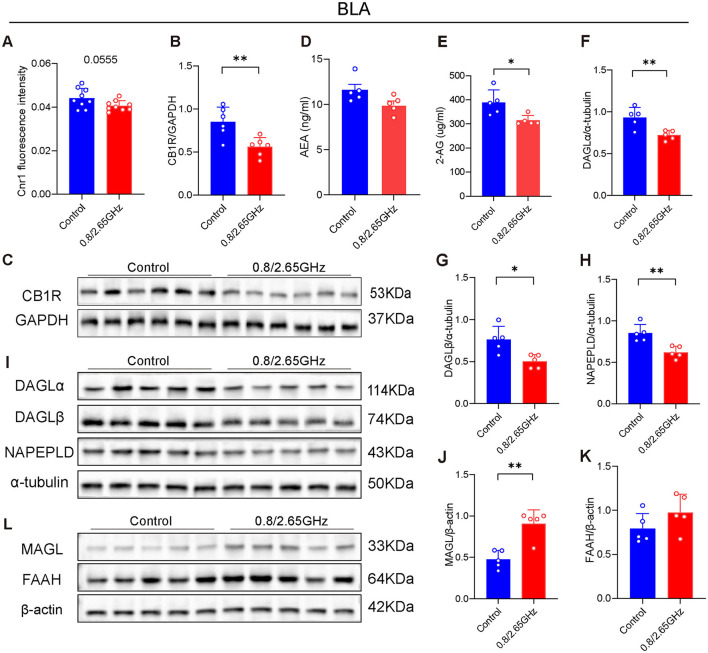 Figure 3
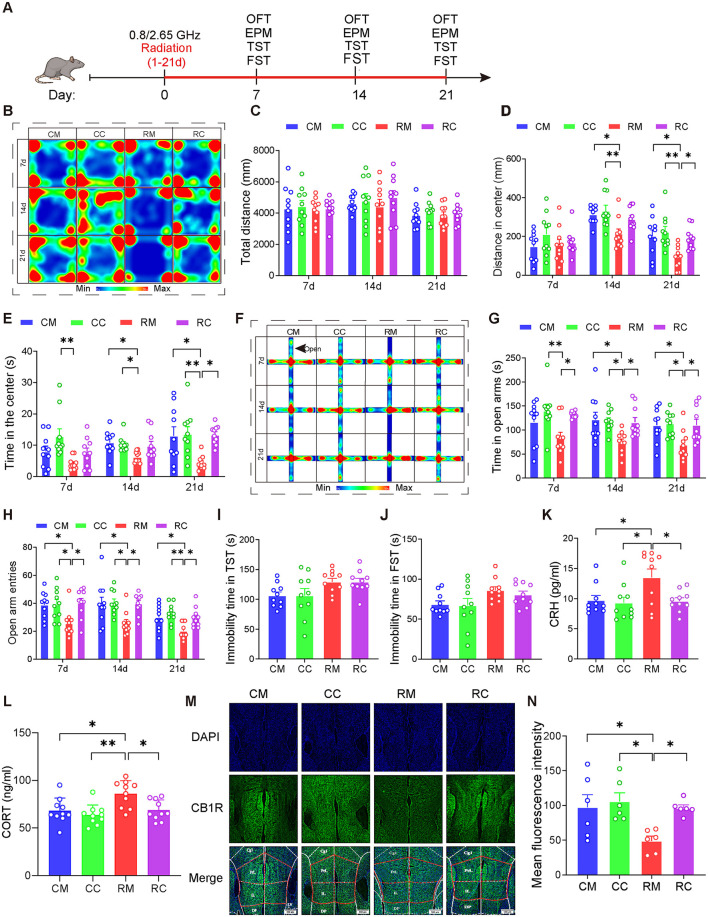 Figure 4
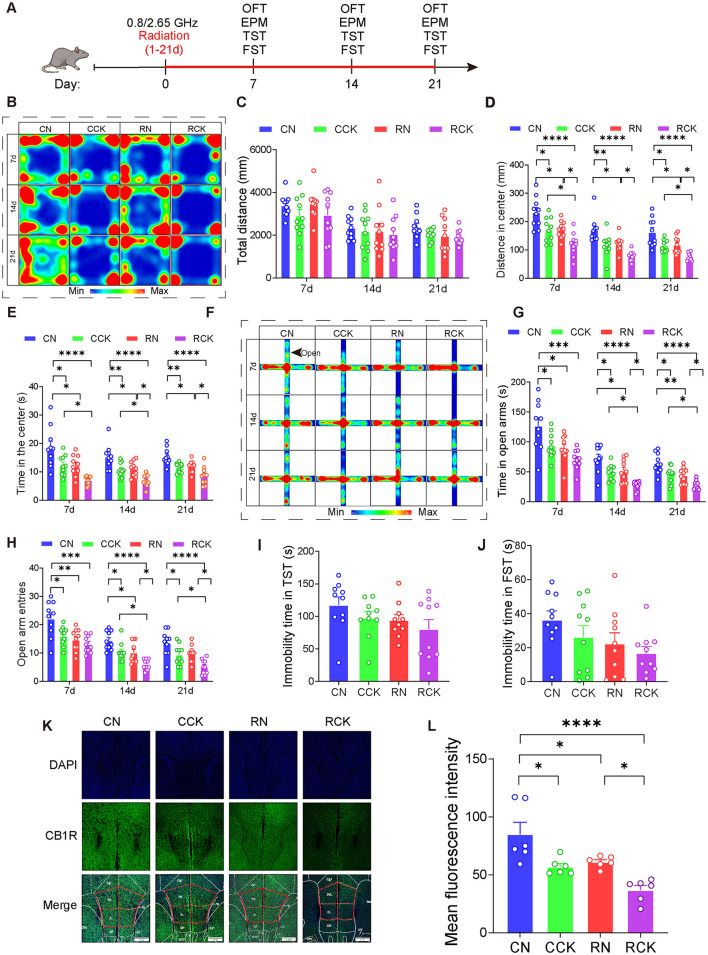 Figure 5
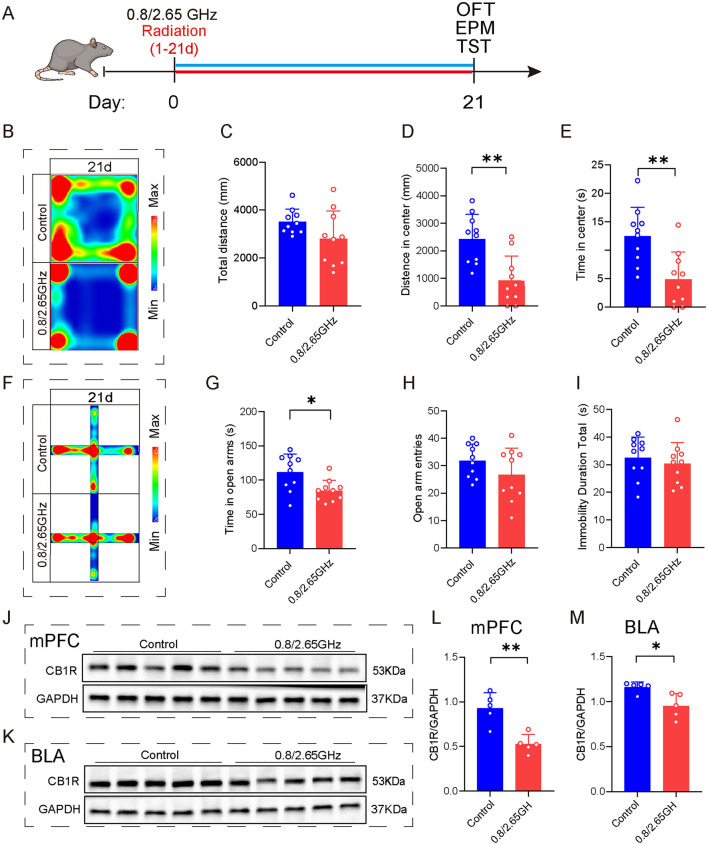 Figure 6
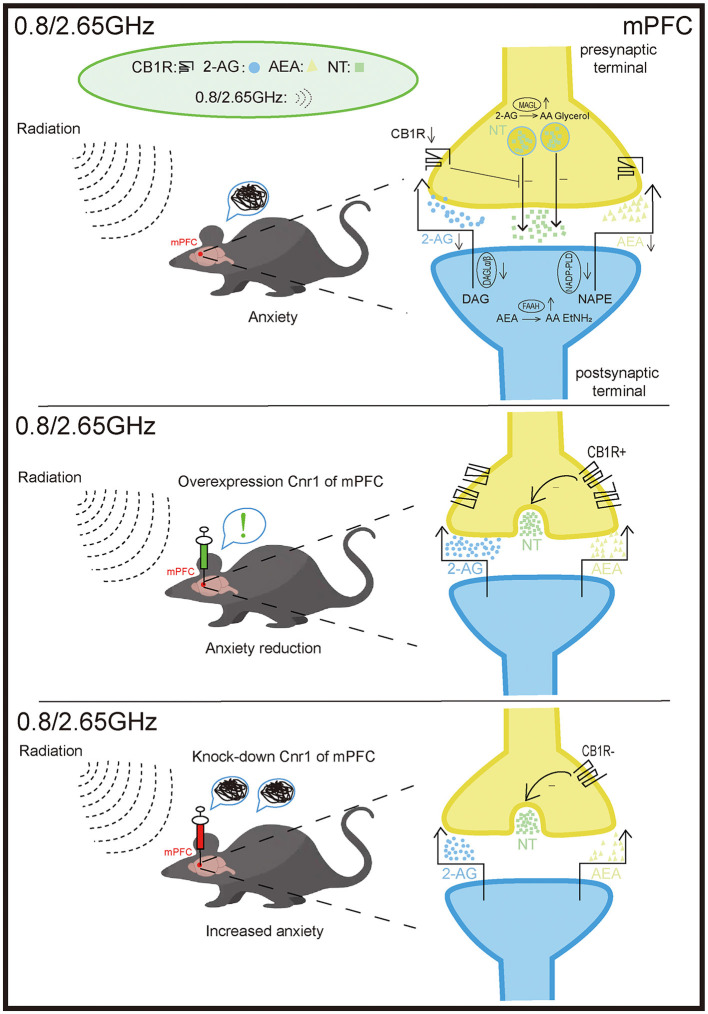 Figure 7
Peer Reviews
No public reviews on file for this paper yet. If you reviewed it on a platform where reviews are public (OpenReview, ICLR, NeurIPS, ICML), you can paste yours below so the community can read it here.
Videos
No videos yet. Explain this paper in a talk, walkthrough, or lecture? Add one.
Taxonomy
TopicsCannabis and Cannabinoid Research