Computer reconstruction of gene networks controlling anxiety levels in humans and laboratory mice
E.G. Vergunov, V.A. Savostyanov, A.A. Makarova, E.I. Nikolaeva, A.N. Savostyanov

TL;DR
This paper uses mouse models and computational methods to reconstruct gene networks linked to anxiety in humans, identifying potential molecular markers for anxiety-related traits.
Contribution
The study introduces a three-domain gene network model for generalized anxiety, combining mouse and human data through a translational approach.
Findings
Differences in gene expression in the cingulate cortex were identified between mice with low and high anxiety.
Orthologs of anxiety-related differentially expressed genes were mapped between mice and humans.
A three-domain gene network was reconstructed, showing how anxiety levels are regulated in humans.
Abstract
Anxiety is a normotypic human condition, and like any other emotion has an adaptive value. But excessively high or low anxiety has negative consequences for adaptation, which primarily determines the importance of studying these two extreme conditions. At the same time, it is known that the perception of aversive stimuli associated with anxiety leads to changes in the activity of the brain’s cingulate cortex. The advantage of animals as models in studying the genetic bases of anxiety in humans is in the ability to subtly control the external conditions of formation of a certain state, the availability of brain tissues, and the ability to create and study transgenic models, including through the use of differentially expressed genes of small laboratory animals from the family Muridae with low and high anxiety. Within the framework of the translational approach, a three-domain potential…
Genes, proteins, chemicals, diseases, species, mutations and cell lines named across the full text — each resolved to its canonical identifier and authoritative record.
Click any figure to enlarge with its caption.
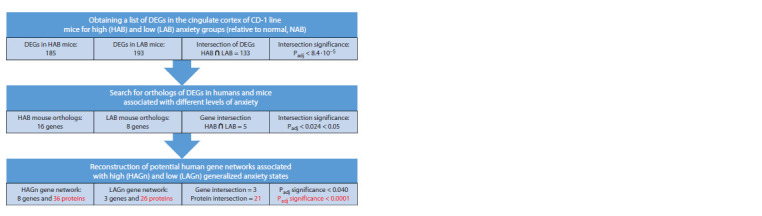 Figure 1
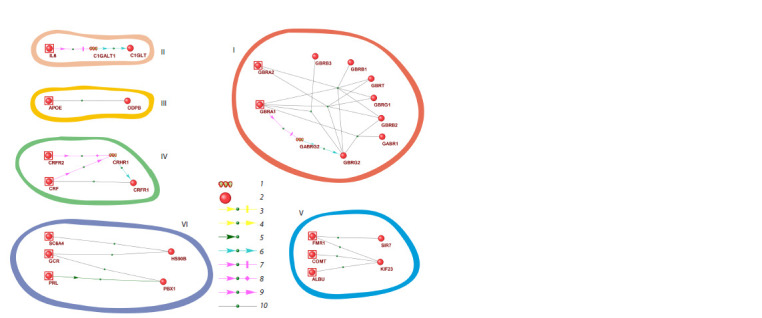 Figure 2
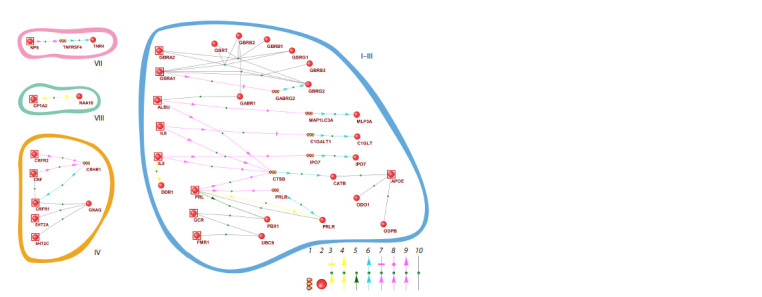 Figure 3
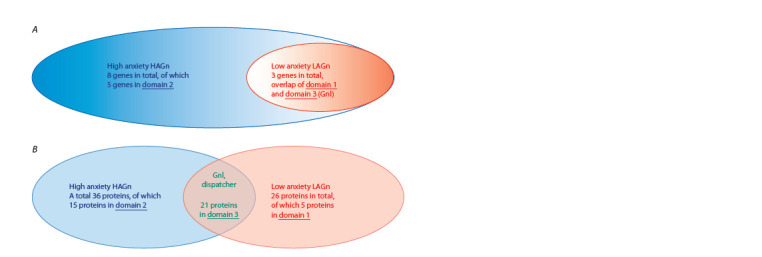 Figure 4
Peer Reviews
No public reviews on file for this paper yet. If you reviewed it on a platform where reviews are public (OpenReview, ICLR, NeurIPS, ICML), you can paste yours below so the community can read it here.
Videos
No videos yet. Explain this paper in a talk, walkthrough, or lecture? Add one.
Taxonomy
TopicsBioinformatics and Genomic Networks · Mental Health Research Topics · Computational Drug Discovery Methods