The role of SELE gene polymorphism in ST-elevation myocardial infarction
N.P. Babushkina, A.M. Nikolaeva, A.D. Dolbnya, V.E. Shavrak, V.V. Ryabov

TL;DR
This study explores how genetic variations in the SELE gene may increase the risk of a severe type of heart attack called STEMI.
Contribution
The study identifies a novel association between the rs5353 genotype in the SELE gene and increased risk of STEMI.
Findings
The CC genotype of rs5353 in the SELE gene is a significant predisposing factor for STEMI (OR = 6.93).
The analyzed SNPs (rs5353, rs3917412, rs1534904) are functionally relevant and likely regulate multiple genes in the region.
These polymorphisms are associated with inflammation, immune response, and DNA repair systems in cardiovascular disease pathogenesis.
Abstract
Ischemic heart disease (IHD) is an important medical and social problem. ST-elevation myocardial infarction (STEMI) is the most severe form of IHD, affecting all layers of the heart muscle. One of the diagnostic criteria for endothelial dysfunction in myocardial infarction is the level of sE-selectin, a cell adhesion molecule that recruits neutrophils and induces neutrophil inflammation. The aim of this study is to investigate intronic polymorphisms rs5353, rs3917412 and rs1534904 of the E-selectin coding gene SELE in patients with STEMI. We have analyzed a group of patients with STEMI (n = 74) and a population sample of Tomsk (n = 136) as the control group. The frequencies of the rs5353 genotypes in the SELE gene have shown statistically significant differences between patients and the control sample (p = 0.004). The CC genotype is a predisposing factor to STEMI (OR = 6.93, CI:95 %…
Genes, proteins, chemicals, diseases, species, mutations and cell lines named across the full text — each resolved to its canonical identifier and authoritative record.
Click any figure to enlarge with its caption.
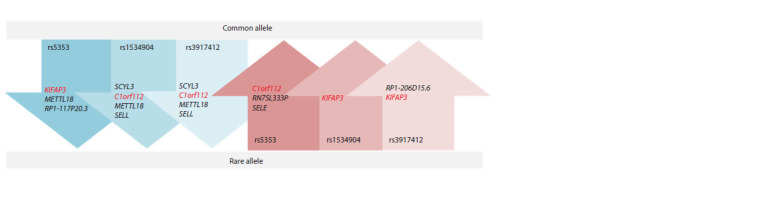 Figure 1
 Figure 2
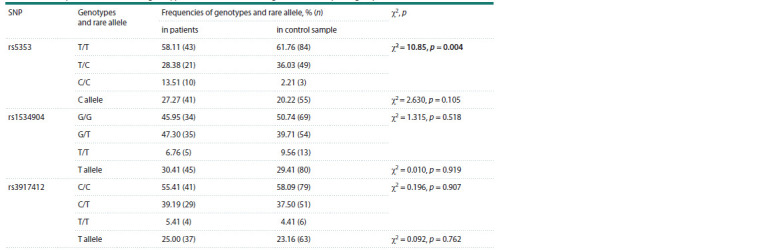 Figure 3
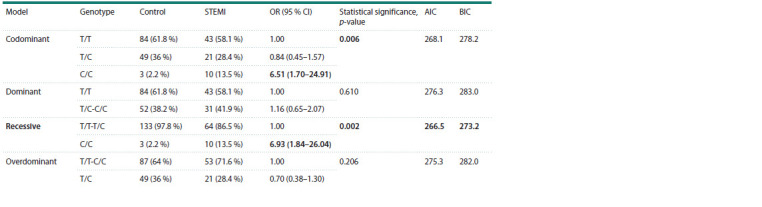 Figure 4
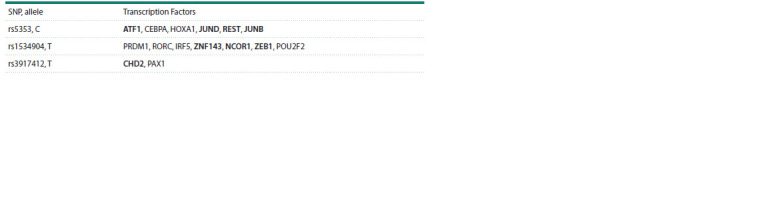 Figure 5
Peer Reviews
No public reviews on file for this paper yet. If you reviewed it on a platform where reviews are public (OpenReview, ICLR, NeurIPS, ICML), you can paste yours below so the community can read it here.
Videos
No videos yet. Explain this paper in a talk, walkthrough, or lecture? Add one.
Taxonomy
TopicsAtherosclerosis and Cardiovascular Diseases · Adipokines, Inflammation, and Metabolic Diseases · Cell Adhesion Molecules Research