Feasibility study of single-image super-resolution scanning system based on deep learning for pathological diagnosis of oral epithelial dysplasia
Zhaochen Liu, Peiyan Wang, Nian Deng, Hui Zhang, Fangjie Xin, Xiaofei Yu, Mujie Yuan, Qiyue Yu, Yuhao Tang, Keke Dou, Jie Zhao, Bing He, Jing Deng

TL;DR
This study explores using deep learning and a super-resolution scanner to diagnose oral epithelial dysplasia, showing improved speed and accuracy compared to traditional methods.
Contribution
The novel contribution is a deep learning-based super-resolution scanning system for rapid and accurate diagnosis of oral epithelial dysplasia.
Findings
The DS30R scanner processes slides in 0.25 min and uses less storage compared to the Nikon scanner.
The system improves image clarity and maintains diagnostic accuracy for oral epithelial dysplasia.
High agreement (kappa values of 0.969 and 0.979) was found between different imaging systems used by the same pathologist.
Abstract
This study aimed to evaluate the feasibility of applying deep learning combined with a super-resolution scanner for the digital scanning and diagnosis of oral epithelial dysplasia (OED) slides. A model of a super-resolution digital slide scanning system based on deep learning was built and trained using 40 pathological slides of oral epithelial tissue. Two hundred slides with definite OED diagnoses were scanned into digital slides by the DS30R and Nikon scanners, and the scanner parameters were obtained for comparison. Considering that diagnosis under a microscope is the gold standard, the sensitivity and specificity of OED pathological feature recognition by the same pathologist when reading different scanner images were evaluated. Furthermore, the consistency of whole-slide diagnosis results obtained by pathologists using various digital scanning imaging systems was assessed. This was…
Genes, proteins, chemicals, diseases, species, mutations and cell lines named across the full text — each resolved to its canonical identifier and authoritative record.
Click any figure to enlarge with its caption.
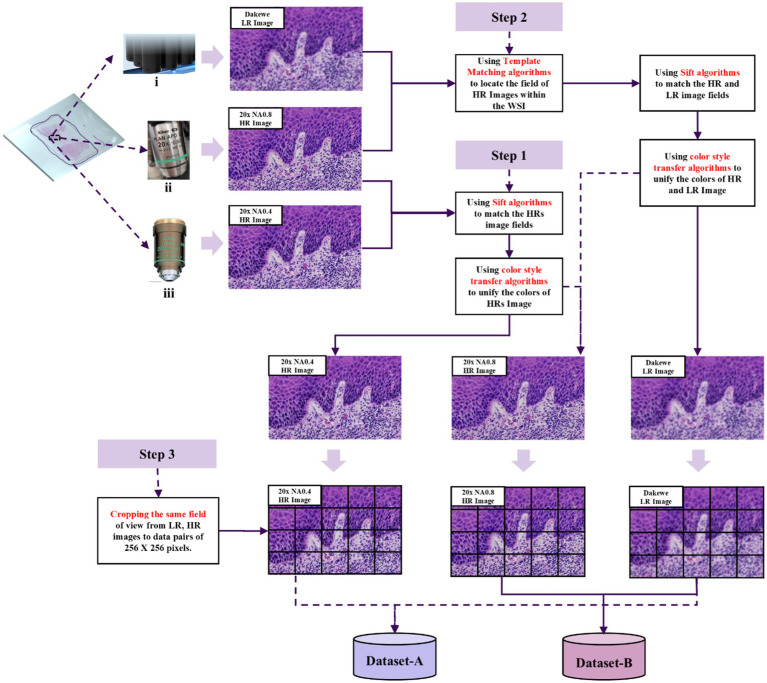 Figure 1
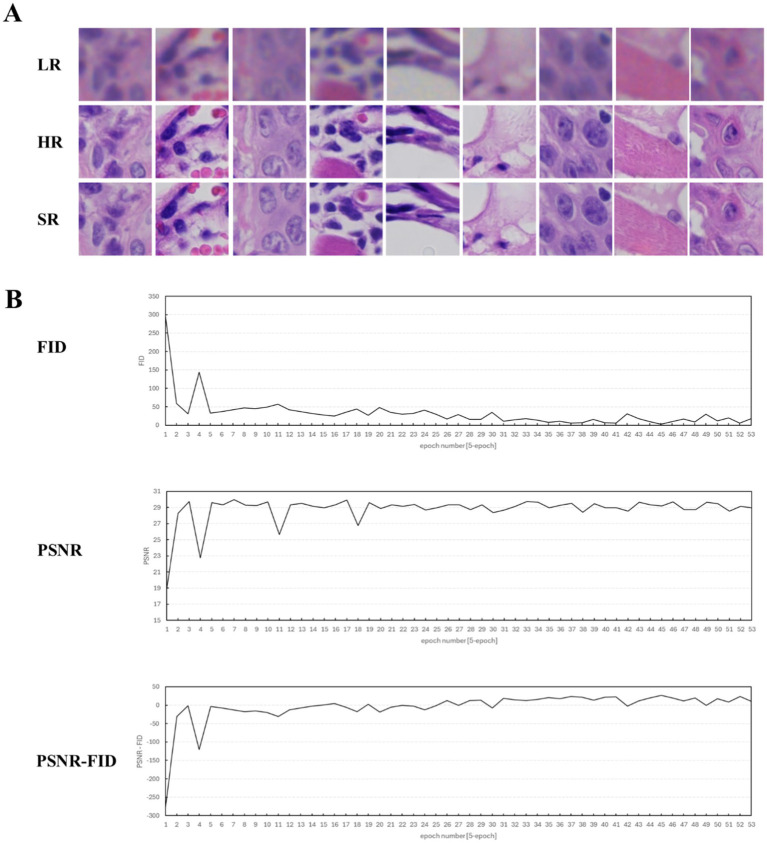 Figure 2
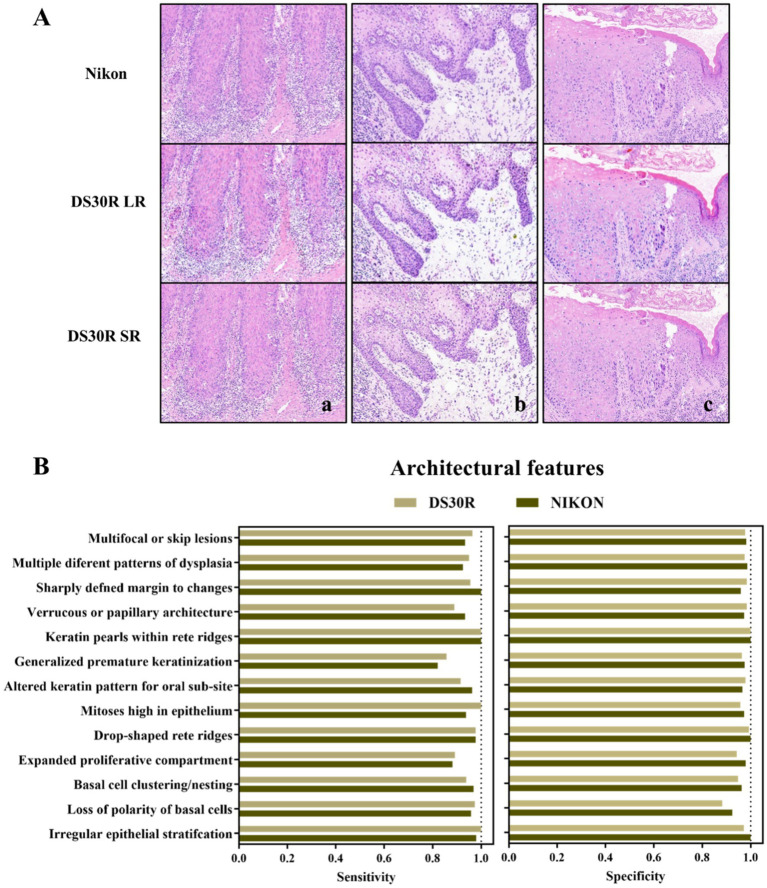 Figure 3
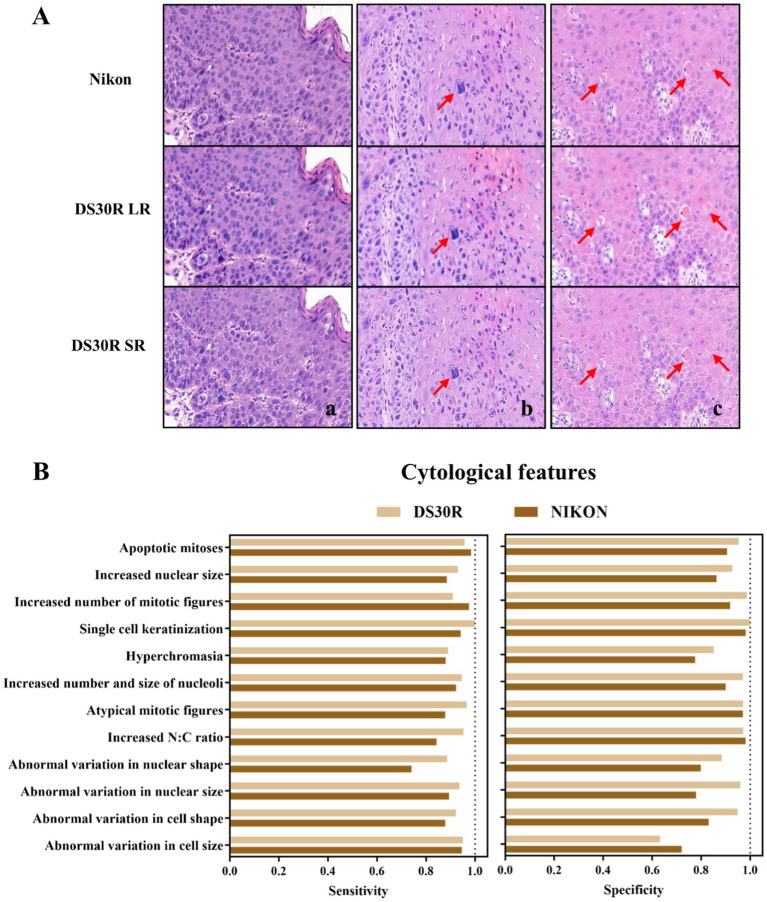 Figure 4
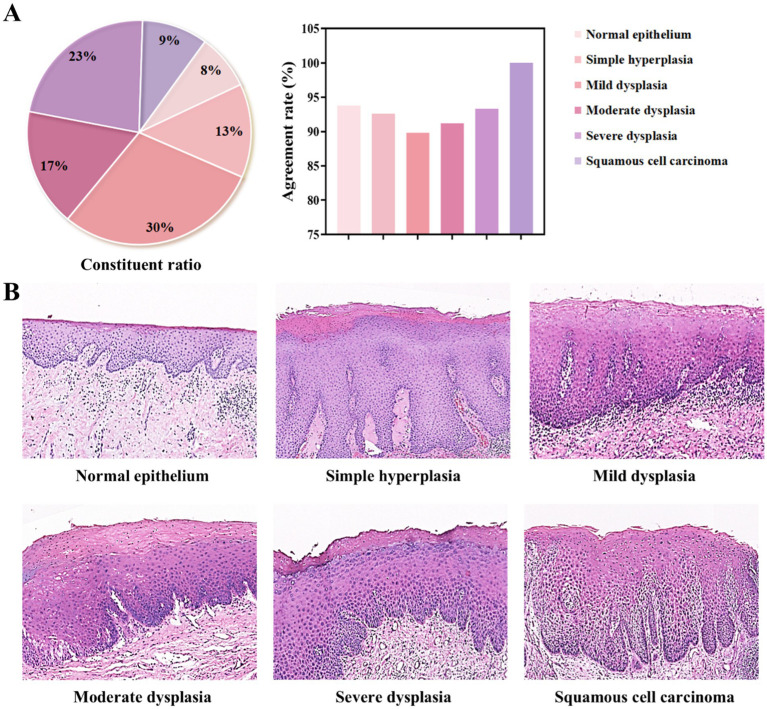 Figure 5
Peer Reviews
No public reviews on file for this paper yet. If you reviewed it on a platform where reviews are public (OpenReview, ICLR, NeurIPS, ICML), you can paste yours below so the community can read it here.
Videos
No videos yet. Explain this paper in a talk, walkthrough, or lecture? Add one.
Taxonomy
TopicsOral Health Pathology and Treatment · Mycobacterium research and diagnosis · Cutaneous lymphoproliferative disorders research