Prenatal diagnosis of intellectual disability, autosomal dominant 29 with a nonsense pathogenic variant in SETBP1: a case report and literature review
Zhuo Wei, Liying Yao, Lei Zhang, Shanshan Li, Meiyi Xu, Dan Wu, Wen Li, Ying Chang

TL;DR
A rare genetic disorder causing intellectual disability was diagnosed prenatally through genetic testing, leading to a decision to terminate the pregnancy.
Contribution
This case report provides new prenatal clinical data on SETBP1-related intellectual disability and its association with fetal cortical abnormalities.
Findings
The SETBP1 c.2425C>T (p.Gln809*) nonsense variant was identified as pathogenic in the proband, mother, and fetus.
Fetal cortical abnormalities and subependymal cystic areas were observed in ultrasound and confirmed by genetic analysis.
The pregnancy was terminated at 30 + 4 gestational weeks based on the prenatal diagnosis.
Abstract
Intellectual disability, autosomal dominant 29 is a rare disorder resulting from pathogenic variants of SETBP1 gene with no specific mutation hotspot identified. Systematic descriptions of new cases are crucial for understanding the genotypic and phenotypic spectrums of the disease. A pregnant woman was referred to the prenatal diagnosis center at our hospital because she has an intellectual disability and has previously given birth to a child with intellectual disabilities. Karyotype, CNV-seq and whole-exome sequencing (WES) were employed to investigate the potential genetic issues in the family. The SETBP1 NM_015559.2: c.2425C>T (p.Gln809*) nonsense variant was found in the proband and mother, who were diagnosed with MRD29. Amniocentesis and genetic analysis (CNV-seq and sanger sequencing for mutation site) were performed as fetal cortical abnormalities and subependymal cystic area…
Genes, proteins, chemicals, diseases, species, mutations and cell lines named across the full text — each resolved to its canonical identifier and authoritative record.
Click any figure to enlarge with its caption.
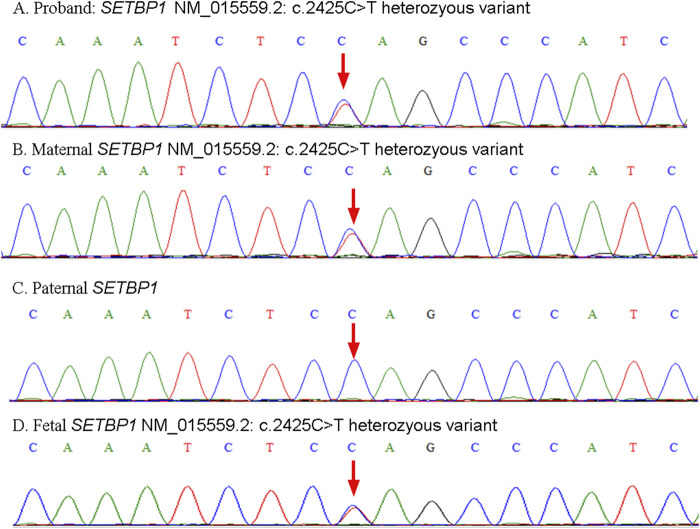 Figure 1
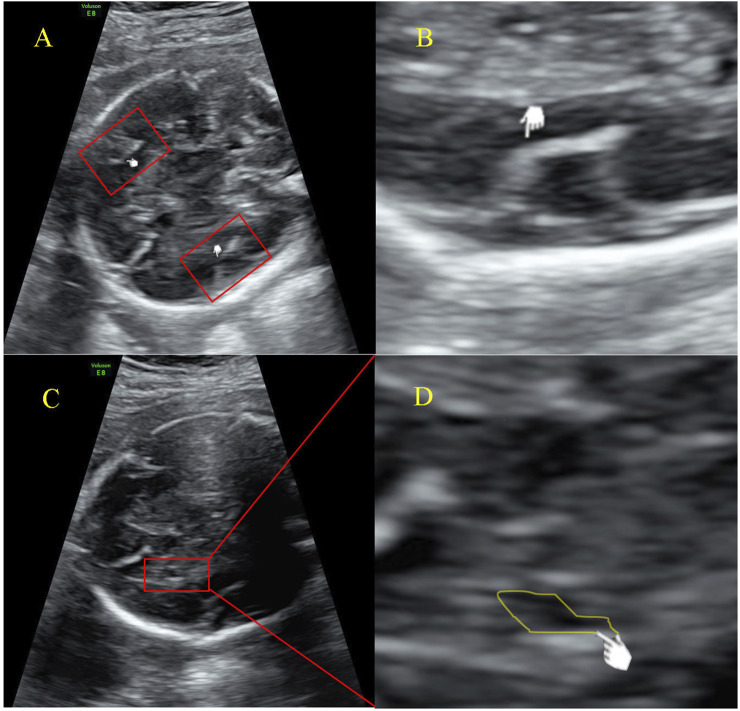 Figure 2
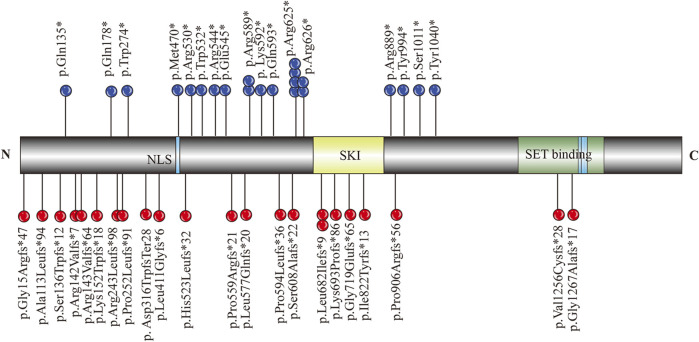 Figure 3
Peer Reviews
No public reviews on file for this paper yet. If you reviewed it on a platform where reviews are public (OpenReview, ICLR, NeurIPS, ICML), you can paste yours below so the community can read it here.
Videos
No videos yet. Explain this paper in a talk, walkthrough, or lecture? Add one.
Taxonomy
TopicsGenomic variations and chromosomal abnormalities · Genomics and Rare Diseases · Genetics and Neurodevelopmental Disorders