A case report of uterine necrosis following cesarean section: lessons learned from cross binding suture for refractory postpartum hemorrhage
Sheng-ying Yang, Yang Liu, Zi-jun Zhou, Jon-bo-wen Yan, Tao Li, Bao-yu Cao, Jun-qiang Li

TL;DR
A rare case of uterine necrosis after a cesarean section highlights risks of using a cross binding suture for severe postpartum bleeding.
Contribution
This case report highlights the potential complications of using a cross binding suture for refractory postpartum hemorrhage.
Findings
Cross binding suture for PPH led to uterine necrosis requiring hysterectomy.
Unconventional surgical techniques can result in severe maternal complications.
Early recognition and intervention are crucial to prevent severe outcomes.
Abstract
Uterine necrosis following cesarean section is an extremely rare but serious complication. This case report presents a unique scenario where a cross binding suture technique was employed to manage intractable postpartum hemorrhage (PPH), ultimately leading to uterine necrosis and hysterectomy. The case underscores the challenges of managing severe PPH and highlights the potential complications of unconventional surgical techniques. It also emphasizes the importance of early recognition and intervention to minimize maternal morbidity and mortality.
Genes, proteins, chemicals, diseases, species, mutations and cell lines named across the full text — each resolved to its canonical identifier and authoritative record.
Click any figure to enlarge with its caption.
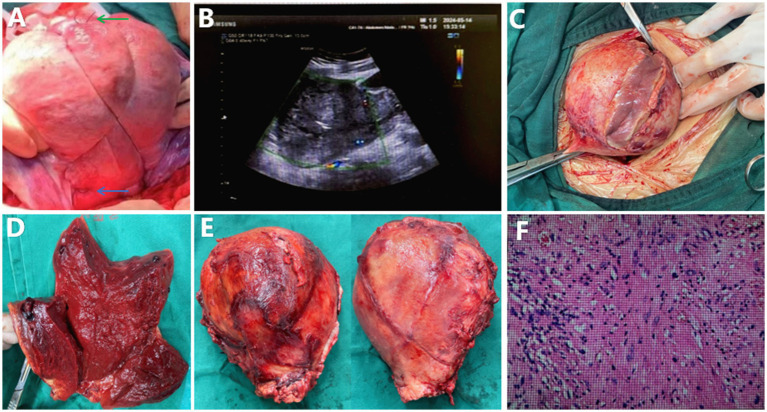 Figure 1
Peer Reviews
No public reviews on file for this paper yet. If you reviewed it on a platform where reviews are public (OpenReview, ICLR, NeurIPS, ICML), you can paste yours below so the community can read it here.
Videos
No videos yet. Explain this paper in a talk, walkthrough, or lecture? Add one.
Taxonomy
TopicsMaternal and fetal healthcare · Pregnancy-related medical research · Maternal and Perinatal Health Interventions