Peripheral vasoconstriction is not elevated during hyperreactive responses to the cold pressor test: a cross-sectional study
Jon Stavres, Anabelle Vallecillo-Bustos, Sarah Parnell, Ryan S. Aultman, Ta’Quoris A. Newsome, Sydney H. Swafford, Abby T. Compton, Rhett C. Schimpf, Sophia N. Schmidt, Carstell Lee, Austin J. Graybeal

TL;DR
This study found that high blood pressure responses to cold exposure are not due to increased narrowing of blood vessels in the limbs.
Contribution
The study shows hyperreactive blood pressure during cold pressor tests is not linked to greater peripheral vasoconstriction.
Findings
Hyperreactors showed higher blood pressure during the cold pressor test but no greater forearm vasoconstriction.
Handgrip exercise reduced exaggerated blood pressure responses in hyperreactors during the cold pressor test.
Hyperreactors had exaggerated blood pressure during handgrip exercise but no changes in forearm blood flow.
Abstract
Individuals demonstrating increases in systolic systolic blood pressure or diastolic diastolic blood pressure blood pressure of at least 15 mmHg are considered hyperreactors to the cold pressor test (CPT). However, it remains unclear if peripheral vasoconstriction is similarly exaggerated during the CPT in these individuals. Fifty-five individuals (54.5% non-White, 67.3% female) performed a single-visit study including a 2-min CPT of the foot, a 2-min bout of rhythmic handgrip exercise ([HG] 25% maximal voluntary contraction), and a 2-min combined trial (CPT + HG). Beat-by-beat heart rate (HR), blood pressure, and forearm blood flow (FBF) were continuously recorded, and vascular conductance (FVC) was calculated as FBF/mean arterial pressure (MAP). Hyperreactors (n = 21) demonstrated exaggerated increases in blood pressure and rate pressure product during the CPT compared to…
Genes, proteins, chemicals, diseases, species, mutations and cell lines named across the full text — each resolved to its canonical identifier and authoritative record.
Click any figure to enlarge with its caption.
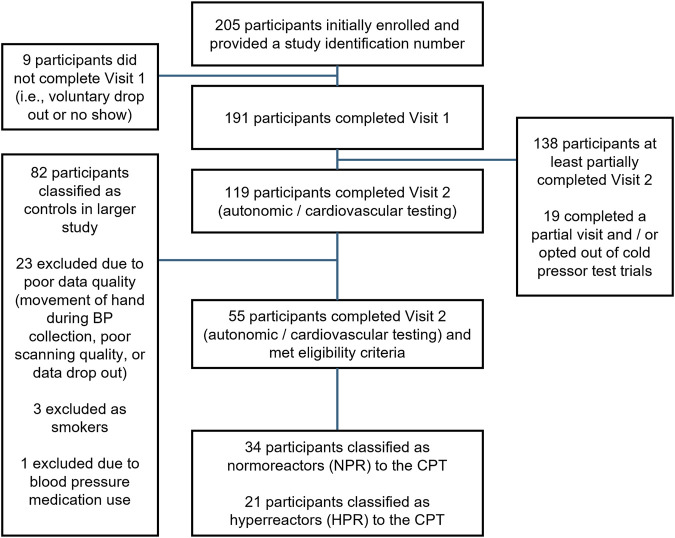 Figure 1
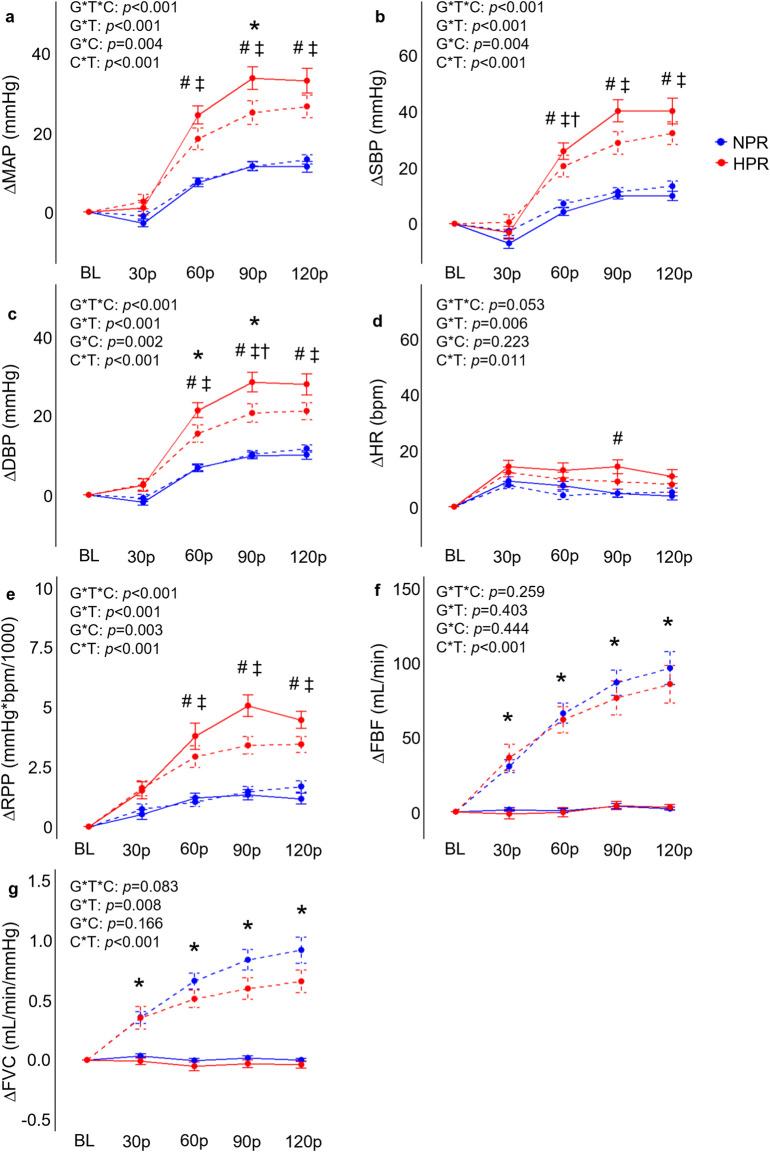 Figure 2
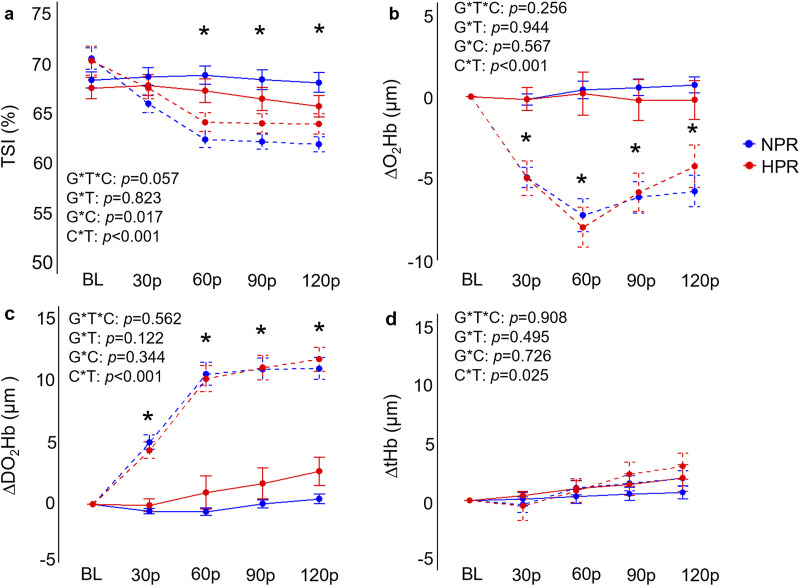 Figure 3
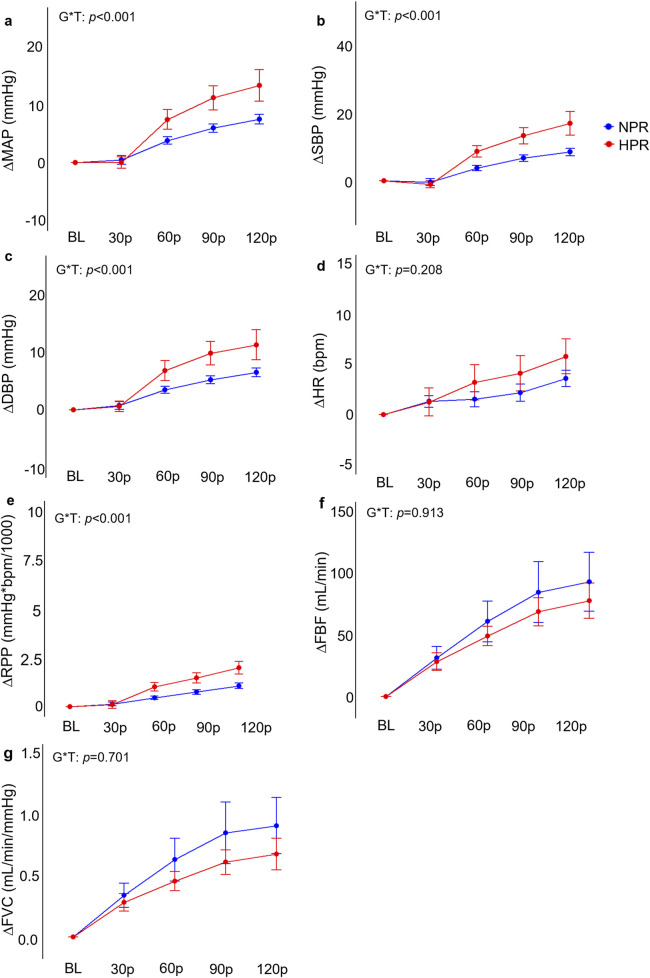 Figure 4
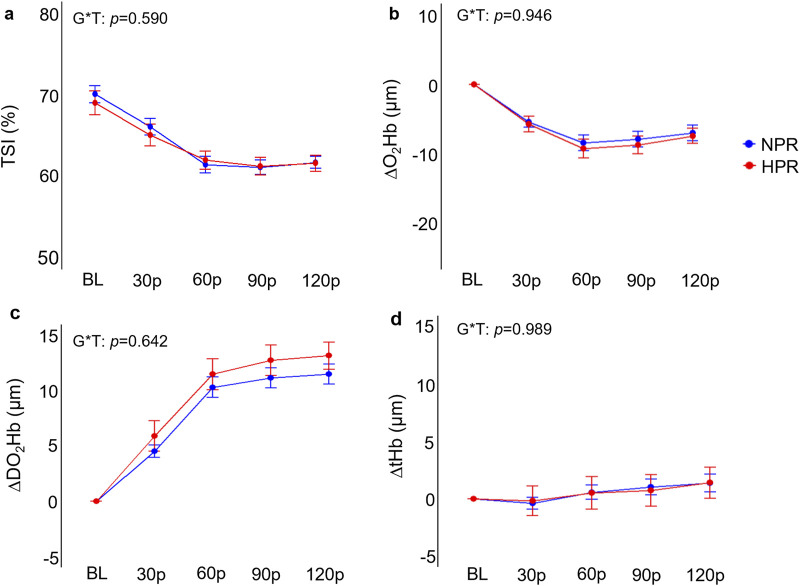 Figure 5
Peer Reviews
No public reviews on file for this paper yet. If you reviewed it on a platform where reviews are public (OpenReview, ICLR, NeurIPS, ICML), you can paste yours below so the community can read it here.
Videos
No videos yet. Explain this paper in a talk, walkthrough, or lecture? Add one.
Taxonomy
TopicsHeart Rate Variability and Autonomic Control · Cardiovascular and exercise physiology · Cardiovascular Effects of Exercise