Associations of serum sLOX-1 levels with disease severity and 3-month function prognosis after spontaneous intracerebral hemorrhage: a prospective cohort study
Xiufeng Ye, Heng He, Huan Song, Jing Huang, Zhixing Zhang, Yan Zhou

TL;DR
Higher levels of sLOX-1 in blood are linked to more severe brain bleeding and worse recovery outcomes in stroke patients.
Contribution
This study identifies sLOX-1 as a potential biomarker for predicting prognosis in spontaneous intracerebral hemorrhage.
Findings
Serum sLOX-1 levels are significantly higher in patients with spontaneous intracerebral hemorrhage compared to healthy controls.
Elevated sLOX-1 levels are independently associated with worse disease severity and poor 3-month neurological outcomes.
A threshold of sLOX-1 >1539.75 pg/mL predicts poor prognosis with high sensitivity and specificity.
Abstract
Soluble lectin-like oxidized low-density lipoprotein receptor-1 (sLOX-1) may be involved in the inflammatory response and aggravate secondary brain injury after spontaneous intracerebral hemorrhage (sICH). The aim of this study was to reveal the association of serum sLOX-1 levels with disease severity and the predictive power of 90-day neurological outcomes after sICH. This prospective cohort study included 118 sICH patients and 118 healthy controls, whose serum sLOX-1 levels were quantified. Glasgow Coma Scale (GCS) scores and hematoma volumes were used to assess disease severity. Glasgow Outcome Scale (GOS) scores were used to assess 3-month function prognosis after stroke. The relation of serum sLOX-1 levels to disease severity and prognosis (GOS scores 1–3) was discerned Receiver operating characteristic curve was built to evaluate the prognostic predictive capability. Serum…
Genes, proteins, chemicals, diseases, species, mutations and cell lines named across the full text — each resolved to its canonical identifier and authoritative record.
Click any figure to enlarge with its caption.
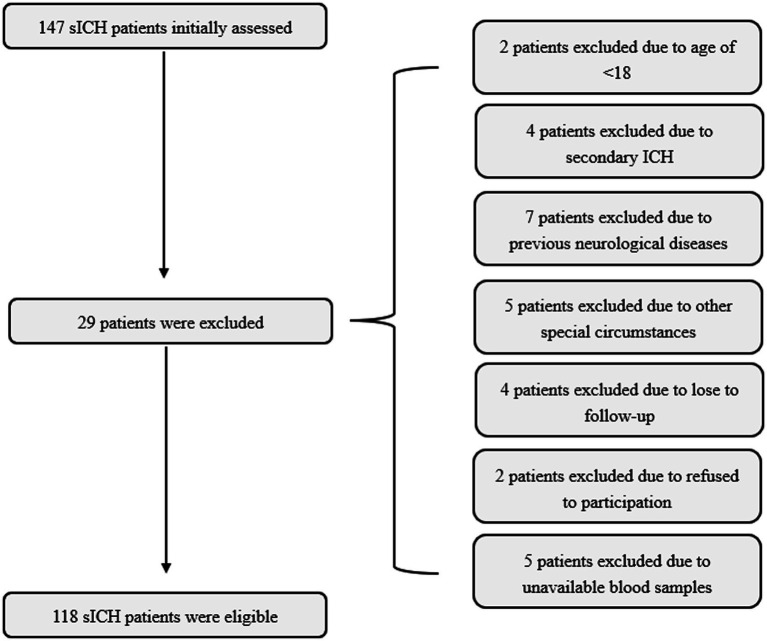 Figure 1
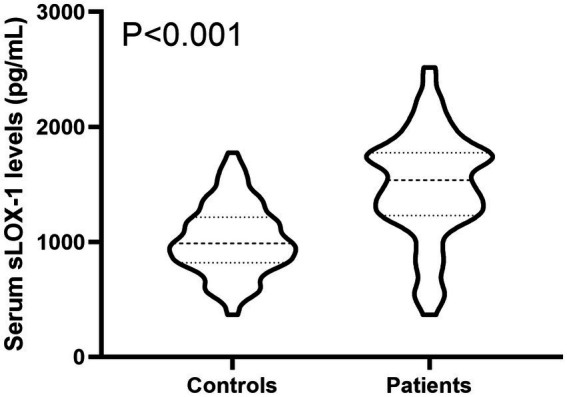 Figure 2
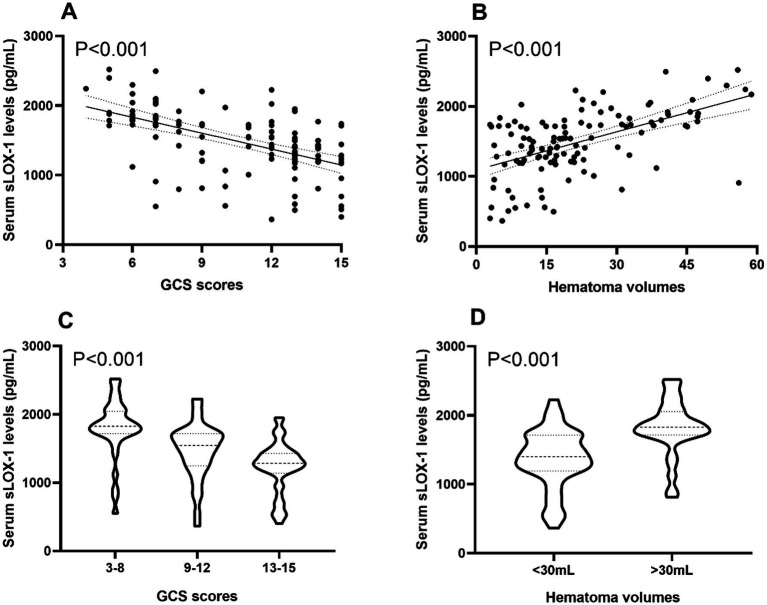 Figure 3
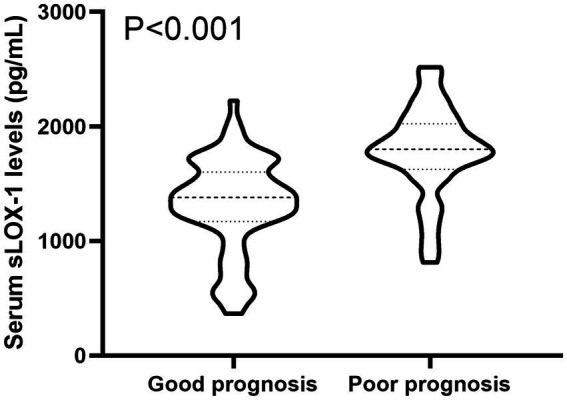 Figure 4
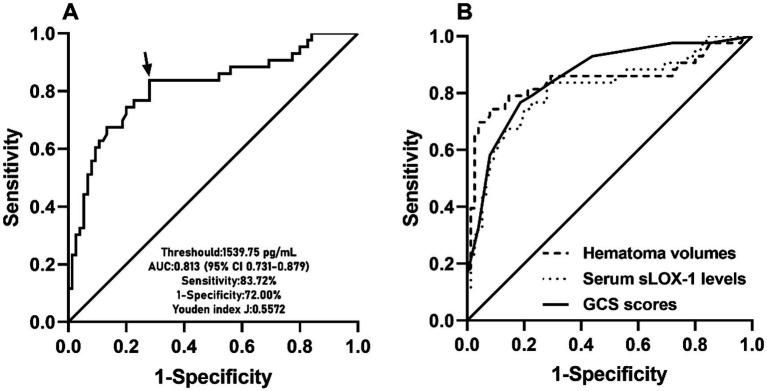 Figure 5
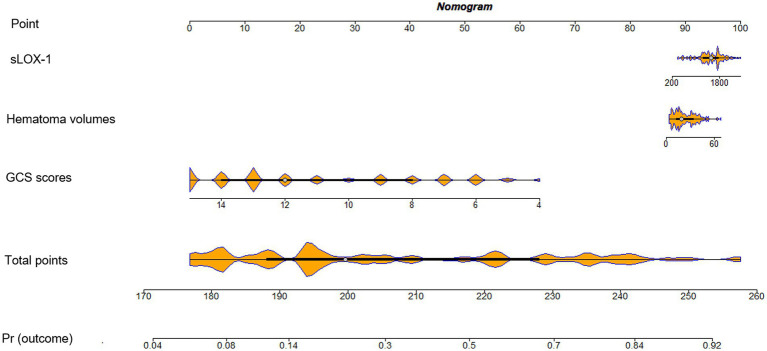 Figure 6
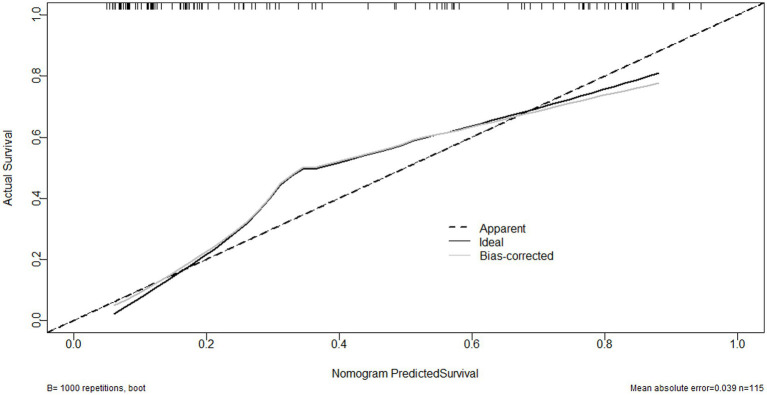 Figure 7
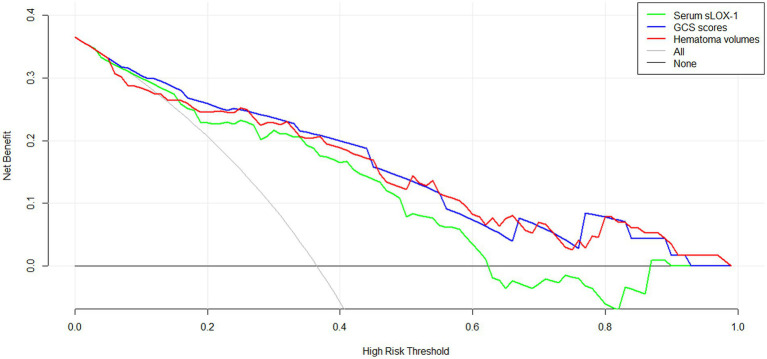 Figure 8
Peer Reviews
No public reviews on file for this paper yet. If you reviewed it on a platform where reviews are public (OpenReview, ICLR, NeurIPS, ICML), you can paste yours below so the community can read it here.
Videos
No videos yet. Explain this paper in a talk, walkthrough, or lecture? Add one.
Taxonomy
TopicsAtherosclerosis and Cardiovascular Diseases · Intracerebral and Subarachnoid Hemorrhage Research · Barrier Structure and Function Studies